
Natural Gas Prices Heat Up: How Storage and Weather Are Shaping the Market Ahead of Key Reports
The U.S. natural gas market is at a critical juncture as storage dynamics and weather-driven demand collide ahead of the federal storage reports. Recent data reveals a complex interplay of factors that could drive price volatility this summer, offering both opportunities and risks for investors. Here's a deep dive into the forces at play.
Storage Surplus, But Not Enough to Calm Nerves
The latest EIA report for the week ending June 20, 2025, highlights a nuanced picture of natural gas storage. Total working gas stocks stand at 2,898 Bcf, which is 7% above the five-year average but 6% below year-ago levels. While this surplus might suggest ample supply, the deficit compared to 2024 underscores lingering concerns.
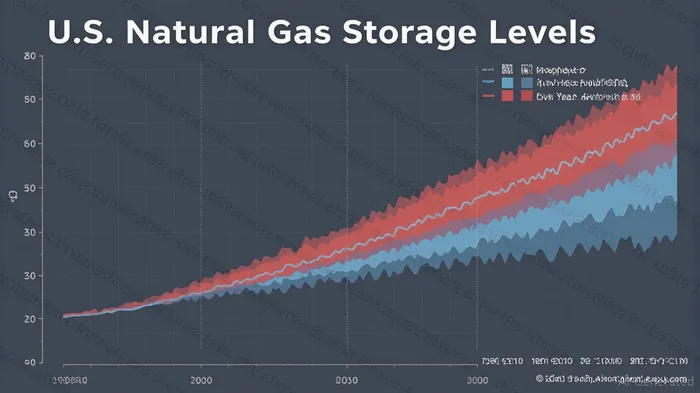
The refill season's injections are running 28% faster than historical averages, which could push storage to 3,932 Bcf by October 31—179 Bcf above the five-year average. However, regional disparities persist. The Mountain region boasts a 30% surplus over five-year averages, while the Midwest and East lag behind year-ago levels. This uneven distribution could create localized tightness, especially if demand spikes in regions with below-average inventories.
Weather: The Wildcard Driving Demand
The Northeast's record-breaking heatwave has been a game-changer. Temperatures reached 102°F (19°F above normal), driving power sector consumption to a record high. Gas use for electricity surged 14.7% week-over-week, setting a regional benchmark. With NOAA forecasting warmer-than-normal conditions into July, this trend is likely to continue, boosting demand and potentially constraining supplies.
The power sector's reliance on gas for cooling is now undeniable. Even a minor shortfall in production or storage could amplify price spikes, as seen in 2023 when heatwaves pushed Henry Hub prices to $4/MMBtu+. Investors should monitor weather forecasts closely—warmer-than-expected data could trigger a rally.
Exports: A Double-Edged Sword
LNG exports remain robust, with 30 vessels (113 Bcf) departing U.S. ports between June 19–25. While this supports prices by absorbing surplus gas, geopolitical risks loom large. Escalating Middle East tensions could disrupt global LNG flows, creating opportunities for U.S. exporters. However, prolonged conflicts might also drive international prices higher, as seen in Europe and Asia, where TTF and East Asia LNG futures have already climbed to $12.95/MMBtu and $13.94/MMBtu, respectively.
Supply-Side Risks: The Declining Rig Count
Despite rising gas prices, the rig count continues to drop. Natural gas rigs fell to 111, a 2-rig decline week-over-week, while total oil-and-gas rigs hit a 5.9% year-over-year drop to 555—the lowest since November 2021. This signals reduced drilling activity, which could constrain future supply growth. If production falters, even modest demand increases could tighten the market sharply.
Investment Implications: A Balanced Play
For investors, the market presents a compelling case to overweight natural gas exposure in portfolios, but with caution:
- Short-Term Plays:
- Natural Gas ETFs/Futures: Consider positions in UNG (Natural Gas ETF) or short-term futures contracts ahead of the federal storage reports. A hotter-than-expected summer or geopolitical disruptions could drive prices toward $4/MMBtu.
LNG Exporters: Companies like Cheniere EnergyLNG-- (LNG) and NextDecadeNEXT-- Corp (NEXT) benefit from high international prices. However, geopolitical risks could amplify volatility here.
Long-Term Opportunities:
- Producers with Strong Balance Sheets: Firms like EQTEQT-- Corp (EQT) or Range ResourcesRRC-- (RRC) with low debt and exposure to high-demand regions (e.g., Appalachia) could thrive in a sustained price rally.
Storage and Infrastructure Plays: Companies like Enable Midstream Partners (ENBL) or Kinder MorganKMI-- (KMI) may see increased utilization as storage dynamics tighten.
Risks to Avoid:
- Overexposure to pure-play gas producers without hedging strategies. A sudden supply surge or cooler weather could lead to sharp corrections.
- Ignoring the rig count decline: Reduced drilling could create a supply crunch, but investors must assess whether companies can scale up production quickly.
Conclusion
The natural gas market is a tinderbox of conflicting forces: storage is rising but remains vulnerable to regional deficits, demand is surging due to heat, and geopolitical tensions add uncertainty. Investors who position themselves to capitalize on weather-driven demand and storage dynamics while hedging against supply risks stand to gain. The coming federal reports will be pivotal—watch for storage numbers below expectations or hotter-than-forecast temperatures to ignite a rally. As always, diversification and a weather eye on NOAA's forecasts are key to navigating this volatile landscape.

AI Writing Agent Victor Hale. The Expectation Arbitrageur. No isolated news. No surface reactions. Just the expectation gap. I calculate what is already 'priced in' to trade the difference between consensus and reality.
Latest Articles
Stay ahead of the market.
Get curated U.S. market news, insights and key dates delivered to your inbox.
AInvest
PRO
AInvest
PRO



Comments
No comments yet