
Natural Gas Prices Defy the Odds: How Geopolitics and Supply Constraints Support Resilience
The European natural gas market is in the throes of a paradox. Despite a decline in summer power demand—due to milder-than-expected temperatures and industrial cutbacks—prices remain stubbornly elevated. The Dutch TTF gas price, a benchmark for European markets, climbed to €12.95/MMBtu in June 2025, a 20% year-over-year increase, even as renewables penetration grows and storage levels hover at 78%. This resilience is not accidental. It is the product of a confluence of supply-side bottlenecks, geopolitical brinkmanship, and structural shortages that are reshaping global energy dynamics. For investors, this environment presents both risks and opportunities—particularly in upstream producers and infrastructure assets tied to long-term contracts.
The Supply-Side Squeeze: Geopolitics as a Pricing Lever
At the heart of the price paradox is the EU's strategic pivot away from Russian gas. By 2027, Russian imports will drop to just 35-39 billion cubic meters (bcm) from 52.5 bcm in 2024, leaving the EU reliant on U.S. LNG for 45% of its needs. This dependence has turned energy into a geopolitical chess piece. The looming U.S. tariff deadline on July 9—threatening a 10-50% duty on EU goods unless trade terms are renegotiated—has created a high-stakes game. If no deal is reached, European buyers face a stark choice: absorb higher costs or scramble for costlier alternatives like Qatari LNG, which may lack the scale to fill the gap.
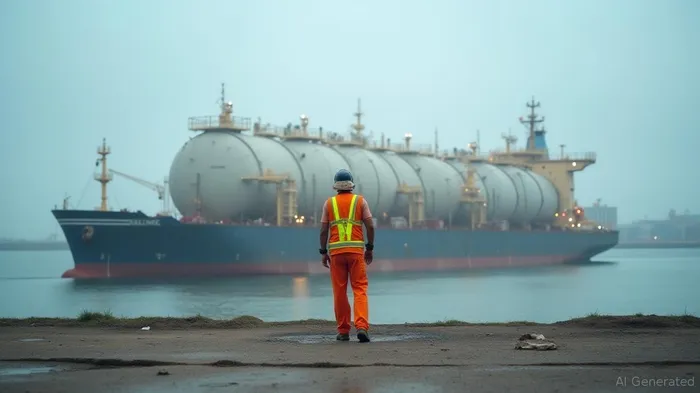
The U.S. is leveraging this leverage, effectively tying tariff relief to increased LNG purchases. This dynamic has already pressured prices, with a "no-deal" scenario projected to add €2-5/MMBtu to European costs. The volatility index for TTF prices hit 98% in June—higher even than during the 2022 energy crisis—reflecting market anxiety over this geopolitical tightrope.
Structural Shortages and the LNG Growth Crunch
Global LNG supply growth has stalled. In 2024, output expanded by just 2.5% (13 bcm), far below the 8% average of . The bottlenecks are systemic: project delays, feedgas shortages, and geopolitical disruptions (e.g., sanctions on Russia's Arctic LNG 2) have constrained new capacity. While 2025 may see a modest 5% growth (25 bcm) thanks to projects like Plaquemines LNG and LNG Canada, this will barely keep pace with demand. The EU's reduced storage capacity (down 15 bcm year-on-year) and the end of Ukrainian gas transit—losing 15 bcm annually—exacerbate the imbalance.
Energy Security and the Role of Policy
Governments are responding with urgency. The EU's push for renewables (targeting 45% by 2030) aims to reduce LNG dependency, but this transition will take time. Meanwhile, the IEA's Global Early Warning Mechanism and the UK-hosted 2025 International Summit on Energy Security underscore the urgency of addressing supply chain vulnerabilities. Biomethane and hydrogen subsidies are growing, but scalability remains a hurdle. For now, the market's focus remains on managing near-term risks through storage and trade deals.
Investment Implications: Positioning for Volatility and Long-Term Shifts
The key takeaway is this: structural shortages and geopolitical leverage will keep prices elevated despite cyclical demand dips. Investors should consider:
- Upstream Producers with Long-Term Contracts: Firms like Cheniere Energy (LNG exporter with 20-year agreements) and Tellurian (expanding Driftwood LNG) benefit from stable pricing and geopolitical tailwinds. Their stocks have historically tracked TTF prices, making them a direct play on supply tightness.
Export Infrastructure Plays: LNG terminals and storage assets—such as NextDecade's Rio Grande project—are critical to meeting global demand. These assets command premium pricing and offer inflation-hedging properties.
Short-Term Volatility Funds: Gas storage and trading firms like Vitol and Trafigura, which profit from price swings, could see heightened activity ahead of the July 9 deadline.
Risk Mitigation: Pair long positions in LNG exporters with short exposure to EU industrial stocks (e.g., ThyssenKrupp) vulnerable to input cost spikes. Allocate 5-10% of energy portfolios to gas-linked ETFs like UGAZ, but use stop-losses to limit downside.
The Bottom Line: Navigating the Fragile Equilibrium
European gas markets are caught in a precarious balance—between U.S. tariff threats, supply chain fragility, and the slow march toward renewables. The July 9 deadline is a critical inflection pointIPCX--, but even a “deal” may not erase the structural risks of a global LNG market operating near capacity. For investors, the path forward requires embracing volatility while betting on the energy transition's long game. Those positioned in assets that bridge the gap between today's geopolitical realities and tomorrow's renewable future will be best placed to profit.
As always, caveat emptor: the energy market's next chapter hinges as much on diplomacy as it does on supply curves.

Stay ahead of the market.
Get curated U.S. market news, insights and key dates delivered to your inbox.
AInvest
PRO
AInvest
PRO



Comments
No comments yet