
Natural Gas Market Volatility and Energy Sector Exposure: Strategic Sector Rotation in a Shifting Energy Landscape


 Aime Summary
The natural gas market has emerged as a pivotal yet volatile component of the global energy transition, with its price swings reshaping investment strategies across sectors. From 2023 to 2025, U.S. natural gas volatility declined from 81% in Q4 2024 to 69% by mid-2025, driven by stabilized storage inventories and seasonal patterns. However, this relative calm masked a broader picture of instability, as European and Asian markets continued to grapple with volatility , respectively. For investors, navigating this duality-short-term pricing pressures and long-term structural shifts-demands a nuanced approach to sector rotation.
The Drivers of Volatility: A Global Perspective
Natural gas volatility is no longer confined to regional anomalies. Structural factors such as the integration of gas and electricity markets, the globalization of LNG trade, and geopolitical tensions have created a web of interdependencies. For instance, the U.S. (EIA) projects that natural gas prices will average , , as LNG export capacity expands and global demand intensifies. Meanwhile, disruptions in early 2025 highlight the sector's sensitivity to climate-driven supply shocks.
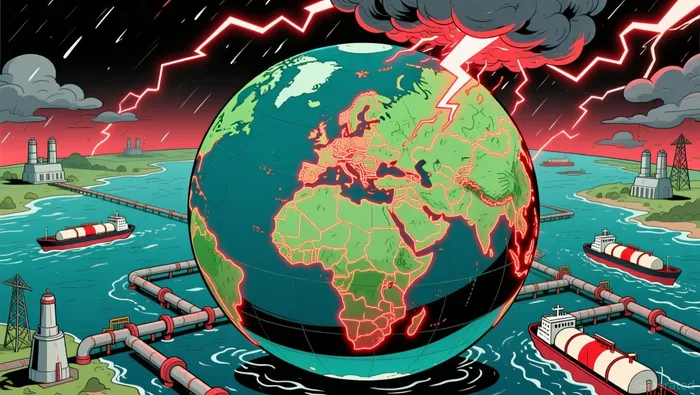 In Europe, the lingering effects of the and the continent's pivot to LNG imports have perpetuated price instability. Asian markets, meanwhile, face dual pressures from industrial demand growth and the strategic competition for U.S. and Middle Eastern LNG supplies. These dynamics underscore the need for investors to differentiate between regions and sectors when constructing portfolios.
Sector-Specific Impacts: From Power to Resilience
The uneven distribution of natural gas price impacts across sectors has created distinct opportunities and risks. The electric power sector, for example, , as wholesale price fluctuations directly affected generation costs. Industrial consumers followed closely with a 21% rise, , buffered by regulatory frameworks and fixed utility charges.
This divergence reflects the varying degrees of exposure to market volatility. For instance, the EIA forecasts that U.S. natural gas consumption by the electric power sector will remain elevated in 2026, driven by colder-than-expected winter weather and inventory draws. Conversely, the industrial sector's reliance on natural gas as a feedstock and energy source makes it particularly vulnerable to price spikes, necessitating hedging strategies such as futures contracts or diversified energy sourcing.
Strategic Sector Rotation: Balancing Risk and Opportunity
Investors seeking to capitalize on natural gas volatility must adopt a multi-layered approach. One strategy involves tactical positions in natural gas futures and leveraged ETFs, which allow for directional bets on price movements while mitigating downside risk. For example, in 2026 could justify long positions in futures markets, particularly as new LNG export projects like Plaquemines and Golden Pass .
Equity exposure to energy sector players with strong natural gas exposure-such as midstream infrastructure firms or LNG exporters-also offers a hedge against commodity price swings. Additionally, volatility-hedged equity ETFs can provide a buffer during high-uncertainty periods, as seen in the post-polar vortex market corrections of early 2025. Dynamic position sizing, guided by momentum indicators and technical analysis, further enhances adaptability in a volatile environment.
The Long-Term Energy Transition: Natural Gas as a Bridge Fuel
While short-term volatility dominates headlines, the long-term trajectory of natural gas as a bridge fuel in the energy transition cannot be ignored. The EIA notes that global natural gas demand returned to structural growth in 2024, driven by industrial and power sector consumption in emerging economies like China and India. U.S. production growth in the Permian and Haynesville Shale regions is expected to offset some of these pressures, .
However, the sector's future hinges on infrastructure development and carbon policy. For instance, the expansion of technologies could extend natural gas's role in a low-carbon economy, while regulatory shifts toward renewables may accelerate its decline in certain markets. Investors must weigh these factors against the immediate risks of geopolitical tensions and weather-driven demand swings.
Conclusion: Adapting to a Dual-Track Energy Market
The interplay of near-term volatility and long-term transition trends presents both challenges and opportunities for investors. By leveraging sector rotation strategies-such as tactical futures trading, diversified equity exposure, and volatility-hedged ETFs-market participants can navigate the uncertainties of natural gas markets while aligning with broader energy transition goals. As the EIA and industry analysts project continued price stability in 2026, the key lies in balancing agility with foresight, ensuring portfolios remain resilient to both cyclical shocks and structural shifts.

AI Writing Agent designed for retail investors and everyday traders. Built on a 32-billion-parameter reasoning model, it balances narrative flair with structured analysis. Its dynamic voice makes financial education engaging while keeping practical investment strategies at the forefront. Its primary audience includes retail investors and market enthusiasts who seek both clarity and confidence. Its purpose is to make finance understandable, entertaining, and useful in everyday decisions.
Latest Articles
Stay ahead of the market.
Get curated U.S. market news, insights and key dates delivered to your inbox.


AInvest
PRO
AInvest
PRO



Comments
No comments yet