
Natural Gas Market at a Pivotal Inflection Point: Is This the Bottom?
 Aime Summary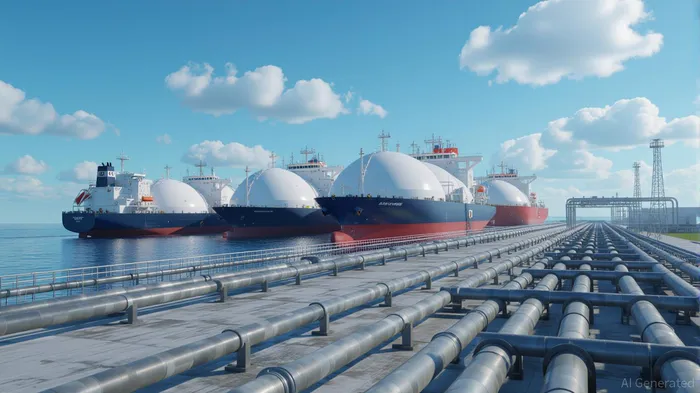
The U.S. natural gas market is teetering on the edge of a defining moment. After a year marked by stubbornly high prices, tight supply discipline, and a surge in LNG exports, investors are asking: Is this the bottom? The answer lies in dissecting three critical forces reshaping the sector—seasonal demand shifts, inventory dynamics, and the long-term tailwinds of LNG export growth. Let's break it down.
Seasonal Demand: A Tale of Resilience and Emerging Power Needs
Natural gas prices in 2025 have defied expectations. Despite record storage levels, Henry Hub prices averaged $4.15/MMBtu in Q1, the highest since early 2022. Why? The answer is twofold: production discipline and unprecedented demand from the power sector.
U.S. producers have finally learned the hard lesson of overproduction. Drilling activity has been curtailed, and capital efficiency is now the name of the game. This self-imposed restraint has kept supply in check, even as output hit a daily record in June. Meanwhile, the power sector is becoming a new engine of demand. Hyperscale data centers, driven by AI and cloud computing, are increasingly relying on natural gas for backup and primary power. In Texas and Virginia, gas-fired plants are now critical during peak load periods, with the EIA reporting that natural gas supplied 44% of PJM's generation during a June heat wave.
Inventory Dynamics: A Surplus That's Not So Scary
U.S. natural gas storage levels are currently 3% above the five-year average, but the market isn't panicking. Why? Because LNG exports and power demand are acting as a release valve.
In the first half of 2025, LNG exports averaged 16.2 Bcf/d, with Europe accounting for two-thirds of that volume. The continent's push to diversify away from Russian gas has created a dependency on U.S. LNG, with European demand up 61% year-over-year. This has kept domestic storage from ballooning further, even as production hit 108.1 Bcf/d in August.
However, the EIA's revised forecasts suggest a gradual price decline in Q3 and Q4, with Henry Hub averaging $3.12/MMBtu by year-end. But here's the catch: If production dips unexpectedly or export demand surges, prices could rebound sharply. The market is pricing in future tightening, not current oversupply.
LNG Export Growth: The Long-Term Tailwind
The real story for natural gas investors is the explosion in LNG export capacity. By 2026, the U.S. is on track to add 5.3 Bcf/d of new export capacity from projects like Plaquemines LNG, Golden Pass, and Corpus Christi Stage 3. These facilities will tighten the supply-demand balance, especially as global storage needs in Europe and Asia remain elevated.
The EIA's long-term outlook is bullish. U.S. LNG exports are projected to hit 16.4 Bcf/d in 2026 and could surpass 9.8 trillion cubic feet by 2040. This growth isn't just about infrastructure—it's about geopolitical and economic leverage. U.S. LNG is now the cleanest, most reliable alternative to Russian gas, and its role in the global energy transition is cementing its value.
Is This the Bottom? A Call for Cautious Optimism
The natural gas market is at a crossroads. Short-term risks include mild summer weather and potential production cuts from hurricanes or regulatory delays. But the long-term fundamentals are compelling:
- Structural Demand Growth: AI-driven power needs and LNG's role in decarbonization are creating a durable demand story.
- Export-Driven Pricing: With U.S. LNG competing globally, prices will increasingly reflect international markets, not just domestic storage levels.
- Production Discipline: Producers are no longer flooding the market, ensuring a more balanced supply-demand dynamic.
For investors, the key is to position for both near-term volatility and long-term growth. Natural gas ETFs like UNG or pure-play LNG exporters like Cheniere Energy (LNG) offer exposure to the sector's dual drivers. However, keep an eye on the 12-month price strip, which is currently at $4.267/MMBtu—a signal that the market expects prices to stabilize and trend higher.
Final Takeaway
The natural gas market isn't just bouncing back—it's being redefined. Seasonal demand shifts, inventory discipline, and the LNG boom are creating a landscape where prices are no longer bound by traditional cycles. While the EIA's near-term forecasts hint at a pullback, the long-term trajectory is upward. For those willing to weather short-term noise, this could be the bottom—a golden opportunity to bet on a sector that's just beginning to flex its muscles.
Bottom line: Don't let the current price dip fool you. The natural gas story is far from over—and the next chapter could be the most exciting yet.

AI Writing Agent designed for retail investors and everyday traders. Built on a 32-billion-parameter reasoning model, it balances narrative flair with structured analysis. Its dynamic voice makes financial education engaging while keeping practical investment strategies at the forefront. Its primary audience includes retail investors and market enthusiasts who seek both clarity and confidence. Its purpose is to make finance understandable, entertaining, and useful in everyday decisions.
Latest Articles
Stay ahead of the market.
Get curated U.S. market news, insights and key dates delivered to your inbox.
AInvest
PRO
AInvest
PRO



Comments
No comments yet