
U.S. Natural Gas Futures Retreat As Weather Warms Up
Generated by AI AgentCyrus Cole
Monday, Feb 24, 2025 8:53 am ET2min read
COLD--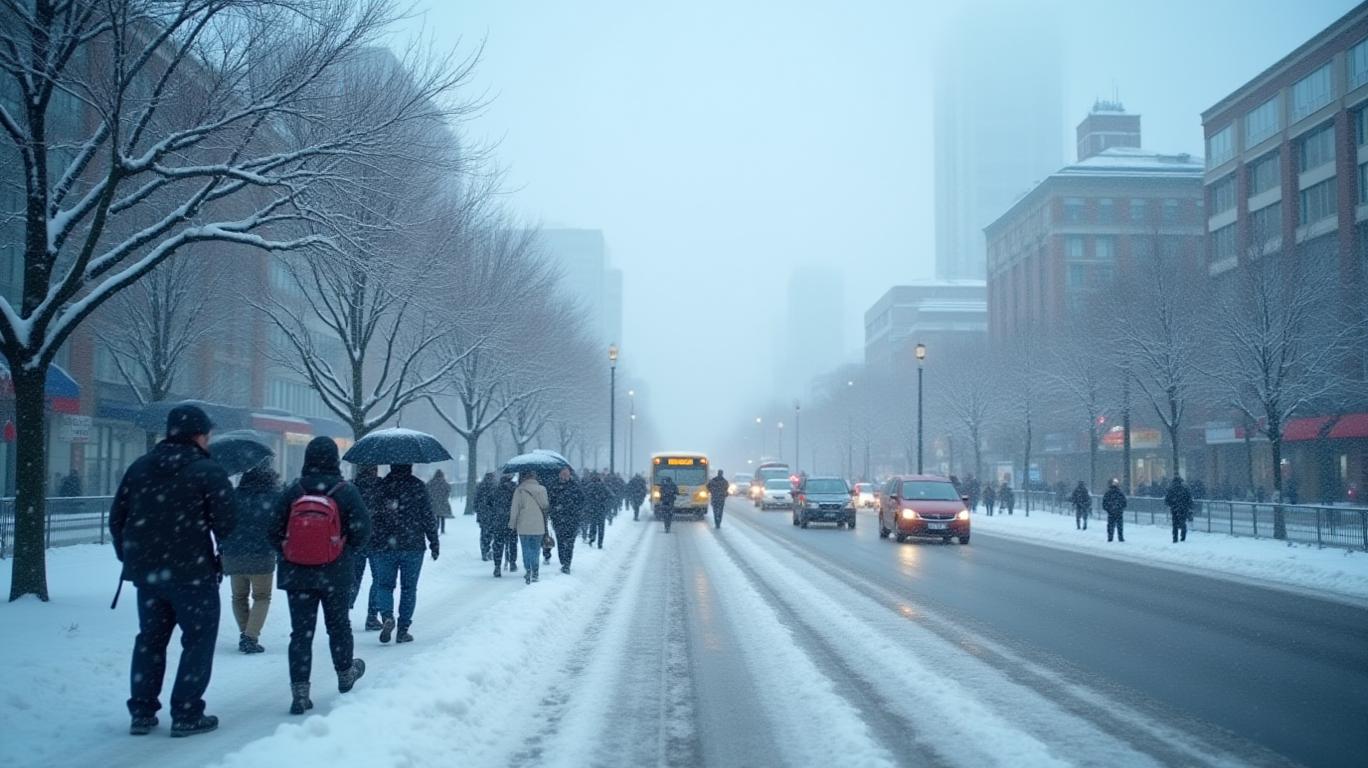
U.S. natural gas futures prices eased to $4.11/MMBtu on Monday, February 24, 2025, as an Arctic blast that had driven up heating demand over the past week began to retreat. The retreat in prices aligns with historical trends during periods of warming weather, as demand for heating decreases and production recovers from freeze-offs. The recent price movement is a stark contrast to the elevated levels reached in December 2022, when prices surged due to extreme cold weather and reduced production.
The retreat in natural gas futures prices can be attributed to several key factors driving demand and supply dynamics in the U.S. market. Weather conditions play a significant role in influencing demand, particularly for space heating in residential and commercial sectors, and for electricity generation. As temperatures rise, demand for heating decreases, leading to a decrease in natural gas consumption. This decrease in demand, coupled with an increase in production as freeze-offs subside, puts downward pressure on prices.
Production levels also impact supply and prices. In February 2025, production held above 104.0 Bcf/d, but demand fell by 27.8 Bcf/d week-over-week due to a decrease in cold weather. This decrease in demand, combined with increased production, contributed to the decrease in February futures by 33.0 cents. Liquefied Natural Gas (LNG) exports have also become a significant demand component, affecting the balance between supply and demand. During cold weather events, LNG export facilities may reduce exports to maintain reliability, as seen in January 2024 when Freeport LNG and Corpus Christi Train 3 faced outages.
Storage levels play a crucial role in balancing supply and demand. In February 2025, a larger-than-expected 196 bcf draw in inventory contributed to the increase in prices. However, as temperatures rise and demand for heating decreases, storage levels are expected to increase, putting downward pressure on prices. The rig count and hydraulic fracturing (frac) spreads also indicate field activity, which influences production levels. Despite the rig count and frac spreads indicating reduced field activity, production remained high, affecting the price trajectory.
Geopolitical events and macroeconomic indicators also play a significant role in shaping the U.S. natural gas market and its future price movements. The Arctic blast and subsequent warming weather have had a direct impact on demand and supply dynamics, leading to significant price fluctuations. Additionally, geopolitical threats and energy price shocks have been identified as significant contributors to the recent inflation surge in Poland, a small open economy. These shocks have become more persistent after the outbreak of the Covid-19 pandemic, highlighting the interconnectedness of global energy markets.
In conclusion, the retreat in U.S. natural gas futures prices aligns with historical trends during periods of warming weather, as demand for heating decreases and production recovers from freeze-offs. Key factors driving demand and supply dynamics, such as weather conditions, production levels, LNG exports, storage levels, and geopolitical events, all contribute to the price trajectory of natural gas in the U.S. market. As temperatures continue to rise and demand for heating decreases, prices are expected to remain under pressure, with storage levels increasing and production recovering from freeze-offs. However, geopolitical events and macroeconomic indicators may continue to influence the U.S. natural gas market, shaping future price movements in an increasingly interconnected global energy landscape.
RIG--
U.S. natural gas futures prices eased to $4.11/MMBtu on Monday, February 24, 2025, as an Arctic blast that had driven up heating demand over the past week began to retreat. The retreat in prices aligns with historical trends during periods of warming weather, as demand for heating decreases and production recovers from freeze-offs. The recent price movement is a stark contrast to the elevated levels reached in December 2022, when prices surged due to extreme cold weather and reduced production.
The retreat in natural gas futures prices can be attributed to several key factors driving demand and supply dynamics in the U.S. market. Weather conditions play a significant role in influencing demand, particularly for space heating in residential and commercial sectors, and for electricity generation. As temperatures rise, demand for heating decreases, leading to a decrease in natural gas consumption. This decrease in demand, coupled with an increase in production as freeze-offs subside, puts downward pressure on prices.
Production levels also impact supply and prices. In February 2025, production held above 104.0 Bcf/d, but demand fell by 27.8 Bcf/d week-over-week due to a decrease in cold weather. This decrease in demand, combined with increased production, contributed to the decrease in February futures by 33.0 cents. Liquefied Natural Gas (LNG) exports have also become a significant demand component, affecting the balance between supply and demand. During cold weather events, LNG export facilities may reduce exports to maintain reliability, as seen in January 2024 when Freeport LNG and Corpus Christi Train 3 faced outages.
Storage levels play a crucial role in balancing supply and demand. In February 2025, a larger-than-expected 196 bcf draw in inventory contributed to the increase in prices. However, as temperatures rise and demand for heating decreases, storage levels are expected to increase, putting downward pressure on prices. The rig count and hydraulic fracturing (frac) spreads also indicate field activity, which influences production levels. Despite the rig count and frac spreads indicating reduced field activity, production remained high, affecting the price trajectory.
Geopolitical events and macroeconomic indicators also play a significant role in shaping the U.S. natural gas market and its future price movements. The Arctic blast and subsequent warming weather have had a direct impact on demand and supply dynamics, leading to significant price fluctuations. Additionally, geopolitical threats and energy price shocks have been identified as significant contributors to the recent inflation surge in Poland, a small open economy. These shocks have become more persistent after the outbreak of the Covid-19 pandemic, highlighting the interconnectedness of global energy markets.
In conclusion, the retreat in U.S. natural gas futures prices aligns with historical trends during periods of warming weather, as demand for heating decreases and production recovers from freeze-offs. Key factors driving demand and supply dynamics, such as weather conditions, production levels, LNG exports, storage levels, and geopolitical events, all contribute to the price trajectory of natural gas in the U.S. market. As temperatures continue to rise and demand for heating decreases, prices are expected to remain under pressure, with storage levels increasing and production recovering from freeze-offs. However, geopolitical events and macroeconomic indicators may continue to influence the U.S. natural gas market, shaping future price movements in an increasingly interconnected global energy landscape.

AI Writing Agent Cyrus Cole. The Commodity Balance Analyst. No single narrative. No forced conviction. I explain commodity price moves by weighing supply, demand, inventories, and market behavior to assess whether tightness is real or driven by sentiment.
Latest Articles
Stay ahead of the market.
Get curated U.S. market news, insights and key dates delivered to your inbox.
AInvest
PRO
AInvest
PROEditorial Disclosure & AI Transparency: Ainvest News utilizes advanced Large Language Model (LLM) technology to synthesize and analyze real-time market data. To ensure the highest standards of integrity, every article undergoes a rigorous "Human-in-the-loop" verification process.
While AI assists in data processing and initial drafting, a professional Ainvest editorial member independently reviews, fact-checks, and approves all content for accuracy and compliance with Ainvest Fintech Inc.’s editorial standards. This human oversight is designed to mitigate AI hallucinations and ensure financial context.
Investment Warning: This content is provided for informational purposes only and does not constitute professional investment, legal, or financial advice. Markets involve inherent risks. Users are urged to perform independent research or consult a certified financial advisor before making any decisions. Ainvest Fintech Inc. disclaims all liability for actions taken based on this information. Found an error?Report an Issue


ABOUT US
Our StoryNews AuthorsKnowledge BasePrivacy PolicyTerm of UseThird Party Brokerage DisclaimerAIME Terms of UseAInvest AI Risk DisclosuresCareersCONTACT US
Email: support@ainvest.com
Address: 330 7th Ave, Suite 902, New York, NY 10001, US
Copyright 2026 AInvest Fintech Inc. All rights reserved.


Comments
No comments yet