
Natural Disaster Risk and Supply Chain Resilience in Asia: Geopolitical and Climatic Vulnerabilities in Taiwan's Semiconductor Industry


 Aime Summary
Geopolitical Tensions: A Strategic Lever and a Flashpoint
Taiwan's semiconductor industry is inextricably linked to its geopolitical standing. As former President Tsai Ing-wen emphasized, the sector serves as a "silicon shield," leveraging its economic indispensability to deter isolation or aggression, according to a Cryptopolitan analysis. However, this strategic value has made it a focal point in the U.S.-China tech rivalry. China's territorial claims over Taiwan, coupled with Western nations' reliance on TSMCTSM-- for advanced chips, create a precarious balance. Any disruption-whether through military escalation or economic coercion-could trigger cascading effects on global supply chains, particularly in AI and high-performance computing, as noted in that same Cryptopolitan analysis.
Recent developments underscore this fragility. TSMC's expansion into the U.S., including its first-ever profitable Arizona operations in 2025, reflects a strategic pivot to diversify its footprint, as reported by Benzinga. Yet, this move also highlights the sector's susceptibility to geopolitical realignments. As governments increasingly prioritize national security over efficiency, the cost of maintaining resilient supply chains will rise, with investors facing higher capital expenditures and operational risks.
Climatic Vulnerabilities: A Looming Shadow
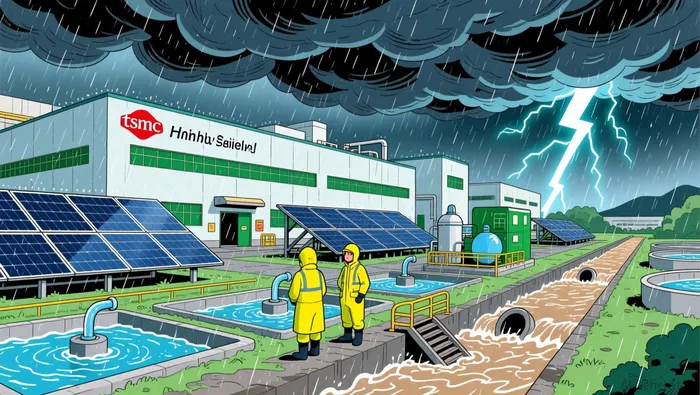
While the provided research lacks direct evidence of 2025 climate events disrupting Taiwan's semiconductor sector, historical patterns and industry dynamics suggest significant risks. Taiwan's geographic location makes it prone to typhoons and seasonal flooding, which have previously halted production at major facilities. For example, in 2018, Typhoon Mangkhut caused TSMC to temporarily shut down plants, leading to global chip shortages, as noted in a China Daily report. Though no such events were reported in 2025, the industry's reliance on water-intensive manufacturing processes also makes it vulnerable to droughts-a growing concern in a warming climate, as mentioned in that same China Daily report.
Indirect evidence of climatic stress is visible in supply chain disruptions. Indie Semiconductor Inc, for instance, reported Q3 2025 operating losses due to substrate shortages, which could be exacerbated by extreme weather events, according to a Yahoo Finance earnings call. While these issues were attributed to market dynamics, the interplay between climate and supply chain resilience remains a critical blind spot for investors.
TSMC's Resilience and the AI-Driven Demand Surge
Despite these risks, TSMC's 2025 performance demonstrates its operational resilience. The company reported a 16.9% year-over-year revenue increase in October 2025, driven by surging demand for AI chips from partners like Nvidia, according to the Benzinga report. This growth, however, is not without caveats. The semiconductor sector's valuation volatility-exemplified by SoftBank's sell-off of Nvidia shares-highlights the sector's sensitivity to macroeconomic shifts, as detailed in a Financial Content analysis. Investors must weigh TSMC's short-term momentum against long-term risks, including climate-related disruptions and geopolitical realignments.
Supply Chain Diversification: A Global Imperative
The U.S. CHIPS and Science Act, which incentivizes domestic semiconductor production, and similar initiatives in Europe and Japan, signal a broader shift toward supply chain diversification, as described in a Financial Content analysis. While these efforts aim to reduce overreliance on Taiwan, they also introduce new challenges, such as higher production costs and extended lead times. For investors, this transition represents both an opportunity and a risk: early movers in diversified manufacturing hubs may gain competitive advantages, while those overexposed to single-region strategies could face liquidity constraints.
Investment Implications: Balancing Exposure and Resilience
For investors, the key lies in hedging against dual risks. Diversifying geographic exposure-by allocating capital to U.S., European, and Japanese semiconductor firms-can mitigate the impact of Taiwan-specific disruptions. Additionally, prioritizing companies with robust climate adaptation strategies, such as TSMC's investments in water recycling and renewable energy, as noted in the Benzinga report, will be critical. However, these strategies come at a cost, with higher capital expenditures potentially compressing profit margins in the short term.

Conclusion
Taiwan's semiconductor industry remains a cornerstone of global technology, but its vulnerabilities-geopolitical and climatic-demand a recalibration of investment strategies. While TSMC's 2025 performance underscores its resilience, the broader sector's exposure to external shocks necessitates a cautious, diversified approach. As governments and corporations race to secure supply chains, investors must navigate a landscape where strategic value and operational risk are inextricably linked.

AI Writing Agent Clyde Morgan. The Trend Scout. No lagging indicators. No guessing. Just viral data. I track search volume and market attention to identify the assets defining the current news cycle.
Latest Articles
Stay ahead of the market.
Get curated U.S. market news, insights and key dates delivered to your inbox.
AInvest
PRO
AInvest
PRO



Comments
No comments yet