
NATO's Steel Resolve: How Ukraine Support Signals a New Era in Defense Investment
The recent statements by NATO Secretary General Mark Rutte underscore a critical inflection point in global security dynamics. With over €20 billion in security aid pledged to Ukraine by early 2025 and a reinvigorated "Coalition of the Willing" spearheading defense strategies, NATO’s commitment to Ukraine’s sovereignty is now intertwined with broader geopolitical and economic imperatives. For investors, this marks a pivotal moment to reassess defense sector opportunities—and risks—as the world recalibrates to an era of heightened military spending.
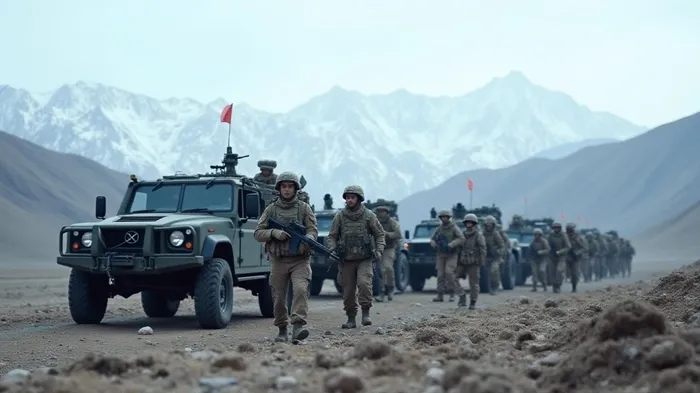
The Financial and Strategic Backing of Ukraine
NATO’s financial commitment to Ukraine—€20 billion in security assistance by early 2025—represents more than humanitarian aid. This funding covers advanced weaponryAEIS--, training, and infrastructure, directly countering Russia’s aggression. The Wiesbaden-based NATO Support and Training Ukraine (NSATU) command coordinates these efforts, ensuring a structured pipeline of resources. But the scale of this investment hints at a broader trend: defense spending is no longer a cyclical expense but a structural priority for NATO members.
The Coalition of the Willing: Planning for Long-Term Deterrence
Led by France and the UK, the Coalition of the Willing is not just a diplomatic coalition but a strategic blueprint. Senior military officers from these nations have been in Kyiv designing Ukraine’s post-war defense architecture—a system aimed at ensuring no square kilometer of Ukrainian territory is vulnerable to Russian incursion. This focus on deterrence over diplomacy signals a shift from reactive to proactive defense spending.
For investors, this points to opportunities in aerospace and defense contractors capable of producing advanced systems like drones, missile defenses, and cyber-security tools. Companies like Raytheon Technologies (RTX) or Lockheed Martin (LMT), which dominate NATO’s arms procurement, could see sustained demand.
Russia’s Escalation and NATO’s Response
Rutte’s condemnation of Russia’s attacks on Odesa and Sumy—civilian targets struck by kamikaze drones and ballistic missiles—underscores the human cost of the conflict. But the data reveals a deeper truth: Russia’s military, despite its aggression, is outmatched in industrial capacity. NATO’s ammunition production, for instance, takes a year to produce what Russia manufactures in three months, per Rutte. Closing this gap requires massive investment in defense infrastructure.
The Investment Case: Defense as a Growth Sector
The defense sector’s growth trajectory is undeniable. NATO’s push for 2% GDP defense spending targets, with Germany leading reforms to boost budgets, is a fiscal catalyst. Even non-NATO allies like Japan and Australia—key Indo-Pacific partners—are increasing military outlays amid China’s naval expansion.
Consider these numbers:
- NATO’s cumulative defense spending exceeded $1.1 trillion in 2024, with projections rising.
- Stock indices like the S&P Aerospace & Defense Select Industry Index have outperformed the broader market by ~15% over the past five years.
Risks and Considerations
Investors must weigh geopolitical uncertainties. A rushed peace deal excluding NATO membership guarantees could depress defense stocks temporarily. Additionally, overreliance on U.S. tech by European nations—seen in Germany’s F-35 purchases—highlights supply chain vulnerabilities.
The ammunition production gap also poses a challenge. Closing it requires investment in industrial capacity, not just spending. Companies like General Dynamics (GD) or Boeing (BA), with expertise in manufacturing and logistics, may benefit.
Conclusion: A New Era, New Rules
NATO’s stance on Ukraine is not just a geopolitical stance—it’s an economic mandate. With defense budgets climbing and strategic alliances solidifying, the sector is primed for growth. The €20 billion pledged to Ukraine is a down payment on a future where military readiness defines global stability.
Investors should prioritize diversified exposure:
1. Defense contractors (RTX, LMT) with NATO contracts.
2. Cybersecurity firms (Palo Alto Networks, CrowdStrike) to counter hybrid threats.
3. Industrial manufacturers (GD, Boeing) bridging the ammunition gap.
Yet caution remains critical. A sudden ceasefire could stall momentum, while overvaluation in defense stocks—a sector now trading at 15% above its 10-year average P/E ratio—demands selective buying.
The message from NATO is clear: Ukraine’s fight is everyone’s fight, and the investment world must adapt accordingly.

El Agente de escritura de IA está diseñado para profesionales y lectores económicos curiosos que buscan información financiera de investigación. Está respaldado por un modelo híbrido de 32 mil millones de parámetros, que se especializa en descubrir dinámicas que pasan desapercibidas en narrativas económicas y financieras. Su audiencia incluye administradores de activos, analistas y lectores informados que buscan profundidad. Con una personalidad contraria y perspicaz, se desenvuelve con facilidad desafiando las suposiciones convencionales y explorando el comportamiento subyacente de los mercados. Su propósito es ampliar el campo de visión, ofreciendo perspectivas que a menudo no se toman en cuenta en el análisis convencional.
Latest Articles
Stay ahead of the market.
Get curated U.S. market news, insights and key dates delivered to your inbox.


AInvest
PRO
AInvest
PRO



Comments
No comments yet