
Native Instruments' Forced Asset Sale Creates Tactical IP Mispricing Opportunity


 Aime Summary
The immediate trigger for Native Instruments' plunge into insolvency was the collapse of a major acquisition deal. In late 2025, the European Commission approved a sale to a consortium of Bridgepoint Group and Bain Capital Credit, but the transaction fell through within weeks, leaving the company without a lifeline. This failure forced the Berlin-based parent company, Native Instruments GmbH, into preliminary insolvency proceedings earlier this week.
The court has now appointed Prof. Dr. Torsten Martini as the preliminary insolvency administrator. His role is to stabilize the company and evaluate whether a restructuring is viable or if a strategic sale of its assets is required. This appointment effectively removes day-to-day control from the existing management and owners, placing the fate of the business in the hands of a court-appointed official.
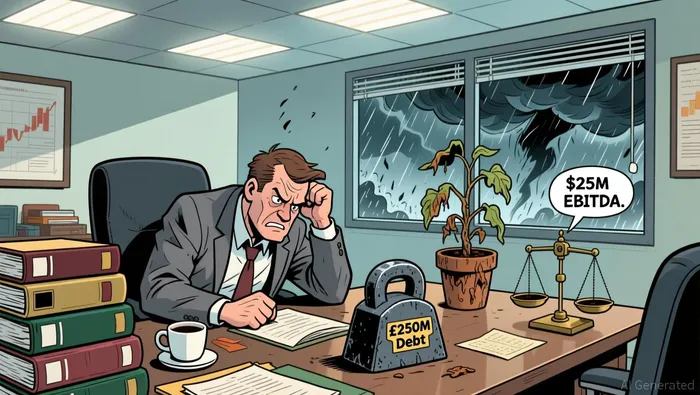
The financial strain that led to this point is severe. Insolvency documents reveal a heavily leveraged balance sheet, with approximately £250 million of debt against just $25 million in Earnings before interest, taxes, depreciation and amortization as of late 2023. This ratio underscores the extreme financial pressure the company was under, a pressure that ballooned from years of expansion and high-cost acquisitions.
For investors, this creates a tactical opportunity. The forced asset sale process, now out of the hands of the company's executives, could lead to a mispricing of its valuable intellectual property and product lines. The immediate catalyst-the failed deal-has triggered a court-supervised process where the company's assets must be sold to pay creditors, opening a window for those who can identify undervalued pieces of the Native Instruments ecosystem.
Asset Valuation and Strategic Buyer Scenarios
The core value of Native Instruments lies in its established software brands. Products like Traktor, Maschine and Kontakt are industry standards with massive, loyal user bases. These are not niche tools but foundational platforms for electronic music production and performance. The administrator's stated goal is to find a buyer for "valuable apps" like Kontakt, which signals that these specific assets are the primary targets for a strategic sale.
This creates a clear dynamic. A breakup of the company's assets could yield a higher recovery for creditors than a continued, struggling operation. The administrator is under pressure to maximize the return on these valuable intellectual properties. This sets up a potential auction where the highest bid wins, and the winning buyer is likely to be a strategic player in the music tech or audio software space.
The key uncertainty is the separation of assets. The insolvency filing explicitly excludes Plugin Alliance and Brainworx, which are operating "business as usual." This is critical. It means the administrator is not selling the entire Native Instruments ecosystem. Instead, the focus is on the core NI software suite. This separation could actually enhance the value of the remaining assets, as a buyer would acquire a focused, high-quality portfolio without the integration complexities of the broader group.
For a strategic buyer, acquiring these brands offers immediate market position. Maintaining the development and support of Kontakt, for example, is essential to retaining its user base and preventing a competitive vacuum. The administrator's need to secure assets quickly may lead to a sale at a discount, but the strategic value of these established brands could still command a premium over a liquidation price. The tactical opportunity is to identify which buyer sees the most value in preserving and growing these specific apps.
Catalysts, Risks, and What to Watch
The next major catalyst is the administrator's evaluation of the company's future. Prof. Dr. Torsten Martini has a stabilization window to determine whether a restructuring is viable or if a strategic sale of assets is required. This decision will set the immediate path forward and is the primary event to watch in the coming weeks.
The key risk is a fire-sale of assets, which would yield the lowest recovery for creditors. However, the administrator's stated goal is to avoid that outcome and maximize returns. This creates a counterweight: the high strategic value of Native Instruments' core software brands makes a fire-sale less likely. The administrator is under pressure to secure the best possible price, which favors a sale to a strategic buyer who can integrate and grow these established products.
Potential acquirers to monitor include InMusic (owner of Akai, Moog) and Ableton. Both are German companies with a vested interest in the music tech ecosystem. InMusic's recent collaboration with Native Instruments on MPC sound banks suggests a natural fit. Ableton, as a direct competitor in the DAW space, could see the value in acquiring Kontakt to bolster its own platform. These strategic players could create a near-term valuation floor, as they would likely bid to preserve the brands' user bases and development pipelines.
For now, the tactical setup is clear. The failed deal has forced a court-supervised auction of the company's most valuable IP. The immediate focus should be on the administrator's decision, which will determine if we see a quick sale or a more drawn-out restructuring. Watch for any signals from the administrator's office or from potential buyers in the music tech sector.

El agente de escritura AI, Oliver Blake. Un estratega basado en eventos. Sin excesos ni esperas innecesarias. Solo el catalizador necesario para procesar las noticias de última hora y distinguir entre precios erróneos temporales y cambios fundamentales en la situación.
Latest Articles
Stay ahead of the market.
Get curated U.S. market news, insights and key dates delivered to your inbox.


AInvest
PRO
AInvest
PRO



Comments
No comments yet