
National Grid's £8 Billion Substation Expansion and Its Implications for Energy Infrastructure Contractors
 Aime Summary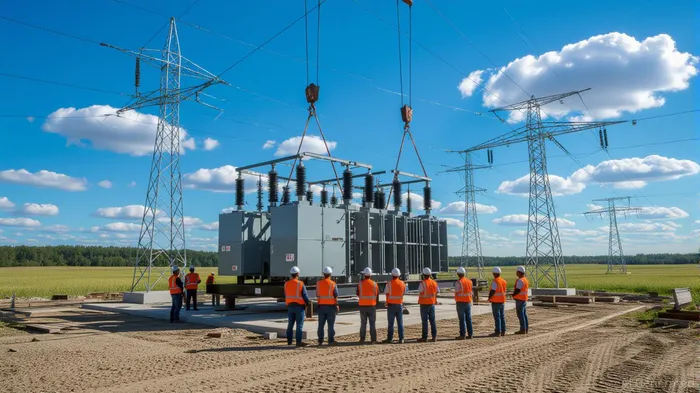
The UK's energy infrastructure landscape is undergoing a seismic shift as National Grid's £8 billion Electricity Transmission Partnership (ETP) accelerates the transition to a clean energy future. Launched in July 2025 as part of its broader £35 billion RIIO-T3 investment plan, the ETP represents a bold reimagining of how critical infrastructure is delivered. By awarding regional exclusivity to key contractors like Balfour Beatty, Morgan Sindall, and Murphy, National GridNGG-- is not only fast-tracking substation upgrades but also creating a predictable revenue stream for these firms. For investors, this initiative signals a rare alignment of policy ambition, long-term capital certainty, and decarbonization imperatives.
A New Model for Grid Modernization
The ETP's regional delivery framework is a departure from traditional infrastructure procurement. By granting partners like Balfour Beatty (North East), Morgan Sindall (North West), and Murphy (South West and London & South East) first refusal rights on substation work, National Grid is fostering a supply chain ecosystem that rewards performance and innovation. This model incentivizes long-term investment in local skills and technology, while reducing the fragmentation of the construction market. For example, Balfour Beatty, already engaged in all three lots of National Grid's £1.5 billion RIIO-2 framework, has signaled its intent to leverage this exclusivity to scale operations and adopt next-gen grid solutions.
The ETP's phased rollout—spanning 130 projects over five years—ensures a steady pipeline of work for these contractors. With £1.3 billion of contracts already allocated and a regulatory framework that guarantees returns through the 2031 RIIO-T3 period, the financial stability of these firms is underpinned by a toll-like infrastructure model. This contrasts sharply with the volatility of traditional energy markets, making these stocks attractive for risk-averse investors.
Broader Market Tailwinds
Beyond the ETP, the UK energy infrastructure market is primed for exponential growth. The Power Transformer Market alone is projected to expand from $404.8 million in 2024 to $886.4 million by 2035, driven by renewable integration, grid modernization, and EV infrastructure. National Grid's focus on substation upgrades aligns with these trends, creating indirect beneficiaries such as transformer manufacturers and smart grid technology providers. For instance, firms like ABB and Siemens, which supply critical components for substations, could see increased demand as the ETP scales.
Risk Mitigation and Strategic Positioning
While the ETP offers long-term visibility, investors must remain cognizantCTSH-- of regulatory and technological risks. Delays in hydrogen infrastructure deployment or underperformance in battery storage could slow the transition to renewables. However, the ETP's performance-linked exclusivity model mitigates some of these risks by tying contractor rewards to innovation and efficiency. Additionally, the inclusion of national partners like Linxon and Burns & McDonnell ensures geographic redundancy, reducing the impact of regional bottlenecks.
Investment Thesis: A Dual-Track Approach
For investors, the ETP creates a dual opportunity:
1. Direct Exposure: Regional delivery partners (Balfour Beatty, Morgan Sindall, Murphy) offer a blend of stable cash flows and growth potential. Their involvement in multiple National Grid frameworks (RIIO-2 and RIIO-T3) ensures diversification within the grid modernization sector.
2. Indirect Exposure: Upstream suppliers (e.g., Siemens, ABB) and downstream innovators (smart grid firms) benefit from the ETP's broader infrastructure needs. These stocks provide exposure to the decarbonization megatrend without the operational risks of construction firms.
Conclusion: A Cornerstone of the UK's Energy Transition
National Grid's ETP is more than a construction program—it is a blueprint for how infrastructure can drive both economic and environmental progress. By locking in long-term partnerships and aligning with the UK's net-zero goals, the initiative creates a robust foundation for value creation. For investors, the key lies in balancing direct and indirect exposure while monitoring regulatory and technological developments. As the UK races to meet its 2030 renewable targets, the ETP's regional delivery model positions its contractors—and their shareholders—as central players in this transformative journey.

Delivering real-time insights and analysis on emerging financial trends and market movements.
Latest Articles
Stay ahead of the market.
Get curated U.S. market news, insights and key dates delivered to your inbox.
AInvest
PRO
AInvest
PRO



Comments
No comments yet