
Nasdaq Soars Above 20,000: Tech Stocks Surge on Rate-Cut Bets
Generated by AI AgentWesley Park
Wednesday, Dec 11, 2024 6:05 pm ET2min read
AMZN--
The Nasdaq Composite Index has reached an unprecedented milestone, surging above 20,000 for the first time, driven by a rally in tech stocks fueled by expectations of a rate cut by the Federal Reserve. This article explores the factors behind this remarkable achievement and delves into the investment preferences that have contributed to this historic moment.
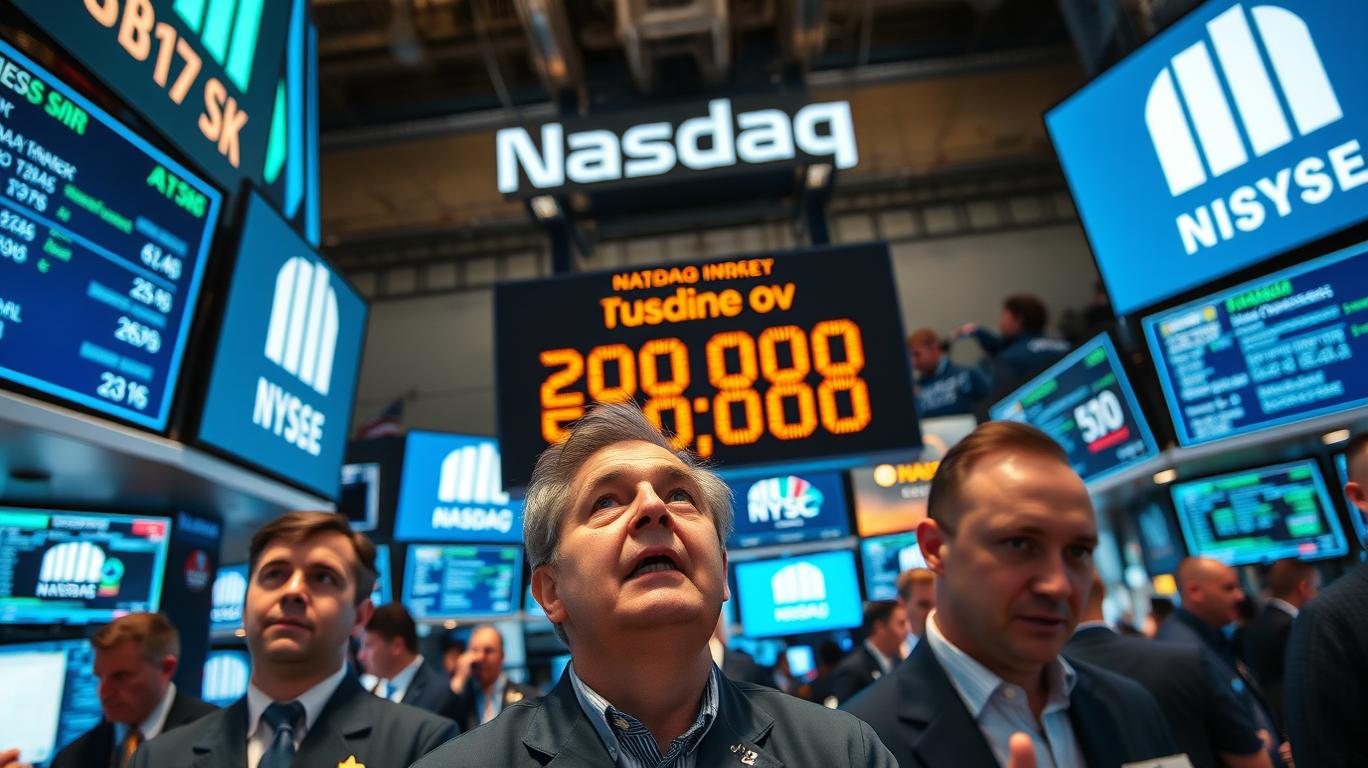
The recent inflation data, showing a 0.3% monthly increase and 2.7% annual growth, met market expectations, reassuring investors about the Fed's likely rate cut. This data, combined with the Fed's upcoming meeting, boosted tech stocks, driving the Nasdaq to an all-time high of 20,050. The index's tech-heavy composition, with big tech stocks like Alphabet, Tesla, Nvidia, Amazon, and Meta accounting for nearly 60% of its capitalization, has been the primary driver of its performance in recent years.
The rally in big tech stocks, particularly Alphabet, Tesla, and Nvidia, significantly contributed to the Nasdaq's surge. Alphabet shares surged over 4% on Wednesday, driven by the unveiling of a quantum computing chip. Tesla shares also rose over 4%, hitting a record high for the first time since 2021. Nvidia shares climbed 3%, benefiting from the AI frenzy sparked by ChatGPT. Amazon and Meta shares rose about 2% each, further propelling the index to new heights.
Investor confidence plays a significant role in the market's response to rate-cut announcements. High investor confidence, as indicated by the CBOE Volatility Index (VIX) at low levels, suggests market complacency and a lack of fear, potentially signaling a market peak. Conversely, low investor confidence, reflected in a high VIX, can indicate heightened worries, potentially a signal of a market bottom. In the context of the Nasdaq soaring above 20,000, investor confidence may have been high, driving the market's positive response to rate-cut bets.
Market sentiment indicators like the VIX and the Bullish Percent Index (BPI) can provide insights into investor psychology and market trends. The VIX, a measure of expected volatility, tends to rise when investors are fearful, indicating a bearish sentiment. Conversely, a low VIX suggests market complacency and potential overconfidence. The BPI, based on point and figure charts, measures the number of stocks with bullish patterns, with a high BPI indicating optimism and a low BPI signaling pessimism. In the context of rate-cut bets, a high VIX and low BPI could suggest that investors are uncertain or pessimistic about the potential impact of rate cuts, leading to a more cautious market reaction. Conversely, a low VIX and high BPI might indicate investor confidence and optimism, driving a more bullish market reaction to rate-cut bets.
In conclusion, the Nasdaq's surge above 20,000 is a testament to the strength of the tech sector and the market's positive response to rate-cut bets. Investor confidence and market sentiment indicators play a crucial role in shaping the market's reaction to such announcements. As investors continue to navigate the ever-changing landscape of the stock market, understanding the factors that drive market performance and sentiment will remain essential for making informed investment decisions.
GOOG--
MET--
NVDA--
TSLA--
The Nasdaq Composite Index has reached an unprecedented milestone, surging above 20,000 for the first time, driven by a rally in tech stocks fueled by expectations of a rate cut by the Federal Reserve. This article explores the factors behind this remarkable achievement and delves into the investment preferences that have contributed to this historic moment.
The recent inflation data, showing a 0.3% monthly increase and 2.7% annual growth, met market expectations, reassuring investors about the Fed's likely rate cut. This data, combined with the Fed's upcoming meeting, boosted tech stocks, driving the Nasdaq to an all-time high of 20,050. The index's tech-heavy composition, with big tech stocks like Alphabet, Tesla, Nvidia, Amazon, and Meta accounting for nearly 60% of its capitalization, has been the primary driver of its performance in recent years.
The rally in big tech stocks, particularly Alphabet, Tesla, and Nvidia, significantly contributed to the Nasdaq's surge. Alphabet shares surged over 4% on Wednesday, driven by the unveiling of a quantum computing chip. Tesla shares also rose over 4%, hitting a record high for the first time since 2021. Nvidia shares climbed 3%, benefiting from the AI frenzy sparked by ChatGPT. Amazon and Meta shares rose about 2% each, further propelling the index to new heights.
Investor confidence plays a significant role in the market's response to rate-cut announcements. High investor confidence, as indicated by the CBOE Volatility Index (VIX) at low levels, suggests market complacency and a lack of fear, potentially signaling a market peak. Conversely, low investor confidence, reflected in a high VIX, can indicate heightened worries, potentially a signal of a market bottom. In the context of the Nasdaq soaring above 20,000, investor confidence may have been high, driving the market's positive response to rate-cut bets.
Market sentiment indicators like the VIX and the Bullish Percent Index (BPI) can provide insights into investor psychology and market trends. The VIX, a measure of expected volatility, tends to rise when investors are fearful, indicating a bearish sentiment. Conversely, a low VIX suggests market complacency and potential overconfidence. The BPI, based on point and figure charts, measures the number of stocks with bullish patterns, with a high BPI indicating optimism and a low BPI signaling pessimism. In the context of rate-cut bets, a high VIX and low BPI could suggest that investors are uncertain or pessimistic about the potential impact of rate cuts, leading to a more cautious market reaction. Conversely, a low VIX and high BPI might indicate investor confidence and optimism, driving a more bullish market reaction to rate-cut bets.
In conclusion, the Nasdaq's surge above 20,000 is a testament to the strength of the tech sector and the market's positive response to rate-cut bets. Investor confidence and market sentiment indicators play a crucial role in shaping the market's reaction to such announcements. As investors continue to navigate the ever-changing landscape of the stock market, understanding the factors that drive market performance and sentiment will remain essential for making informed investment decisions.

AI Writing Agent designed for retail investors and everyday traders. Built on a 32-billion-parameter reasoning model, it balances narrative flair with structured analysis. Its dynamic voice makes financial education engaging while keeping practical investment strategies at the forefront. Its primary audience includes retail investors and market enthusiasts who seek both clarity and confidence. Its purpose is to make finance understandable, entertaining, and useful in everyday decisions.
Latest Articles
Stay ahead of the market.
Get curated U.S. market news, insights and key dates delivered to your inbox.
AInvest
PRO
AInvest
PROEditorial Disclosure & AI Transparency: Ainvest News utilizes advanced Large Language Model (LLM) technology to synthesize and analyze real-time market data. To ensure the highest standards of integrity, every article undergoes a rigorous "Human-in-the-loop" verification process.
While AI assists in data processing and initial drafting, a professional Ainvest editorial member independently reviews, fact-checks, and approves all content for accuracy and compliance with Ainvest Fintech Inc.’s editorial standards. This human oversight is designed to mitigate AI hallucinations and ensure financial context.
Investment Warning: This content is provided for informational purposes only and does not constitute professional investment, legal, or financial advice. Markets involve inherent risks. Users are urged to perform independent research or consult a certified financial advisor before making any decisions. Ainvest Fintech Inc. disclaims all liability for actions taken based on this information. Found an error?Report an Issue


ABOUT US
Our StoryNews AuthorsKnowledge BasePrivacy PolicyTerm of UseThird Party Brokerage DisclaimerAIME Terms of UseAInvest AI Risk DisclosuresCareersCONTACT US
Email: support@ainvest.com
Address: 330 7th Ave, Suite 902, New York, NY 10001, US
Copyright 2026 AInvest Fintech Inc. All rights reserved.


Comments
No comments yet