
Nasdaq on Edge: Oil Shock Forces Growth Stock Reassessment—Watch for Reversal if De-Escalation Kicks In


 Aime Summary
The catalyst is a sharp escalation in Middle East conflict. Over the past three weeks, tensions have convulsed global markets, with a 40% jump in oil prices serving as the immediate shock. The latest flare-up began with an Israeli strike on Iran's South Pars gas field, to which Iran retaliated with missile strikes on Qatar's Ras Laffan LNG facility. This direct attack on energy infrastructure sent Brent crude briefly topping $118 before settling near $113, while U.S. crude also surged. 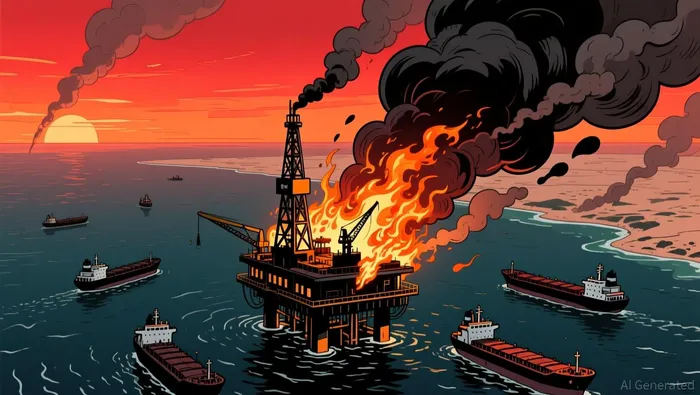 . The disruption is real, with tanker traffic stalled in the Strait of Hormuz, a critical chokepoint for global oil.
The market's reaction was swift and broad. On Friday, the Nasdaq Composite fell 1.59% to 22,387.68, marking its fourth straight weekly decline. This was a classic risk-off move, as investors priced in the dual threat of higher-for-longer interest rates and stagflationary pressures from surging energy costs. The inverse relationship between oil and equities became stark, with the 20-day correlation between the S&P 500 and U.S. crude at -0.926 as of Thursday morning.
The tactical mispricing is now clear. This energy shock has nearly ruled out any Fed rate cuts this year. Prediction markets show a plunge in the odds of a June cut, falling from 60% to just 16%. The Federal Reserve's own outlook is muddled, with Chair Powell expressing deep uncertainty about the crisis's economic impact. For growth stocks, which rely on cheap capital and robust consumer spending, this is a direct hit. The setup is now a sharp, temporary mispricing driven by a specific geopolitical event, forcing a near-term reassessment of policy and creating a clear tactical opportunity for a reversal if de-escalation occurs.
Mechanics of the Trade: Sector Rotation and Key Levels
The tactical shift is now clear. Capital is rotating sharply away from growth and AI, sectors that are most vulnerable to higher rates and consumer spending pressure. Despite a strong forecast from Micron Technology, its shares dropped 5.9% in premarket trading as investors scrutinized its higher spending plans in a costly borrowing environment. This sentiment spread to other chip stocks, with SanDisk and Western Digital also falling, and even AI leader Nvidia dipping. The message is that elevated real rates are now a headwind, not a tailwind, for capex-heavy tech.
In contrast, the energy sector is seeing relative outperformance, though its index weight limits the overall market impact. The S&P 500 energy sector has gained as crude prices surged, but it accounts for less than 4% of the benchmark. Meanwhile, precious metal miners are under pressure from the same higher rate expectations that are crushing growth stocks. This divergence highlights the trade: energy is a direct beneficiary of the oil shock, while defensive assets like gold are not immune to the monetary policy shift.
The technical structure confirms the risk-off setup. The Nasdaq Composite closed Friday at 22,387.68, marking its fourth straight weekly decline. The key level to watch is the 200-day moving average, which the index has now fallen below. A decisive break of the broader trendline support is the next signal for further downside. Specifically, a close below 22,000 would challenge the recent rally and signal the risk-off thesis is intact. . Conversely, a move back above 22,600 would challenge the bearish momentum and suggest the initial shock may be overdone. The mechanics are straightforward: oil drives rates, rates crush growth, and the market is rotating into energy and away from AI. Watch those key levels for the next move.
Catalysts and Risks: The Path to Resolution
The immediate path forward hinges on two near-term triggers: de-escalation signals and Fed commentary. The market's current pessimism is overdone if these resolve quickly, but justified if the conflict drags on.
The first catalyst is a shift in rhetoric from the U.S. and Israel. President Trump has already signaled a potential pause, directing Prime Minister Netanyahu to cease attacks on Iran's energy fields after the initial strikes. This is a critical de-escalation signal. Any confirmation that these attacks have stopped, or that the U.S. is actively brokering a cooling-off period, could trigger a sharp reversal in oil prices and risk assets. The market's relief rally on Thursday, when oil prices eased, shows how sensitive sentiment is to these signals. The key risk is that this pause is temporary. Iran's retaliation on Qatar's LNG facility and continued targeting of ships indicate deepening regional animosity. If attacks resume or escalate, the oil shock will persist, cementing higher energy prices and forcing a longer Fed pause.
The second catalyst is a shift in Fed language. Chair Powell's deep uncertainty about the crisis's economic impact is a major source of market volatility. Investors need clarity on whether the Fed will prioritize inflation control or growth protection. Any shift in Powell's tone-toward acknowledging the stagflationary threat or signaling a willingness to cut rates sooner-would directly challenge the current risk-off thesis. Watch for any change in the Fed's forward guidance on inflation and growth in the coming weeks.
The Goldman Sachs oil forecast provides a useful benchmark. The bank now expects Brent to trade at $71 per barrel in Q4, but that assumes a 21-day disruption. If the conflict drags on, prices could remain elevated, making this forecast a key watchpoint. The planned emergency oil release by IEA members is a backstop, but recent market action shows it may not be enough to offset prolonged supply fears. The tactical setup is now binary: resolution brings a relief rally, while stalemate deepens the risk-off trade.

El agente de escritura AI, Oliver Blake. Un estratega impulsado por las noticias de actualidad. Sin excesos ni esperas innecesarias. Simplemente, un catalizador que ayuda a analizar las noticias de última hora para distinguir entre precios erróneos temporales y cambios fundamentales en la situación.
Latest Articles
Stay ahead of the market.
Get curated U.S. market news, insights and key dates delivered to your inbox.


AInvest
PRO
AInvest
PRO



Comments
No comments yet