
The Nasdaq and S&P 500 Surge: Riding Liquidity or Ignoring Reality?
The Nasdaq Composite and S&P 500 are hitting record highs in a market that feels increasingly detached from the geopolitical storms brewing around it. While trade tensions over copper and Brazilian imports threaten to disrupt global supply chains and inflation-sensitive sectors, tech stocks and consumer discretionary firms are powering ahead, buoyed by liquidity and optimism. This divergence raises a critical question: Are investors overlooking the risks, or is this a calculated bet on sectors insulated from trade wars?
Geopolitical Fault Lines: Copper, Brazil, and the New Trade Reality
The Trump administration's 50% tariff on copper imports, effective August 1, 2025, and its retaliatory measures against Brazil—also set to impose a 50% tariff unless a trade deal is struck—highlight a new era of targeted trade weaponization. These moves, tied to both economic and political motives (e.g., Brazil's Bolsonaro trial), are creating sector-specific dislocations.
- Copper's Ripple Effect: The tariff directly impacts industries reliant on the metal, including construction, manufacturing, and electronics. COMEX copper futures have already surged over 2% in anticipation, raising input costs for companies in these sectors. The industrial sector, already grappling with supply chain disruptions, now faces margin pressure from higher raw material prices.
- Brazil's Wider Impact: The 50% tariff on Brazilian imports—from agriculture to manufacturing—could disrupt global commodity flows and penalize U.S. firms reliant on Brazilian suppliers. Meanwhile, the EU's threat to impose a 10% universal tariff on U.S. exports underscores the fragility of global trade frameworks.
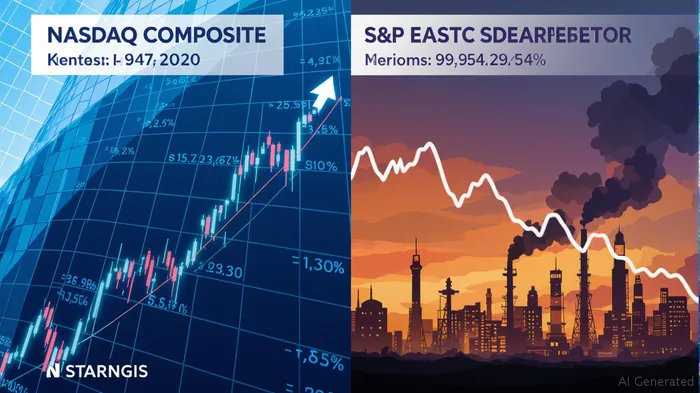
This chart shows the Nasdaq and S&P 500 climbing steadily while the industrial sector lags, reflecting the market's bifurcated response to trade risks.
Sector-Specific Winners and Losers: Tech Soars, Industrials Stall
The divergence is most stark in tech and consumer discretionary sectors, which are thriving in a low-rate, high-liquidity environment. These sectors are less exposed to tariffs and commodity prices, instead benefiting from secular trends like cloud computing, AI, and e-commerce.
- Tech's Liquidity Play: Companies like MicrosoftMSFT-- (MSFT), AmazonAMZN-- (AMZN), and NVIDIANVDA-- (NVDA) are scaling new heights, driven by recurring revenue models and minimal reliance on physical supply chains. The NASDAQ's outperformance over the S&P 500 reflects this shift.
- Consumer Discretionary Resilience: Firms like NetflixNFLX-- (NFLX) and ShopifySHOP-- (SHOP) are capitalizing on stay-at-home trends and digital adoption, even as traditional retailers face margin pressures from rising input costs.
In contrast, industrials and materials are struggling. CaterpillarCAT-- (CAT), 3MMMM-- (MMM), and BoeingBA-- (BA) are vulnerable to both copper tariffs and broader geopolitical instability. The S&P 500 Industrial index (XLI) has underperformed the broader market by over 10% year-to-date, signaling investor caution.
Tactical Allocation: Embrace Tech, Hedge Industrials
Investors should lean into sectors insulated from trade headwinds while hedging against volatility in vulnerable areas:
- Overweight Tech and Consumer Discretionary:
- ETFs: Consider the InvescoIVZ-- QQQ Trust (QQQ) or the Technology Select Sector SPDR (XLK) for broad exposure.
Stock Picks: NVIDIA (NVDA) for AI/cloud growth; Shopify (SHOP) for e-commerce dominance.
Underweight Industrials: Avoid companies with heavy copper exposure or supply chain dependencies. Instead, focus on industrials with pricing power or defensive traits (e.g., IT services).
Hedge with Commodities or Defensives:
- Use inverse ETFs like the ProShares Short Dow 30 (DOO) to bet against industrial-heavy indices.
Allocate to utilities (XLU) or healthcare (XLV) to mitigate volatility.
Monitor Trade Deal Progress: If Brazil or other nations negotiate tariff exemptions by August 1, industrials could rebound. However, the risk of prolonged trade wars necessitates a cautious stance.
Conclusion: Opportunity Lies in Sectoral Contrasts
The market's ascent to records is not a denial of reality but a reflection of sectoral divergence. Tech and consumer discretionary firms are the beneficiaries of liquidity and structural trends, while industrials face an uphill battle. Investors who position themselves to capitalize on this divide—while hedging against geopolitical volatility—can navigate these highs without overheating their portfolios.
The key takeaway: Focus on sectors that thrive on ideas, not inputs, and stay nimble as trade negotiations evolve.
Data as of July 7, 2025. Past performance does not guarantee future results. Always consult a financial advisor before making investment decisions.

Stay ahead of the market.
Get curated U.S. market news, insights and key dates delivered to your inbox.






Comments
No comments yet