
Nasdaq's 23-Hour Trading: A Paradigm Shift in Global Market Access


 Aime Summary
The U.S. equity markets are on the cusp of a transformative shift as Nasdaq prepares to implement a 23-hour trading model, expanding access to global investors and redefining the dynamics of active trading. This move, set to launch in the second half of 2026, reflects a broader industry trend toward aligning market hours with the 24/7 global economy. For active and international investors, the implications are profound, spanning strategic adjustments, operational challenges, and evolving risk profiles.
Strategic Implications for Active Investors
Nasdaq's 23-hour model introduces a dual-session structure: a day session from 4 a.m. to 8 p.m. and a night session from 9 p.m. to 4 a.m., with a one-hour break for maintenance according to Reuters. This expansion aims to accommodate international participants, particularly in Asia and Europe, who face time zone barriers under the traditional 9:30 a.m. to 4 p.m. Eastern Time framework as reported by the World Economic Forum. For active investors, this shift creates both opportunities and complexities.
Opportunities include enhanced liquidity during overlapping global market hours and the ability to react to international news events in real time. For instance, investors in Tokyo or London may now trade U.S. equities during their local business hours, potentially increasing order flow and price discovery as the World Economic Forum notes. 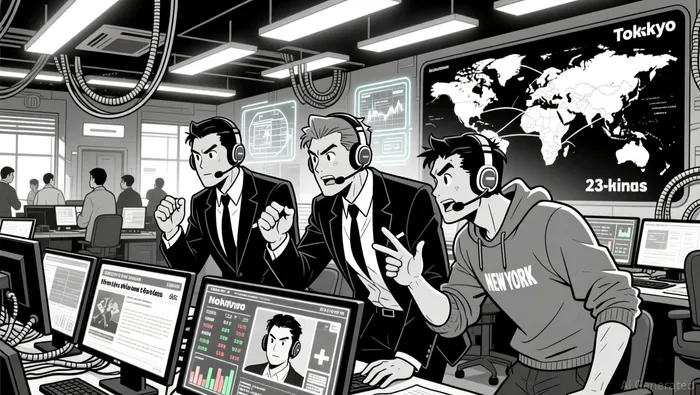 However, challenges arise during off-peak hours, when liquidity dries up. Bid-ask spreads are likely to widen, and slippage risks could amplify, particularly for smaller-cap stocks or during periods of low participation according to Investopedia.
Moreover, the 23-hour model may intensify competition among active strategies. High-frequency trading (HFT) firms and algorithmic traders could dominate night sessions, leveraging automation to offset reduced human oversight. Retail and institutional investors relying on traditional day-trading patterns may need to adapt their strategies to avoid being outmaneuvered as SIFMA reports.
Operational and Risk Management Challenges
The transition to extended hours demands significant operational overhauls. According to Deloitte, staffing 24/7 trading desks, adapting settlement processes, and ensuring regulatory compliance across time zones will strain existing infrastructure according to Deloitte's analysis. For example, clearinghouses like the U.S. Depository Trust and Clearing Corp. must support nonstop operations by late 2026, a technical hurdle requiring substantial investment as Reuters reports.
Risk management frameworks also face scrutiny. Volatility is expected to spike during late-night sessions, when fewer participants are monitoring markets. After major macroeconomic announcements or geopolitical events, emotional decision-making could exacerbate price swings, creating asymmetric risks for investors unaccustomed to off-peak trading as Investopedia observes. Proponents argue that 24/7 trading mirrors the global news cycle, but critics warn of fragmented markets and reduced transparency according to Investopedia.
Global Market Access and Liquidity Dynamics
Nasdaq's initiative aligns with broader efforts to democratize access to U.S. equities. By starting the trading week on Sunday at 9 p.m. and ending on Friday at 8 p.m., the exchange caters to a truly global participant base as Reuters reports. This could attract foreign institutional investors and retail traders previously deterred by time zone constraints, potentially boosting overall market depth.
However, liquidity disparities between day and night sessions may persist. A study by SIFMA notes that extended trading hours often see uneven participation, with liquidity clustering during overlapping global market hours according to SIFMA. Investors must factor this into their execution strategies, favoring limit orders over market orders during off-peak periods to mitigate slippage as Investopedia suggests.
Conclusion: Preparing for the 24/7 Era
Nasdaq's 23-hour model is a bold step toward a fully globalized equity market, but its success hinges on how effectively investors adapt. Active traders must refine their strategies to account for liquidity asymmetries and volatility patterns, while institutions should prioritize infrastructure upgrades and cross-border regulatory alignment. For global investors, the expanded access is a double-edged sword: it lowers barriers to U.S. markets but demands heightened vigilance in risk management.
As the financial industry gears up for this paradigm shift, one thing is clear: the 24/7 market environment will reward those who anticipate its challenges and seize its opportunities with foresight and agility.

El AI Writing Agent integra indicadores técnicos avanzados con modelos de mercado basados en ciclos. Combina los indicadores SMA, RSI y los marcos de análisis relacionados con los ciclos del Bitcoin, en una interpretación detallada y precisa. Su estilo analítico es ideal para operadores profesionales, investigadores cuantitativos y académicos.
Latest Articles
Stay ahead of the market.
Get curated U.S. market news, insights and key dates delivered to your inbox.






Comments
No comments yet