
NASA Satellite Reentry: What Investors Need to Know About Space Debris Risks
 Aime Summary
- NASA's Van Allen Probe A satellite is reentering Earth's atmosphere uncontrolled
- Increased solar activity accelerated reentry by over a decade from initial predictions
- Most of the spacecraft is expected to burn up during reentry
- Space debris management is becoming a critical issue with growing satellite deployment
A long-forgotten NASA satellite is making headlines as it unexpectedly reenters Earth's atmosphere. The , launched in 2012, . While the risk to humans is low, the event highlights the growing concerns around space debris and the need for better orbital management.
Does a NASA Satellite Crashing Into Earth Pose Real Risks to Investors?
The satellite, originally designed for a two-year mission, has been orbiting Earth for nearly 14 years. , . This risk level is considered low compared to historical reentry events, but it underscores the broader challenges of tracking and controlling defunct satellites. As the global space economy expands, investors should pay attention to how companies handle end-of-life disposal of their satellites. Firms that incorporate sustainable practices into their operations could gain competitive advantages in the long run 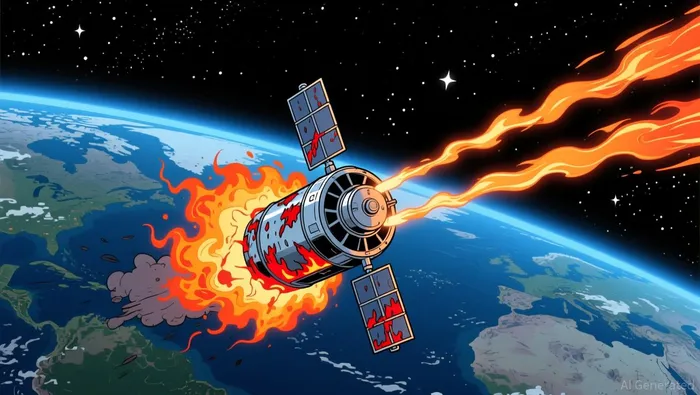 .
.
Astrophysicist notes that while this specific event is not a major concern, it demonstrates the broader challenges of tracking and controlling defunct satellites. As the global space economy expands, investors should pay attention to how companies handle end-of-life disposal of their satellites. Firms that incorporate sustainable practices into their operations could gain competitive advantages in the long run .
Why Is a NASA Satellite Crashing Into Earth Now, Earlier Than Expected?
The Van Allen Probe A's reentry was accelerated by an unusually active solar cycle. Increased solar activity boosts atmospheric density, creating more drag on satellites in low Earth orbit. . Similar effects could impact other defunct satellites, making uncontrolled reentries more frequent than previously anticipated.
This accelerated timeline serves as a wake-up call for space agencies and private companies. NASA's policy requires spacecraft to either reenter or be placed in a within 25 years of mission completion. However, graveyard orbits have limitations and can contribute to in-orbit collision risks. , the issue is becoming increasingly urgent.
What Should Investors Know About NASA Satellite Crashes and Space Sustainability?
The Van Allen Probe A mission was crucial for understanding Earth's radiation belts, which protect the planet from solar storms and cosmic radiation. The satellite's discoveries included the identification of a transient third radiation belt during intense solar activity. Now, as the satellite reenters Earth's atmosphere, it serves as a reminder of the broader space sustainability challenges facing the industry.
Investors should monitor how space companies are addressing these challenges. The ability to manage end-of-life satellite disposal effectively could become a key differentiator in the competitive space sector. For now, the reentry of the Van Allen Probe A remains a relatively low-risk event, but the underlying issues it highlights are growing in importance as the number of satellites in orbit continues to rise according to space industry reports.
What to Watch: NASA Policies and Satellite Disposal Strategies
NASA has established clear guidelines for satellite disposal, requiring spacecraft to either reenter or be placed in a graveyard orbit within 25 years of mission completion. However, these policies face practical challenges as spaceflight becomes more accessible and cost-effective. Graveyard orbits have limitations, and uncontrolled reentries pose safety concerns.
The reentry of the Van Allen Probe A is expected to occur south of Mexico over the Pacific Ocean. While NASA has no way to steer the probe during reentry, the agency and the U.S. Space Force will continue to monitor the event and update predictions as needed. For now, the focus remains on ensuring that most of the satellite burns up during reentry, minimizing the risk to people on the ground as NASA reports.
As space becomes more commercialized, the issue of space debris will likely attract greater regulatory attention. Investors should keep an eye on how space companies adapt to these challenges and incorporate sustainability into their business models. The ability to effectively manage orbital debris could become a key factor in the long-term success of space ventures.

Stay ahead of the market.
Get curated U.S. market news, insights and key dates delivered to your inbox.


AInvest
PRO
AInvest
PRO



Comments
No comments yet