
NASA Conducts Historic Medical Evacuation, Implications for Space Travel
 Aime Summary
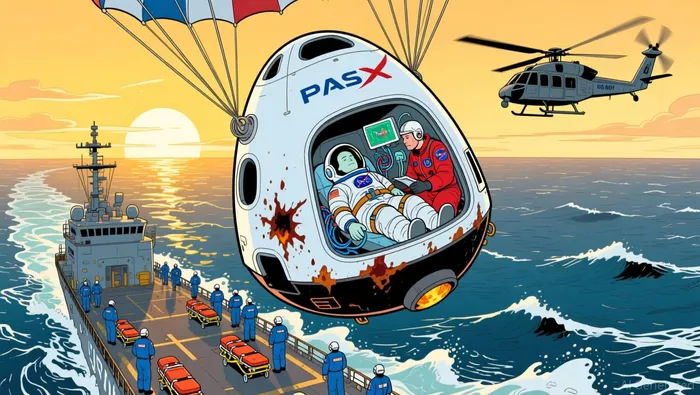
NASA's Crew-11 mission was cut short due to a medical issue involving one astronaut, marking the first medical evacuation in the 25-year history of the International Space Station (ISS). The early return was necessary for the astronaut to receive proper medical care on Earth, with the crew splashing down in the Pacific Ocean near San Diego. The evacuation highlights the growing importance of medical preparedness for long-term space missions and underscores the inherent risks of extended time in space. NASA has not disclosed the identity of the affected astronaut or the medical condition for privacy reasons, but confirmed the individual remained stable during the mission. The early return may impact the station's scientific and maintenance activities until a new crew launches in mid-February.
NASA's Crew-11 mission was cut short due to a medical issue involving one astronaut, marking the first medical evacuation in the 25-year history of the ISS. The crew returned to Earth a month ahead of schedule, highlighting the risks and challenges of long-term space missions. The evacuation occurred after NASA decided to bring the crew back for proper medical care, with the mission part of the Commercial Crew Program involving private companies like SpaceX.
What Does NASA's First Medical Evacuation Mean for Space Travel?
NASA's decision to evacuate Crew-11 marks a significant moment in space exploration history. The International Space Station has been continuously occupied since 2000, yet this is the first time a mission has been cut short for medical reasons. The astronaut in question remained stable, and no emergency evacuation was required, but the need for diagnostic testing and care on Earth necessitated the early return.
This event highlights the growing importance of medical protocols and emergency planning for future long-duration missions, including those to the Moon and Mars. For example, extended missions in microgravity can lead to health issues like muscle atrophy, bone density loss, and cardiovascular changes. NASA is already working on countermeasures such as in-orbit exercise regimens to mitigate these effects. However, the ability to address more serious medical conditions in space remains limited, making timely return to Earth a critical factor in mission planning.
How Does This Evacuation Impact NASA's Commercial Crew Program and SpaceX?
NASA's Commercial Crew Program, which partners with private companies like SpaceX to ferry astronauts to and from the ISS, has been a cornerstone of U.S. space policy since the retirement of the space shuttle in 2011. The Crew-11 mission was the 11th rotation mission for SpaceX under this partnership, and its early return may raise questions about the robustness of current mission timelines and medical support systems.
The evacuation also puts a spotlight on the capabilities of SpaceX's Dragon spacecraft, which has proven itself in multiple crewed missions. The return of Crew-11 was a routine splashdown, with no special modifications or accommodations needed, showing the reliability of the spacecraft. However, the incident underscores the importance of redundancy and emergency response planning, especially as NASA eyes future missions with fewer crew rotations and longer stays in space.
Why Is This Medical Evacuation a Concern for Investors and Market Analysts?
Investors in aerospace and space exploration companies may view this event as a risk factor for future missions, particularly as NASA and private firms like SpaceX plan more complex and longer-duration flights. While this was not an emergency situation, it demonstrates the unpredictability of human health in the extreme environment of space. According to reports, the evacuation could influence how investors assess the viability of companies involved in in-space healthcare, medical monitoring, or life-support systems.
Additionally, it may impact the public perception of NASA and SpaceX's mission reliability, potentially affecting funding and support for future projects such as Artemis II, which aims to return humans to the Moon. A related article discusses the implications for space medicine and future mission planning.
Moreover, the incident could prompt increased scrutiny over how space agencies and private companies handle health emergencies in orbit. While the current evacuation was well-managed, future scenarios may require more advanced on-orbit medical capabilities, possibly leading to new partnerships or investments in space medicine. According to experts, these measures will be crucial for ensuring the safety and success of future missions.
What Are the Next Steps for NASA and the ISS Crew?
NASA and SpaceX are already working to move up the launch of a fresh crew to the ISS, with a mid-February target. The next mission will bring four astronauts to the station, restoring the full crew complement. In the meantime, the current crew at the ISS consists of one American, one Japanese, and two Russian astronauts, a reduced number that may limit the station's operational capacity. NASA has stated it will not be able to perform a spacewalk until the next crew arrives, which could impact ongoing experiments and repairs.
As NASA continues to refine its protocols for managing health issues in space, the agency is likely to increase its focus on medical training, in-orbit diagnostics, and emergency return procedures. These measures will be crucial for ensuring the safety and success of future missions, particularly as the U.S. and other nations push forward with plans for lunar and Martian exploration.
The evacuation of Crew-11 is a historic event that not only marks a milestone in space medicine but also serves as a reminder of the challenges that remain in making space travel safer and more sustainable for the long term.

Stay ahead of the market.
Get curated U.S. market news, insights and key dates delivered to your inbox.


AInvest
PRO
AInvest
PRO



Comments
No comments yet