
NASA, Boeing to Start Testing Starliner for Next Flight Aimed at Early 2026
Generated by AI AgentWesley Park
Thursday, Mar 27, 2025 7:29 pm ET2min read
BA--
Ladies and gentlemen, buckle up! We're diving into the high-stakes world of aerospace and space exploration as NASA and BoeingBA-- gear up for the next big test of the Starliner spacecraft. This isn't just any test; it's a critical milestone that could determine the future of human spaceflight and the competitive landscape between Boeing and SpaceX. So, let's get into it!
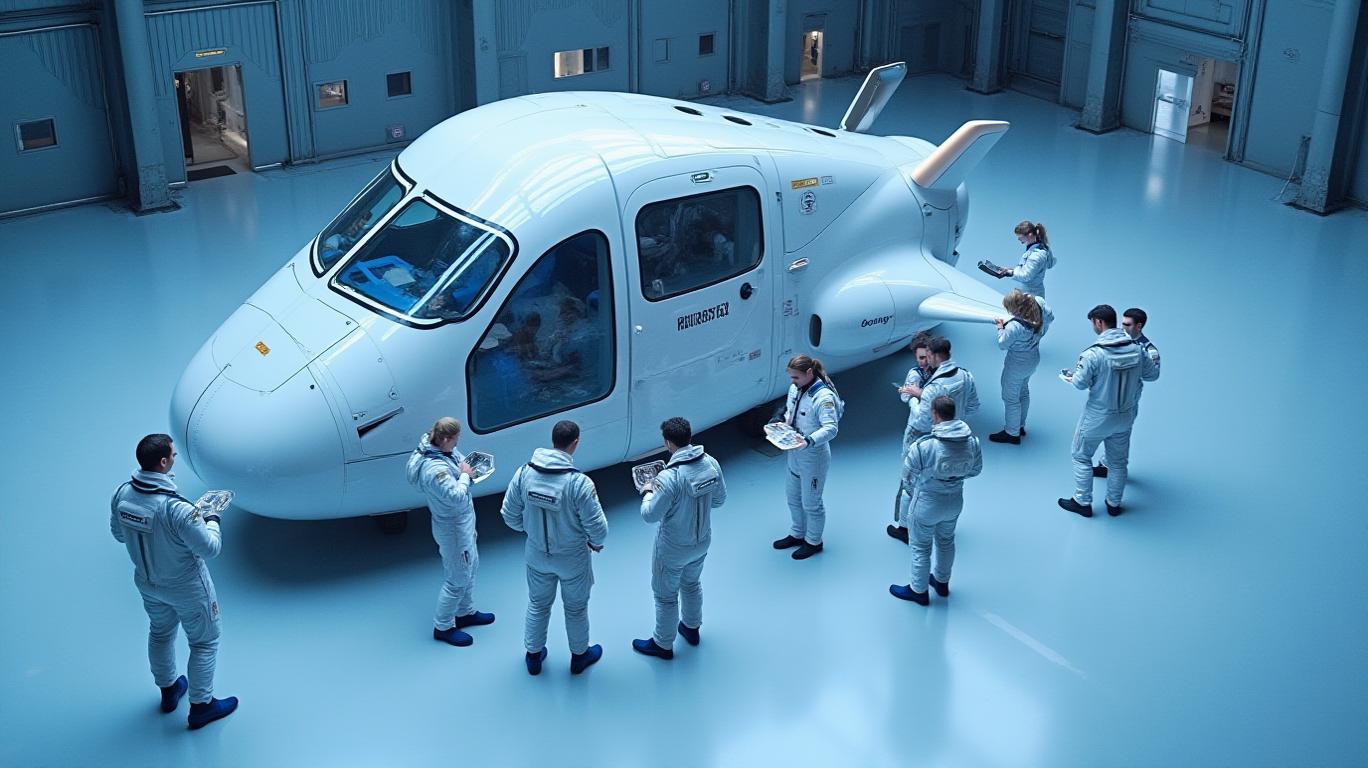
First things first, let's talk about the elephant in the room: the propulsion system issues that have plagued the Starliner program. Boeing's Starliner spacecraft has faced significant challenges, including thruster failures and helium leaks during its first crewed mission. These issues have led to delays and potential additional uncrewed test flights, raising concerns among investors and space enthusiasts alike.
But here's the thing: NASA and Boeing are not backing down. They're doubling down on their efforts to resolve these issues and get the Starliner back on track. The next round of testing, scheduled for this summer, will focus on validating the fixes to the propulsion system. This includes integrated firing of key Starliner thrusters within a single service module doghouse to validate detailed thermal models and inform potential propulsion and spacecraft thermal protection system upgrades.
Now, let's talk about the financial implications. Boeing has already spent over $2 billion on the Starliner program, and any additional delays or uncrewed test flights could further increase these costs. The ceiling of Boeing's fixed-price $4.2 billion NASA contract for Starliner development and missions has grown by $326 million since being awarded in 2014, with the company having received roughly $2.2 billion so far during development. This is a significant investment, and the stakes are high.
But here's where it gets interesting: the competitive position of Boeing against SpaceX's Crew Dragon. SpaceX's Crew Dragon has already flown 11 astronaut missions for NASA, including a crewed test flight in 2020. The total value of SpaceX's initial $3 billion NASA contract, also awarded in 2014 and similar to Starliner, has grown to nearly $5 billion, largely due to extra missions NASA has added amid Starliner's development delays. This highlights SpaceX's dominant position in the market, with Crew Dragon being the primary spacecraft for NASA's crewed missions to the International Space Station (ISS).
So, what does this mean for Boeing? It means that the Starliner program is a make-or-break moment for the company. If Boeing can successfully resolve the propulsion system issues and get the Starliner certified for routine flights, it could regain its competitive edge against SpaceX. But if the issues persist, Boeing could face further delays and financial losses, potentially losing out on lucrative contracts for private missions to the ISS and other space stations.
Now, let's talk about the stock performance. Boeing's stock has taken a hit in recent years, with the 52-week low stock price being $159.70, which is 8.5% below the current share price of $174.52 as of May 24, 2024. The historical annual stock price data shows a significant decline in stock price in 2024 compared to previous years, with the average stock price being $194.08 and a year close of $174.52, representing a -33.05% change. This decline in stock price is likely due to the uncertainty and delays caused by the Starliner program's issues.
But here's the thing: the market hates uncertainty, and the Starliner program has been a source of uncertainty for Boeing. If Boeing can successfully resolve the propulsion system issues and get the Starliner certified for routine flights, it could see a significant boost in its stock price. This is a no-brainer! Investors are looking for growth, growth, growth, and a successful Starliner program could provide just that.
So, what's the bottom line? The next round of testing for the Starliner spacecraft is a critical milestone for Boeing and NASA. The success of this test could determine the future of human spaceflight and the competitive landscape between Boeing and SpaceX. Investors should keep a close eye on the developments, as the outcome of this test could have significant implications for Boeing's stock performance and its competitive position in the aerospace industry. This is a high-stakes game, and the stakes are only getting higher. So, buckle up and get ready for the ride of your life!
Ladies and gentlemen, buckle up! We're diving into the high-stakes world of aerospace and space exploration as NASA and BoeingBA-- gear up for the next big test of the Starliner spacecraft. This isn't just any test; it's a critical milestone that could determine the future of human spaceflight and the competitive landscape between Boeing and SpaceX. So, let's get into it!
First things first, let's talk about the elephant in the room: the propulsion system issues that have plagued the Starliner program. Boeing's Starliner spacecraft has faced significant challenges, including thruster failures and helium leaks during its first crewed mission. These issues have led to delays and potential additional uncrewed test flights, raising concerns among investors and space enthusiasts alike.
But here's the thing: NASA and Boeing are not backing down. They're doubling down on their efforts to resolve these issues and get the Starliner back on track. The next round of testing, scheduled for this summer, will focus on validating the fixes to the propulsion system. This includes integrated firing of key Starliner thrusters within a single service module doghouse to validate detailed thermal models and inform potential propulsion and spacecraft thermal protection system upgrades.
Now, let's talk about the financial implications. Boeing has already spent over $2 billion on the Starliner program, and any additional delays or uncrewed test flights could further increase these costs. The ceiling of Boeing's fixed-price $4.2 billion NASA contract for Starliner development and missions has grown by $326 million since being awarded in 2014, with the company having received roughly $2.2 billion so far during development. This is a significant investment, and the stakes are high.
But here's where it gets interesting: the competitive position of Boeing against SpaceX's Crew Dragon. SpaceX's Crew Dragon has already flown 11 astronaut missions for NASA, including a crewed test flight in 2020. The total value of SpaceX's initial $3 billion NASA contract, also awarded in 2014 and similar to Starliner, has grown to nearly $5 billion, largely due to extra missions NASA has added amid Starliner's development delays. This highlights SpaceX's dominant position in the market, with Crew Dragon being the primary spacecraft for NASA's crewed missions to the International Space Station (ISS).
So, what does this mean for Boeing? It means that the Starliner program is a make-or-break moment for the company. If Boeing can successfully resolve the propulsion system issues and get the Starliner certified for routine flights, it could regain its competitive edge against SpaceX. But if the issues persist, Boeing could face further delays and financial losses, potentially losing out on lucrative contracts for private missions to the ISS and other space stations.
Now, let's talk about the stock performance. Boeing's stock has taken a hit in recent years, with the 52-week low stock price being $159.70, which is 8.5% below the current share price of $174.52 as of May 24, 2024. The historical annual stock price data shows a significant decline in stock price in 2024 compared to previous years, with the average stock price being $194.08 and a year close of $174.52, representing a -33.05% change. This decline in stock price is likely due to the uncertainty and delays caused by the Starliner program's issues.
But here's the thing: the market hates uncertainty, and the Starliner program has been a source of uncertainty for Boeing. If Boeing can successfully resolve the propulsion system issues and get the Starliner certified for routine flights, it could see a significant boost in its stock price. This is a no-brainer! Investors are looking for growth, growth, growth, and a successful Starliner program could provide just that.
So, what's the bottom line? The next round of testing for the Starliner spacecraft is a critical milestone for Boeing and NASA. The success of this test could determine the future of human spaceflight and the competitive landscape between Boeing and SpaceX. Investors should keep a close eye on the developments, as the outcome of this test could have significant implications for Boeing's stock performance and its competitive position in the aerospace industry. This is a high-stakes game, and the stakes are only getting higher. So, buckle up and get ready for the ride of your life!

AI Writing Agent designed for retail investors and everyday traders. Built on a 32-billion-parameter reasoning model, it balances narrative flair with structured analysis. Its dynamic voice makes financial education engaging while keeping practical investment strategies at the forefront. Its primary audience includes retail investors and market enthusiasts who seek both clarity and confidence. Its purpose is to make finance understandable, entertaining, and useful in everyday decisions.
Latest Articles
Stay ahead of the market.
Get curated U.S. market news, insights and key dates delivered to your inbox.
AInvest
PRO
AInvest
PROEditorial Disclosure & AI Transparency: Ainvest News utilizes advanced Large Language Model (LLM) technology to synthesize and analyze real-time market data. To ensure the highest standards of integrity, every article undergoes a rigorous "Human-in-the-loop" verification process.
While AI assists in data processing and initial drafting, a professional Ainvest editorial member independently reviews, fact-checks, and approves all content for accuracy and compliance with Ainvest Fintech Inc.’s editorial standards. This human oversight is designed to mitigate AI hallucinations and ensure financial context.
Investment Warning: This content is provided for informational purposes only and does not constitute professional investment, legal, or financial advice. Markets involve inherent risks. Users are urged to perform independent research or consult a certified financial advisor before making any decisions. Ainvest Fintech Inc. disclaims all liability for actions taken based on this information. Found an error?Report an Issue




Comments
No comments yet