
NASA Astronaut's Medical Evacuation Reveals Risks of Long-Duration Space Missions
 Aime Summary
- NASA astronaut Mike Fincke became the first person medically evacuated from the International Space Station after a sudden, unexplained loss of speech.
- The incident lasted about 20 minutes and occurred during a post-spacewalk meal, with no pain or clear cause identified despite extensive testing.
- Doctors ruled out choking or a heart attack, but a possible link to prolonged weightlessness has been suggested as a factor.
- The incident forced Fincke and his crew to return to Earth earlier than planned and raised questions about the medical risks of extended space travel.
- NASA is reviewing other astronauts' medical records to see if similar cases have occurred, highlighting the need for better protocols for deep-space missions.
The sudden medical evacuation of astronaut Mike Fincke from the International Space Station marks a significant and alarming moment in the history of space exploration. On January 7, 2026, Fincke, a four-time space flier and veteran astronaut, experienced a mysterious episode that left him temporarily unable to speak for about 20 minutes. His crewmates immediately contacted flight surgeons on Earth, and after a series of tests, a decision was made to evacuate the crew.
This event is a rare and concerning example of how unpredictable health issues can arise in the microgravity environment of space. While doctors have ruled out common causes like heart attacks or choking, the underlying reason for Fincke’s condition remains a mystery. Some scientists speculate it might be related to the prolonged effects of weightlessness on the human body.
What Happened During NASA's First Medical Evacuation from the International Space Station?
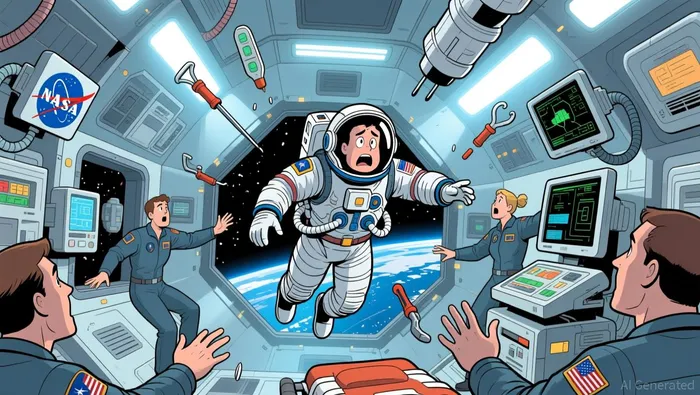
Fincke’s medical episode occurred during a routine meal following preparations for a scheduled spacewalk. He described the incident as “completely out of the blue” and “amazingly quick.” His crewmates, seeing him in distress, sprang into action, contacting flight surgeons at NASA’s Johnson Space Center. Within seconds, the situation was treated as a medical emergency, and the crew began preparing for an early return to Earth.
NASA’s SpaceX Crew Dragon spacecraft was used to bring Fincke and three other astronauts back to Earth on January 15. After splashing down in the Pacific Ocean, the crew was immediately transported to a nearby hospital for further evaluation. Despite the suddenness of the incident, Fincke has since undergone numerous tests and reported feeling fine.
How Do Medical Emergencies in Space Challenge NASA's Protocols for Long-Term Missions?
This incident raises serious questions about the medical preparedness for future missions, especially those planned under NASA’s Artemis program, which aims to establish a long-term human presence on the Moon. With the prospect of extended space travel and eventual missions to Mars, NASA must now reassess the medical risks associated with prolonged exposure to microgravity.
Fincke’s episode highlights the importance of having robust medical systems in place on spacecraft. While the ISS is equipped with basic diagnostic tools like an ultrasound machine, more advanced equipment might be necessary for missions where astronauts are farther from Earth and medical support is limited. NASA is now reviewing past astronaut medical records to see if similar incidents have occurred, which could help inform future protocols.
What Are the Potential Implications for Future Deep-Space Exploration and Astronaut Health?
The long-term health effects of space travel remain a key area of research. This incident adds another layer of complexity to the already well-documented issues like bone density loss and vision impairment caused by extended time in space.
Fincke, who has spent 549 days in space, has been a vocal advocate for astronaut health and safety. Despite the early return and cancellation of a planned spacewalk, he remains optimistic about future missions and hopes to return to space. NASA Administrator Jared Isaacman has supported Fincke, reassuring him that the issue was not his fault and that it was an unpredictable event of space travel.
As NASA and other space agencies plan for longer missions, the need for advanced medical training, on-board diagnostics, and emergency response protocols has never been more urgent. The ability to identify and respond to rare and unexplained medical conditions will be critical to ensuring the safety of astronauts on future deep-space missions.

Stay ahead of the market.
Get curated U.S. market news, insights and key dates delivered to your inbox.


AInvest
PRO
AInvest
PRO



Comments
No comments yet