
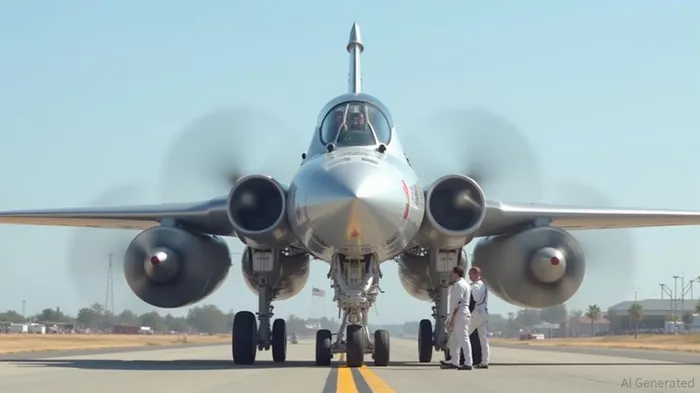
NASA's X-59 supersonic jet takes taxiing test, poised to cut NYC-London flight time in half.
ByAinvest
Friday, Jul 18, 2025 10:36 pm ET1min read
CIGL--
The X-59 jet, measuring 100 feet long and 30 feet wide, is designed to revolutionize air travel by quietly breaking the sound barrier. Its innovative design and shape are expected to produce a quiet "thump" sound instead of the thunderous roar associated with traditional supersonic flights [1]. The aircraft is part of NASA's Quiet Supersonic Technology (QueSST) mission, which aims to reduce the loud sonic boom to a quieter threshold, making supersonic commercial flights over land more acceptable [2].
During the recent taxi tests, the X-59 was monitored for stability and control across various conditions, validating critical systems like steering and braking. The aircraft is expected to reach speeds of up to 925 miles per hour, significantly reducing transatlantic flight times [1]. NASA estimates that the X-59 could potentially fly from New York to London in just three and a half hours, compared to the current average of seven hours [1].
The X-59's success in completing its final trials marks a significant milestone in the history of supersonic aviation. The aircraft is expected to succeed the British Airways Concorde, which was retired from commercial service in 2003 due to high maintenance costs and a fatal crash [1]. The X-59's ability to produce a quieter sonic boom could help overcome regulatory hurdles and pave the way for the commercialization of supersonic travel.
References:
[1] https://nypost.com/2025/07/18/business/nasas-supersonic-x-59-jet-that-could-slash-nyc-london-flight-time-in-half-taxis-closer-to-take-off/
[2] https://www.nasa.gov/image-article/nasas-x-59-quiet-supersonic-aircraft-begins-taxi-tests/
LMT--
NASA's X-59 supersonic jet, dubbed the "son of Concorde," has completed its final series of trials and is set to make its maiden voyage later this year. The plane is designed to break the sound barrier quietly and could potentially cut transatlantic flight time in half, flying from New York to London in just three and a half hours. Taxi tests have been underway on a California runway, and the jet is expected to reach speeds of up to 925 miles per hour.
NASA's X-59 supersonic jet, affectionately dubbed the "son of Concorde," has successfully completed its final series of ground tests, paving the way for its maiden voyage later this year. The experimental aircraft, developed by NASA and Lockheed Martin, taxied on a California runway at low speed using its own power for the first time on July 10, 2025 [1].The X-59 jet, measuring 100 feet long and 30 feet wide, is designed to revolutionize air travel by quietly breaking the sound barrier. Its innovative design and shape are expected to produce a quiet "thump" sound instead of the thunderous roar associated with traditional supersonic flights [1]. The aircraft is part of NASA's Quiet Supersonic Technology (QueSST) mission, which aims to reduce the loud sonic boom to a quieter threshold, making supersonic commercial flights over land more acceptable [2].
During the recent taxi tests, the X-59 was monitored for stability and control across various conditions, validating critical systems like steering and braking. The aircraft is expected to reach speeds of up to 925 miles per hour, significantly reducing transatlantic flight times [1]. NASA estimates that the X-59 could potentially fly from New York to London in just three and a half hours, compared to the current average of seven hours [1].
The X-59's success in completing its final trials marks a significant milestone in the history of supersonic aviation. The aircraft is expected to succeed the British Airways Concorde, which was retired from commercial service in 2003 due to high maintenance costs and a fatal crash [1]. The X-59's ability to produce a quieter sonic boom could help overcome regulatory hurdles and pave the way for the commercialization of supersonic travel.
References:
[1] https://nypost.com/2025/07/18/business/nasas-supersonic-x-59-jet-that-could-slash-nyc-london-flight-time-in-half-taxis-closer-to-take-off/
[2] https://www.nasa.gov/image-article/nasas-x-59-quiet-supersonic-aircraft-begins-taxi-tests/
Stay ahead of the market.
Get curated U.S. market news, insights and key dates delivered to your inbox.
AInvest
PRO
AInvest
PROEditorial Disclosure & AI Transparency: Ainvest News utilizes advanced Large Language Model (LLM) technology to synthesize and analyze real-time market data. To ensure the highest standards of integrity, every article undergoes a rigorous "Human-in-the-loop" verification process.
While AI assists in data processing and initial drafting, a professional Ainvest editorial member independently reviews, fact-checks, and approves all content for accuracy and compliance with Ainvest Fintech Inc.’s editorial standards. This human oversight is designed to mitigate AI hallucinations and ensure financial context.
Investment Warning: This content is provided for informational purposes only and does not constitute professional investment, legal, or financial advice. Markets involve inherent risks. Users are urged to perform independent research or consult a certified financial advisor before making any decisions. Ainvest Fintech Inc. disclaims all liability for actions taken based on this information. Found an error?Report an Issue


ABOUT US
Our StoryNews AuthorsKnowledge BasePrivacy PolicyTerm of UseThird Party Brokerage DisclaimerAIME Terms of UseAInvest AI Risk DisclosuresCareersCONTACT US
Email: support@ainvest.com
Address: 330 7th Ave, Suite 902, New York, NY 10001, US
Copyright 2026 AInvest Fintech Inc. All rights reserved.


Comments
No comments yet