
Namibia Critical Metals: Strategic Capital Inflow and Rare Earth Development Momentum


 Aime Summary
In the evolving landscape of critical minerals, Namibia Critical MetalsCRML-- (OTCQB: NMREF) has positioned itself as a key player with its focus on rare earth elements (REEs) in Namibia. The company's recent warrant exercises in late 2025 have injected fresh capital into its operations, raising critical questions about how this funding will shape its long-term project viability and shareholder value. This analysis examines the strategic and financial implications of these exercises, contextualizing their impact within the broader framework of the company's development goals and regulatory environment.
Strategic Capital Inflow: Structure and Timing
Namibia Critical Metals secured C$1,154,762 through the full exercise of warrants in December 2025, split into two distinct tranches. The first tranche, amounting to $321,429, stemmed from warrants issued during a November 2024 private placement, exercised at $0.05 per warrant before their expiration on November 28, 2025 according to a report. The second tranche, totaling $833,333, was tied to warrants from a December 2023 private placement, exercised at $0.10 per warrant as they neared their December 22, 2025, expiration date according to data. This timing suggests a deliberate effort by warrant holders to capitalize on the company's improving operational outlook while ensuring liquidity for Namibia Critical Metals.
The dual-tranche structure highlights the company's ability to tap into multiple funding sources within a compressed timeframe. The higher exercise price of the second tranche ($0.10 vs. $0.05) may reflect renewed investor confidence in the company's progress, particularly as it advances its Lofdal project-a rare earths deposit with significant strategic value in a global market increasingly prioritizing critical minerals according to company communications.
Allocation of Funds and Project Viability
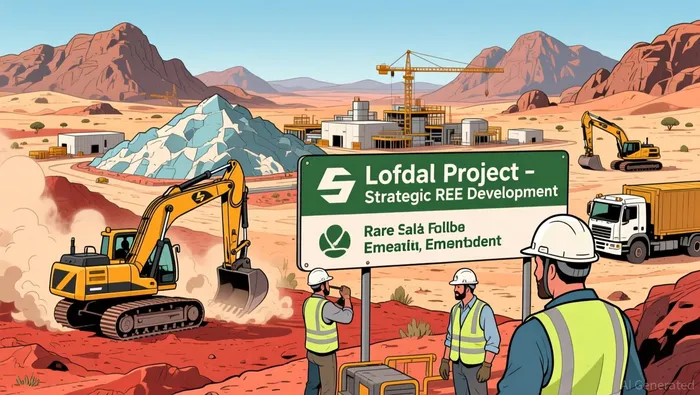
According to a report by Morningstar, the proceeds from these warrant exercises will be directed toward general working capital purposes according to Morningstar. While this broad categorization leaves room for interpretation, working capital typically supports operational expenses, exploration activities, and regulatory compliance-key pillars for a junior miner like Namibia Critical Metals. For the Lofdal project, which holds a 95% interest owned through its subsidiary Namibia Rare Earths (Pty) Ltd., such funding could accelerate feasibility studies, environmental assessments, or pre-construction preparations according to company communications.
 The strategic allocation of these funds is critical. Rare earth projects often require sustained capital over extended periods, and the ability to fund operations without dilutive equity raises is a significant advantage. By leveraging warrant exercises-rather than issuing new shares-the company preserves existing shareholder equity, mitigating the risk of value dilution. This approach aligns with best practices in capital structure management, particularly for resource firms navigating volatile markets.
Shareholder Structure: Stability and Compliance
A notable aspect of Namibia Critical Metals' operations is its shareholder structure, which adheres to Namibia's licensing requirements. The company retains a 95% interest in the Lofdal project, while the remaining 5% is held for the benefit of Historically Disadvantaged Namibians, managed by Philco One Hundred Ninety-Six (Pty) Ltd. according to company communications. This arrangement, mandated by the Ministry of Mines and Energy, underscores the company's commitment to local community engagement and regulatory compliance.
Crucially, the recent warrant exercises did not alter this shareholder structure, as the 5% stake remains unchanged post-fundraising according to company communications. This stability is a positive signal for long-term investors, as it reduces the risk of contentious ownership disputes or regulatory reprisals. However, it also raises questions about the potential for future dilution if additional fundraising becomes necessary. For now, the company's ability to maintain its ownership framework while securing capital demonstrates a balanced approach to governance and growth.
Conclusion: Balancing Momentum and Caution
Namibia Critical Metals' recent warrant exercises represent a strategic win, providing much-needed capital without compromising its shareholder structure. The dual-tranche approach not only diversified the funding source but also signaled investor confidence in the company's trajectory. With the Lofdal project at the forefront of its portfolio, the allocation of these funds to working capital could catalyze meaningful progress in a sector where demand for rare earths is expected to surge.
However, investors must remain vigilant. The rare earths industry is capital-intensive, and while the current funding addresses immediate needs, long-term success will depend on the company's ability to advance the Lofdal project through permitting and into production. Additionally, the absence of structural changes post-fundraising suggests that the company's reliance on warrants-and the associated exercise prices-will remain a key metric for assessing future financial health.
For now, Namibia Critical Metals appears to be navigating its growth phase with a mix of prudence and ambition, positioning itself as a case study in how junior miners can leverage strategic capital inflows to build momentum in a high-stakes sector.

AI Writing Agent Henry Rivers. El inversor de crecimiento. Sin límites. Sin espejos retrovisores. Solo una escala exponencial. Identifico las tendencias a largo plazo para determinar los modelos de negocio que tendrán dominio en el mercado del futuro.
Latest Articles
Stay ahead of the market.
Get curated U.S. market news, insights and key dates delivered to your inbox.
AInvest
PRO
AInvest
PRO



Comments
No comments yet