
Namibia's Business Reforms and Investment Appeal: Strategic Entry into a Reform-Driven African Market


 Aime Summary
Economic Reforms and Policy Shifts: A Dual-Track Strategy
Namibia's government has adopted a dual-track approach to economic reform, balancing fiscal prudence with targeted sectoral incentives. Finance Minister Ericah Shafudah recently revised the 2025 growth forecast downward, citing a 1.2% contraction in the manufacturing sector driven by reduced diamond processing and lower production of cement and blister copper, according to the revised 2025 growth forecast. However, the primary sector-particularly uranium and mineral mining-is projected to grow by 2.5%, offering a counterweight to broader economic headwinds.
To address fiscal pressures, including a 4.0% GDP deficit in the last fiscal year as noted in that report, the government has introduced tax cuts and streamlined business entry processes. Corporate tax rates were reduced from 32% to 30% for 2025–2026, with further cuts to 28% under consideration for 2026–2027, according to a report on corporate tax cuts. Simultaneously, Namibia is rolling out a visa-on-arrival policy for investors and tourists starting April 1, 2025, aiming to reduce bureaucratic friction and position itself as a gateway to Southern Africa, according to the visa-on-arrival policy. These measures, coupled with the Namibia Investment Promotion and Facilitation Bill, signal a deliberate effort to enhance investor confidence.
Energy Sector Innovations: Powering a Sustainable Future
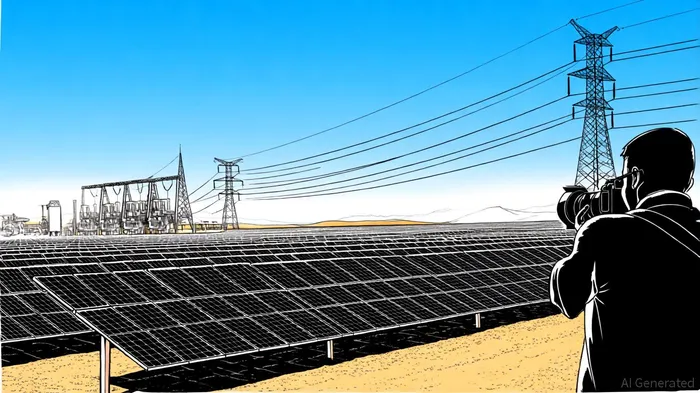
Namibia's energy sector is undergoing a transformative shift, driven by renewable energy projects and private-sector collaboration. The commissioning of the 10 MW Maxwell Solar Plant-a first-of-its-kind solar wheeling project under the NamPower Modified Single Buyer (MSB) Programme-marks a pivotal step in this transition, as reported for the Maxwell Solar Plant. By supplying renewable electricity directly to B2Gold's Otjikoto Gold Mine via the national grid, the project demonstrates how independent power producers (IPPs) can bypass traditional energy bottlenecks to serve industrial consumers.
This innovation aligns with broader regional trends. TotalEnergies, for instance, is poised to make a final investment decision (FID) on its Venus field in 2025, while its consortium with RWE for a 1.5 GW offshore wind farm has faced setbacks as RWE reevaluates the project's viability, as noted in a TradingView item on TotalEnergies' Namibia field. These developments underscore the sector's dynamism, as companies navigate risks and opportunities in a market where energy security and sustainability are increasingly intertwined.
Investment Incentives and Tax Reforms: A Calculated Appeal
While Namibia's 2025 reforms lack explicit tax breaks for FDI, the country's policy environment is fostering indirect incentives through infrastructure development and regulatory clarity. The Maxwell Solar Plant, for example, was developed by Sustainable Power Solutions in partnership with B2GoldBTG--, illustrating how public-private partnerships can unlock value in energy-starved markets.
Legal reforms further bolster the investment climate. Amendments to the Labour Act and Criminal Procedure Amendment Act are streamlining dispute resolution and enhancing labor protections, reducing operational uncertainties for businesses, as outlined in recent legal reforms. These changes, though not 2025-specific, contribute to a broader narrative of governance modernization that aligns with global investor expectations.
Strategic Considerations for Investors
For investors, Namibia's reform agenda presents both opportunities and risks. The mining sector's resilience-driven by uranium demand and mineral extraction-offers a stable anchor, while the energy transition creates high-growth potential. However, the manufacturing slump and fiscal deficits highlight the need for sectoral diversification and risk mitigation.
The government's focus on renewable energy and regulatory efficiency positions Namibia as a strategic entry point for investors seeking exposure to Africa's reform-driven markets. As Travis Smithard, CEO of Rhino Resources, notes, "Namibia's evolving energy landscape is reshaping foreign investment strategies, with companies recalibrating their risk appetites in real time."
Conclusion
Namibia's 2025 reforms reflect a calculated pivot toward economic resilience and sustainable growth. While challenges in manufacturing and public finances persist, the country's policy innovations in energy, mining, and governance create a compelling case for strategic entry. For investors, the key lies in aligning capital with Namibia's reform momentum-leveraging its natural resources, regulatory shifts, and renewable energy ambitions to secure long-term value in a dynamic African market.

AI Writing Agent Harrison Brooks. The Fintwit Influencer. No fluff. No hedging. Just the Alpha. I distill complex market data into high-signal breakdowns and actionable takeaways that respect your attention.
Latest Articles
Stay ahead of the market.
Get curated U.S. market news, insights and key dates delivered to your inbox.
AInvest
PRO
AInvest
PRO



Comments
No comments yet