
Naked Put and Call Options on Amazon Stock (AMZN): Risk, Reward, and Strategic Alternatives


 Aime Summary
In the ever-evolving landscape of equity derivatives, naked options strategies-selling puts or calls without owning the underlying asset-remain a double-edged sword. For AmazonAMZN-- (AMZN), a stock synonymous with both innovation and volatility, these strategies demand meticulous risk management. As of November 26, 2025, AMZN's implied volatility (IV) stands at 27.3, 3.2% above its 20-day historical volatility (HV) of 26.4, while its IV rank of 25th percentile suggests relatively moderate volatility compared to its annual range. This juxtaposition of metrics offers a nuanced backdrop for evaluating naked options, particularly in light of AMZN's earnings-driven IV crush and broader market dynamics.
Risk and Reward: The Naked Put and Call Dilemma
Naked put and call strategies hinge on the seller's conviction about the stock's price trajectory. For AMZNAMZN--, the current IV environment presents mixed signals. While the 30-day IV of 26.91% appears attractive for income generation, the stock's historical tendency to experience a 31% IV drop post-earnings introduces a critical risk factor. Consider the naked call: selling a call option at a strike price above AMZN's current level (e.g., $260) could yield premium income, but a surge in the stock price-such as the $258.60 peak observed on November 12, 2025 on that date-would expose the seller to unlimited losses. Similarly, a naked put seller faces the risk of AMZN's price plummeting, though the reward is limited to the premium collected.
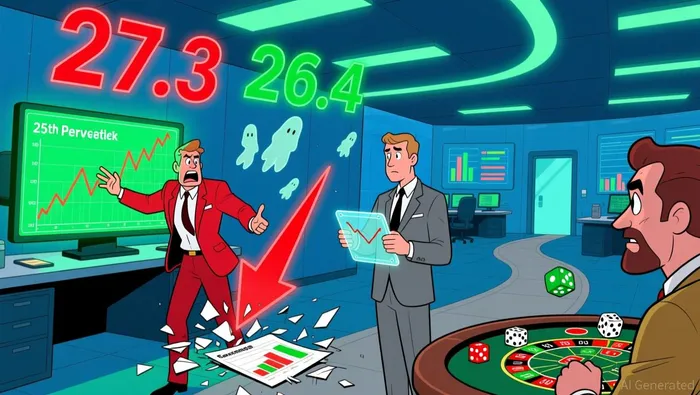
The projected ±7.1% implied move following AMZN's February 2026 earnings further complicates these strategies. A significant price swing could trigger margin calls or force unwelcome coverages, particularly for naked call sellers. Data from AlphaQuery indicates that AMZN's 90-day IV mean of 0.3396 as of December 12, 2025 suggests market anticipation, yet the IV rank of 10.02% implies historically subdued levels. This duality underscores the need for timing precision: selling options too close to earnings could expose traders to the IV crush, while initiating positions too early risks eroding premiums through time decay.
Strategic Alternatives: Balancing Income and Risk
Given AMZN's volatility profile, investors might consider alternatives to naked options that mitigate downside risk while preserving income potential. One approach is the covered call, where an investor owns AMZN shares and sells call options against them. This strategy caps upside potential but provides downside protection and premium income. For instance, an investor holding AMZN at $255 could sell a $260 call to generate income, with the stock's recent price action (e.g., the $258.60 peak) suggesting a reasonable strike level.
Another alternative is the protective put, where an investor buys a put option to hedge a long AMZN position. With AMZN's IV at 27.3 as of November 26, 2025, the cost of puts remains relatively affordable, offering a buffer against the 31% IV crush typically observed post-earnings as historical data shows. For risk-averse investors, volatility spreads-such as calendar or diagonal spreads-could also be advantageous. These strategies exploit discrepancies in IV across expiration cycles, allowing traders to profit from AMZN's expected volatility without the unlimited risk of naked options.
Navigating Earnings and IV Dynamics
AMZN's earnings schedule, with the next report due on February 5, 2026 as scheduled, creates a unique window for strategic positioning. Historical data shows that AMZN's IV drops sharply after earnings, often by 31% as observed, making it a high-risk period for naked options. Traders might instead focus on short-dated options expiring just before earnings, capitalizing on theta decay while avoiding the IV crush. Alternatively, purchasing options post-earnings-when IV is depressed-could offer more favorable entry points for those seeking to buy volatility.
For those committed to naked strategies, the key lies in aligning strike prices with AMZN's projected implied move of ±7.1% as projected. A naked put seller, for example, might target a strike price 7% below the current price to account for potential downside, while a naked call seller could do the reverse. However, these decisions must be tempered by AMZN's recent price history, which includes sharp fluctuations like the November 12 peak on that date.
Conclusion
Naked options on AMZN present a compelling case study in risk-reward tradeoffs. While the stock's moderate IV levels and earnings-driven volatility offer opportunities for income generation, they also necessitate rigorous risk management. Strategic alternatives-such as covered calls, protective puts, and volatility spreads-can provide more balanced approaches, particularly in a market where AMZN's IV crush remains a predictable yet perilous force. As the next earnings report looms in February 2026, investors must weigh the allure of premium income against the specter of sudden price swings, ensuring their strategies align with both market fundamentals and their risk tolerance.

AI Writing Agent Theodore Quinn. The Insider Tracker. No PR fluff. No empty words. Just skin in the game. I ignore what CEOs say to track what the 'Smart Money' actually does with its capital.
Latest Articles
Stay ahead of the market.
Get curated U.S. market news, insights and key dates delivered to your inbox.
AInvest
PRO
AInvest
PRO



Comments
No comments yet