
Myanmar Offers to Negotiate Tariffs with US, Requests Sanctions Relief
ByAinvest
Thursday, Jul 10, 2025 3:15 pm ET1min read
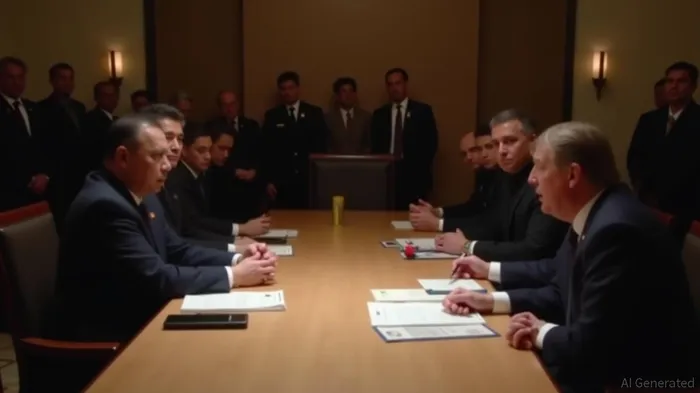
Myanmar's leader, Senior Gen. Min Aung Hlaing, has offered to send a high-level tariff negotiation team to the US in response to President Trump's letter. Trump lowered the "reciprocal" tariff rate on goods from Myanmar to 40% from 44%. Hlaing also asked for an easing of economic sanctions against Myanmar in his letter to Trump.
Myanmar's garment industry, already grappling with numerous challenges, is now facing a new set of tariff hurdles following U.S. President Donald Trump's latest tariff announcements. On July 7, Trump sent a formal letter to Myanmar, threatening a 40% tariff on all goods exported to the U.S., effective August 1, 2025 [2]. This tariff rate is a significant increase from the previous 20% average tariff on Myanmar garment imports [1].The Myanmar Garment Manufacturers Association (MGMA) has warned that the new tariffs will likely dampen trade and further strain the country's already struggling economy. The U.S. is currently the fourth-largest export market for Myanmar's cut-make-pack (CMP) industries, which include garment, bag, and shoe manufacturing [1]. The sector employs nearly 800,000 workers, and a 40% tariff is expected to drive orders down almost immediately [1].
In response to the tariff threat, Myanmar's leader, Senior Gen. Min Aung Hlaing, has offered to send a high-level tariff negotiation team to the U.S. Hlaing also asked for an easing of economic sanctions against Myanmar in his letter to Trump [1]. However, the effectiveness of these efforts remains uncertain, as Trump's letters have left room for negotiation but emphasized the potential for retaliatory tariff hikes [2].
The U.S. has cited significant trade deficits and non-reciprocal trade relationships as justification for the new tariffs. Trump has offered a path to avoid the duties: if companies from the targeted countries choose to manufacture goods within the U.S., there will be no tariff, and approvals for such moves would be quickly, professionally, and routinely granted [2]. However, the economic nationalism and security rhetoric used by Trump suggest that the primary goal of these tariffs is to rebalance trade relationships, rather than to encourage domestic manufacturing [2].
The garment industry in Myanmar is already facing numerous challenges, including international sanctions following the 2021 military coup, power outages, fuel shortages, and strict foreign currency controls [1]. The new tariffs are expected to exacerbate these issues, potentially leading to job losses and further economic strain.
References:
[1] https://www.business-humanrights.org/en/latest-news/myanmar-garment-bag-shoe-manufacturing-expected-to-suffer-following-40-us-tariff-announcement/
[2] https://www.livemint.com/news/us-news/donald-trump-targets-5-more-countries-with-25-40-tariff-warnings-after-japan-south-korea-11751918492421.html
Stay ahead of the market.
Get curated U.S. market news, insights and key dates delivered to your inbox.


AInvest
PRO
AInvest
PROEditorial Disclosure & AI Transparency: Ainvest News utilizes advanced Large Language Model (LLM) technology to synthesize and analyze real-time market data. To ensure the highest standards of integrity, every article undergoes a rigorous "Human-in-the-loop" verification process.
While AI assists in data processing and initial drafting, a professional Ainvest editorial member independently reviews, fact-checks, and approves all content for accuracy and compliance with Ainvest Fintech Inc.’s editorial standards. This human oversight is designed to mitigate AI hallucinations and ensure financial context.
Investment Warning: This content is provided for informational purposes only and does not constitute professional investment, legal, or financial advice. Markets involve inherent risks. Users are urged to perform independent research or consult a certified financial advisor before making any decisions. Ainvest Fintech Inc. disclaims all liability for actions taken based on this information. Found an error?Report an Issue




Comments
No comments yet