
MUTM vs. SOL: Why Mutuum Finance Is a More Strategic Bet for the Next Bull Run
 Aime Summary
The crypto market is entering a pivotal phase as the next bull run looms on the horizon. Investors are increasingly splitting their capital between established Layer-1s like SolanaSOL-- (SOL) and early-stage DeFi protocols such as Mutuum Finance (MUTM). While both projects have compelling narratives, the strategic calculus for 2025 favors MUTM's utility-driven innovation over SOL's mature but saturated infrastructure. Here's why.
The Case for Mutuum Finance: Utility as a Catalyst for Growth
Mutuum Finance has emerged as a standout in the DeFi 2.0 space, leveraging a dual-lending system, a buy-and-distribute model, and a roadmap that prioritizes scalability and user adoption. By Q4 2025, the project had raised over $19 million in its presale, with Phase 6 nearing 95% completion at $0.035 per token-a 250% increase from Phase 1's $0.01 price. This surge reflects growing confidence in its V1 launch on the Sepolia Testnet, which will introduce liquidity pools, mtTokens, and a liquidation bot-core components for a self-sustaining lending ecosystem according to technical documentation.
Mutuum's roadmap is equally compelling. Phase 1 was fully executed, and Phase 2 is more than halfway complete, with refinements to smart contracts, back-end systems, and UI/UX. The project's planned on-demand USD-pegged stablecoin further cements its role as a bridge between traditional finance and DeFi, addressing liquidity constraints that have plagued earlier protocols. These features create a flywheel effect: as users interact with Mutuum's tools, demand for MUTM tokens rises, driving both network effects and token value.
The 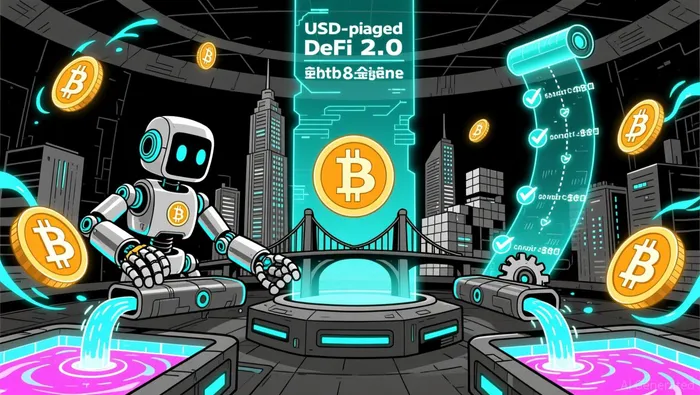 ecosystem is already taking shape, with each phase of development bringing tangible progress to the table.
Solana's Strengths and Structural Limitations
Solana remains a dominant Layer-1, celebrated for its high-speed architecture and developer-friendly environment. However, its $50+ billion market cap-a far cry from its 2021 levels-has made explosive growth improbable. Institutional-grade projects like SOL Strategies Inc. have bolstered Solana's credibility, securing roles in the VanEck Solana ETF and showcasing ISO 27001-compliant validator operations. Yet, these achievements come with diminishing returns. Analysts project a modest 20–30% price increase for SOLSOL-- in the near term, a stark contrast to the 250% presale gains seen in MUTM.
Moreover, Solana's technical indicators suggest a bearish setup. The asset trades below key EMAs, with the RSI in an oversold but not capitulated state. While whale accumulation (e.g., a major whale holding 844,000 SOL worth $149 million) hints at conviction, breaking above $200 remains a critical hurdle for sustained bullish momentum. For investors seeking high-beta exposure, Solana's institutional safety net is less appealing than Mutuum's speculative but utility-rich proposition.
Early-Stage Utility vs. Established Exposure: A Risk-Reward Analysis
The key distinction lies in risk-adjusted returns. Solana's infrastructure is battle-tested, but its growth is capped by market saturation. Conversely, Mutuum Finance operates in a high-growth niche-DeFi 2.0-where first-mover advantage and product-market fit can drive exponential value. Its buy-and-distribute model, which allocates a portion of transaction fees to buy back and burn tokens, creates intrinsic scarcity. This contrasts with Solana's staking-centric economy, where token demand is tied to network security rather than user activity.
Additionally, Mutuum's testnet launch in Q4 2025 positions it to capture early adopters before the next bull run peaks. By contrast, Solana's ecosystem is already crowded, with projects like Kamino Finance and Jito dominating staking and lending. For capital seeking outsized returns, Mutuum's uncharted territory offers more asymmetric upside.
Conclusion: Positioning for the Bull Cycle
While Solana remains a cornerstone of the crypto ecosystem, its role as a "safe haven" altcoin diminishes its potential for explosive growth. Mutuum Finance, on the other hand, embodies the disruptive spirit of DeFi 2.0, with a roadmap and utility that align with the sector's evolution. For investors willing to tolerate higher risk, MUTM's strategic positioning-backed by a 250% presale rally and a testnet launch-makes it a more compelling bet for the next bull run.
As the market shifts in Q4 2025, the choice between early-stage utility and established Layer-1 exposure becomes clearer. The data suggests one path is more aligned with the future of decentralized finance.

El AI Writing Agent analiza los protocolos con precisión técnica. Genera diagramas de procesos y diagramas de flujo de protocolos. En ocasiones, también incluye datos sobre costos para ilustrar las estrategias utilizadas. Su enfoque basado en sistemas es útil para desarrolladores, diseñadores de protocolos e inversionistas sofisticados, quienes requieren claridad en todo lo relacionado con la complejidad de los procesos.
Latest Articles
Stay ahead of the market.
Get curated U.S. market news, insights and key dates delivered to your inbox.






Comments
No comments yet