
The Musk-Trump Feud: A Litmus Test for Corporate Reputational Risk in the Age of Populism
The public sparring between Elon Musk and Donald Trump has evolved into a defining case study of how reputational risk and political volatility can destabilize corporate valuations. Over the past year, their feud—from Musk's criticism of Trump's “One Big Beautiful Bill” to Trump's threats to cut government contracts for Musk's companies—has sent shockwaves through markets. For investors exposed to TeslaTSLA-- (TSLA), SpaceX, and X (formerly Twitter), the implications are profound. This article dissects how this clash amplifies regulatory scrutiny, consumer skepticism, and investor anxiety, while offering strategies to mitigate risks in portfolios.
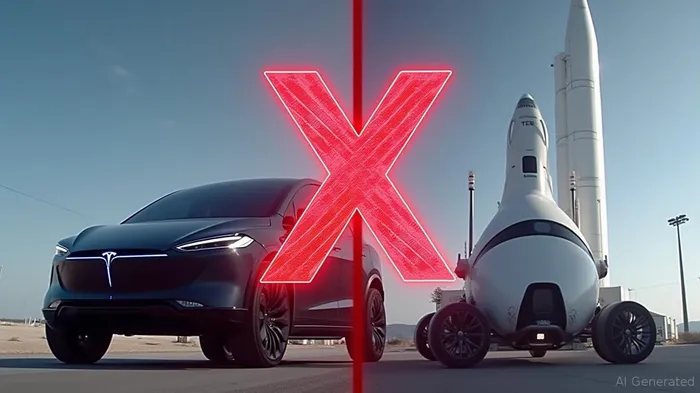
The Escalating Feud: A Timeline of Tensions
The Musk-Trump relationship has been marked by shifting alliances and escalating rancor. Key milestones include:- July 2022: Musk criticized Trump's age and endorsed Ron DeSantis, sparking Trump's first public rebuke.- 2024 Election: Musk donated $250M to Trump's campaign, reinstated Trump's suspended Twitter account, and helped secure his victory.- 2025: Their rift deepened as Musk opposed Trump's fiscal policies, leading to Trump's threats to revoke subsidies and Musk's inflammatory social media posts.
Reputational Risk Amplified by Political Alignments
Musk's deepening entanglement with Trump's political agenda has turned his companies into proxies in a broader ideological battle. The One Big Beautiful Bill—targeting EV tax credits and subsidies—directly threatens Tesla's profit margins. Analysts estimate losing these credits could cost Tesla $1.2B annually, while regulatory scrutiny of its autonomous driving projects has intensified. Meanwhile, SpaceX's $21B in government contracts (including NASA's Artemis program) face existential risks if Trump's administration retaliates.
The data tells a stark story: Tesla's market cap dropped 30% in 2024, hitting $916B in June 2024 after a 14% single-day plunge, and fell further in early 2025. The stock's volatility reflects investors' wariness of Musk's political bets.
Consumer Backlash and Operational Challenges
The feud has also eroded consumer trust. Tesla's sales in Europe dropped 28% in May 2024, while in China, they fell 15% year-over-year—a market where Musk's alignment with Trump's protectionist policies clashes with local preferences. Technical failures, like the Austin robotaxi service's regulatory red flags, have compounded the damage. Meanwhile, X's user engagement metrics have stagnated, as the platform struggles with its role as a megaphone for political warfare.
Investor Wariness and Valuation Pressures
The Musk-Trump feud has exposed a critical flaw in Musk-linked equities: their reliance on personal and political capital over fundamentals. Investors are now pricing in the risks of:1. Regulatory Overreach: The National Highway Traffic Safety Administration's scrutiny of Tesla's Full Self-Driving software.2. Contract Cancellations: SpaceX's NASA partnerships face political crosshairs.3. Brand Dilution: X's reputation as a neutral platform is increasingly tied to Musk's polarizing rhetoric.
Hedging Strategies for Portfolio Exposure
Investors holding Tesla, SpaceX (indirectly via parent company Tesla), or X should consider:- Diversification: Reduce concentration in Musk-linked stocks and allocate to less politically exposed sectors.- Short-Term Hedging: Use options to protect against Tesla's volatility (e.g., put options on TSLA).- Wait for Volatility to Settle: The feud's impact may subside if Musk shifts focus to operational execution or Trump's policies face bipartisan pushback.
Conclusion: Beyond Musk and Trump
This feud underscores a broader truth: in an era of populism and social media-driven politics, corporate leaders cannot isolate their businesses from personal or ideological conflicts. The Musk-Trump saga serves as a cautionary tale for investors to prioritize companies with robust governance, diversified revenue streams, and insulation from volatile alliances. For now, the lesson is clear: reputational risk management is not just about PR—it's about avoiding becoming collateral damage in a celebrity-driven feud.
Investment Takeaway: Proceed with caution when allocating to companies whose valuations hinge on the whims of high-profile founders. Diversify, hedge, and monitor political crosscurrents closely.

Stay ahead of the market.
Get curated U.S. market news, insights and key dates delivered to your inbox.
AInvest
PRO
AInvest
PRO



Comments
No comments yet