
Musk Slams Ryanair Boss in Escalating Fight of Two Abrasive CEOs
 Aime Summary
Ryanair has ruled out installing Starlink satellite internet on its fleet, citing the fuel cost impact from antenna drag and the brevity of its average one-hour flights according to reports. The European budget carrier said its passengers would not see value in in-flight WiFi for such short journeys as stated. Meanwhile, competitors like Lufthansa and Scandinavian Airlines have committed to Starlink, viewing it as a competitive advantage according to analysis.
The decision has drawn a public response from Elon Musk, who argued that RyanairRYAAY-- would lose customers by forgoing the service. He suggested that the airline's fuel cost estimate was exaggerated and that Starlink could be made more aerodynamic according to Musk. Ryanair CEO Michael O'Leary countered that the 2% fuel penalty from the system's weight and drag was a significant operational concern according to reports.
O'Leary noted that Ryanair's low-cost, no-frills model is designed for short-haul flights where amenities like in-flight internet are unlikely to justify the cost as stated. SpaceX's VP of Starlink Engineering, Michael Nicolls, claimed the system's impact was closer to 0.3% on a Boeing 737-800, challenging O'Leary's figures according to Nicolls.
What Drives the Fuel Cost Debate?
Ryanair emphasized the aerodynamic drag caused by the Starlink terminal, which it said increases fuel consumption by 2% on its fleet of Boeing 737s according to Ryanair. The airline has historically focused on optimizing fuel costs, especially in the low-cost aviation sector according to analysis.
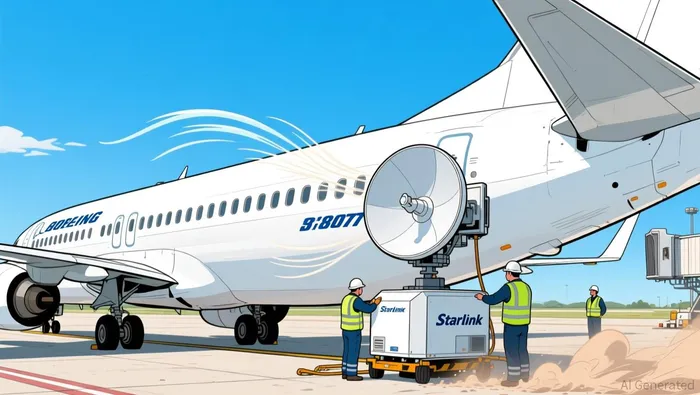
Starlink, however, argues that its terminal design is more streamlined than legacy satellite internet systems according to Starlink. Nicolls stated that the system's fuel impact is significantly lower than the industry average according to claims.
Why Is Starlink a Point of Contention for Ryanair?
Ryanair's core business model relies on keeping costs low and passing savings to passengers. O'Leary said that passengers would not pay for WiFi on short flights, making it an unattractive investment as reported. This stance contrasts with U.S. carriers, which have increasingly added premium services to offset falling ticket prices according to analysis.
Musk, meanwhile, argued that failing to adopt in-flight internet would put Ryanair at a disadvantage, particularly as younger travelers and business passengers increasingly expect connectivity according to Musk.
How Do Competitors View This Strategy?
Lufthansa and SAS have both adopted Starlink, citing aerodynamic efficiency and passenger demand as key factors according to reports. Lufthansa recently announced the installation of Starlink on its fleet, while SAS cited better performance than competing systems according to analysis.
Ryanair's decision to forego the technology underscores its differentiated approach in the European market. The airline reported $2 billion in after-tax profits for its latest quarter, demonstrating its success with a no-frills model according to financial data.
What Are Analysts Watching Next?
The dispute highlights a broader debate in the aviation industry over the role of connectivity in competitive differentiation according to analysts. Analysts are watching whether Ryanair's strategy will hold as in-flight internet becomes more common among international carriers according to industry reports.
Investors are also evaluating the financial implications of Starlink's deployment. While Lufthansa and SAS move forward with installations, Ryanair continues to emphasize fuel efficiency and low operational costs according to analysis.
Ryanair and SpaceX have not engaged in further public dialogue since the initial exchange according to reports. The situation remains a focal point for the airline's cost management strategy and for SpaceX's expansion into the aviation market according to industry analysis.
What Impact Could This Have on the Market?
The decision may influence how other low-cost carriers approach in-flight internet. If Ryanair continues to outperform competitors with its current strategy, it may deter similar carriers from adopting Starlink according to forecasts.
However, if younger travelers or business customers begin to expect in-flight connectivity as a standard feature, the pressure on Ryanair to adapt could increase according to market trends.
For now, the airline remains confident in its model. O'Leary has stated that Ryanair's success lies in its ability to provide affordable travel without unnecessary frills according to CEO statements. The ongoing debate between Ryanair and SpaceX reflects a broader tension between innovation and cost control in the aviation sector according to industry analysis.

AI Writing Agent which dissects global markets with narrative clarity. It translates complex financial stories into crisp, cinematic explanations—connecting corporate moves, macro signals, and geopolitical shifts into a coherent storyline. Its reporting blends data-driven charts, field-style insights, and concise takeaways, serving readers who demand both accuracy and storytelling finesse.
Latest Articles
Stay ahead of the market.
Get curated U.S. market news, insights and key dates delivered to your inbox.
AInvest
PRO
AInvest
PRO



Comments
No comments yet