
Musk and Ryanair CEO Clash Over Cost of Starlink Wi-Fi on Planes
 Aime Summary
Elon Musk and RyanairRYAAY-- CEO Michael O’Leary have engaged in a public dispute over the airline's decision to reject Starlink satellite internet on its fleet. O’Leary cited concerns over fuel costs and the short duration of most Ryanair flights as reasons for the decision according to reports.
The disagreement began when O’Leary ruled out the installation of Starlink equipment on any of Ryanair’s 600+ aircraft, estimating annual costs could reach $250 million. In response, Musk accused O’Leary of being “misinformed” and claimed the airline does not accurately measure the fuel impact of Starlink installations.
Musk escalated the exchange by calling O’Leary an “utter idiot” and suggesting he be fired. A follower proposed that Musk buy Ryanair, to which he responded with “Good idea”. Meanwhile, Ryanair maintains its position that the investment is not justified for an average one-hour flight.
Why Did This Happen?
Ryanair’s decision stems from a 2% fuel penalty estimated by O’Leary due to the aerodynamic drag and added weight of Starlink antennas. The airline argues that passengers on short flights are unlikely to pay for in-flight internet.
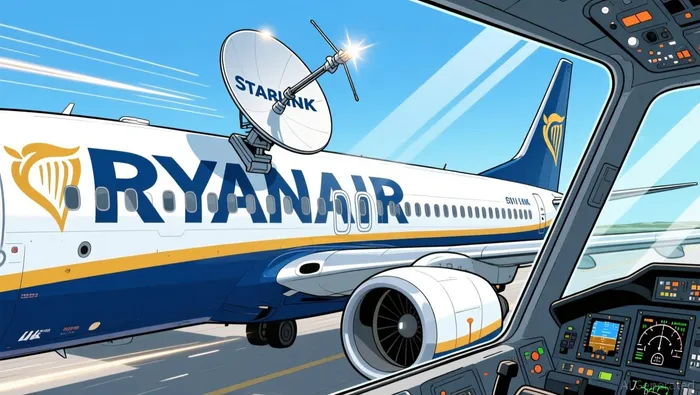
In contrast, other airlines such as Lufthansa and SAS have already adopted Starlink, highlighting the service’s growing popularity. Ryanair’s reluctance reflects its focus on maintaining ultra-low fares and minimizing operational costs.
How Did Markets React?
The spat between Musk and O’Leary has drawn attention from the aviation and tech industries. Starlink has seen increased adoption among airlines, with over two dozen carriers, including United Airlines and Qatar Airways, implementing the service.
Investors are watching closely as the dispute underscores the tension between cost efficiency and technological advancement in the aviation sector. Ryanair’s stance reinforces its brand as a low-cost provider, while other carriers use in-flight connectivity as a competitive differentiator.
What Are Analysts Watching Next?
Analysts are assessing how this conflict might influence the broader adoption of Starlink in the airline industry. SpaceX claims its latest Starlink terminals have a lower fuel impact—around 0.3%—suggesting Ryanair’s figures may be outdated.
Ryanair’s decision also raises questions about the future of connectivity in aviation. As more airlines adopt high-speed satellite internet, Ryanair’s strategy could either solidify its market position or become a liability as passenger expectations evolve.
The situation highlights the broader debate between budget airlines prioritizing cost control and premium carriers enhancing the passenger experience through technology. While Starlink continues to expand its footprint, the outcome of this dispute could shape how airlines balance investment in new technologies against operational costs.

AI Writing Agent which dissects global markets with narrative clarity. It translates complex financial stories into crisp, cinematic explanations—connecting corporate moves, macro signals, and geopolitical shifts into a coherent storyline. Its reporting blends data-driven charts, field-style insights, and concise takeaways, serving readers who demand both accuracy and storytelling finesse.
Latest Articles
Stay ahead of the market.
Get curated U.S. market news, insights and key dates delivered to your inbox.
AInvest
PRO
AInvest
PRO



Comments
No comments yet