
The Musk Revolution: Can a New Political Party Disrupt Tech and Media?
Elon Musk's July 2025 announcement of the “America Party” marks a bold leap into political entrepreneurship—one that could reshape the tech and media landscapes as profoundly as his ventures in electric cars or space exploration. The party's birth, fueled by a public rift with President Donald Trump over fiscal policy, signals a new phase in Musk's career: leveraging his $350 billion fortune and social media megaphone to challenge the status quo. But can political ambition translate into market disruption? The answer hinges on understanding how Musk's vision for a third party might influence regulatory environments, consumer behavior, and corporate strategies.
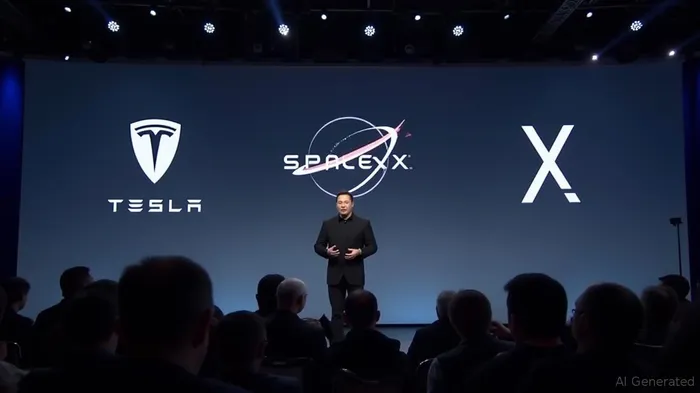
The Birth of the America Party: A Political Wildcard
The America Party emerged from Musk's disillusionment with Trump's “One Big Beautiful Bill,” which he claims will balloon the national debt by $5 trillion. By declaring the party's creation via a viral X poll—65% of 1.25 million voters supported the idea—Musk positioned himself as a centrist disruptor. His platform, though vague, emphasizes fiscal conservatism, free speech, and tech-friendly policies. The party's immediate goal is to sway the 2026 midterms by targeting 2-3 Senate seats and 8-10 House districts.
But Musk's political venture faces steep hurdles. Third parties in the U.S. rarely gain traction, as seen in Ross Perot's 1992 campaign or Andrew Yang's Forward Party. The America Party's lack of a detailed policy blueprint, coupled with the need to navigate state-by-state ballot access rules, raises doubts about its viability. Legal experts note that securing Federal Election Commission recognition and mobilizing voters in a two-party system could cost hundreds of millions—a small fraction of Musk's wealth, but a significant gamble.
Market Implications: Tech and Media in the Crosshairs
The party's potential impact on tech and media is twofold: regulatory shifts and corporate influence.
First, fiscal conservatism could reshape government spending, directly affecting tech firms reliant on public contracts. Musk's Department of Government Efficiency (DOGE) role hinted at his desire to curb waste, and the America Party may push for cuts to programs like NASA's moon missions or infrastructure grants. For companies like BoeingBA-- or Lockheed MartinLMT--, this could mean reduced revenue streams. Meanwhile, Musk's TeslaTSLA-- and SpaceX might gain an edge if the party prioritizes private-sector innovation over bureaucratic projects.
Second, the America Party's stance on free speech could redefine content moderation norms. As X's owner, Musk has long opposed regulations that limit expression, even at the cost of fostering misinformation. A political platform endorsing free speech could embolden social media platforms to resist Section 230 reforms or antitrust probes. For MetaMETA--, Twitter's competitor, this creates uncertainty: Will the party's influence embolden users to demand less moderation, or will it accelerate calls for stricter oversight?
Risks and Challenges: The Long Road to Disruption
Despite Musk's resources, the America Party's success is far from assured. The two-party system's inertia is formidable. Even with $280 million in Trump campaign donations behind him, Musk's lack of political infrastructure—no grassroots network, untested candidates—leaves the party vulnerable. A splintered Republican base might welcome the America Party as a protest vehicle, but Democrats could exploit the divide to gain seats.
Moreover, Musk's personal brand carries risks. His volatility—threatening to deport himself or mocking rivals—could alienate moderates. Regulatory backlash is another wildcard: If the party's pro-technology policies clash with labor or environmental groups, it might face lawsuits or consumer boycotts.
Investment Considerations: Navigating the Political Crosscurrents
For investors, the America Party's rise creates both opportunities and pitfalls.
Tech Stocks: Companies with exposure to federal contracts, like defense contractors or clean energy firms, could face headwinds if spending cuts materialize. Conversely, tech firms with a “Musk-friendly” profile—such as AI startups or space exploration ventures—might benefit from deregulation or tax incentives.
Media and Social Media: X's valuation could surge if the America Party's political messaging drives user growth, but regulatory scrutiny of content policies remains a threat. Investors in traditional media, like CBS or DisneyDIS--, might see muted growth if the party's free-speech ethos weakens ad revenue from brands wary of misinformation.
Sector-Specific Plays:
- Winners: Companies with agile regulatory strategies, like cloud-based AI firms (e.g., NVIDIA), or those betting on privatized space exploration (e.g., Blue Origin).
- Losers: Firms reliant on government subsidies (e.g., First Solar) or those facing antitrust scrutiny (e.g., Google).
Conclusion: A Risky Bet on Disruption
Musk's America Party is as much a political experiment as it is a business play. Its success depends on translating Musk's personal brand into a coherent platform—and overcoming the structural barriers to third-party politics. For investors, the key is to monitor two metrics: the party's ability to secure ballot access and its influence on legislative priorities.
In the short term, volatility in tech and media stocks is inevitable. But over the long term, the party's disruptive potential could redefine which companies thrive in an era of political flux. As Musk himself might say: “The only way to do great work is to love what you do.” Now, he's betting that love can extend to politics—and the market will be watching closely.

Stay ahead of the market.
Get curated U.S. market news, insights and key dates delivered to your inbox.


AInvest
PRO
AInvest
PRO



Comments
No comments yet