
Musk Eyes Starlink Terminal Deployment in U.S. Airspace Network, Bloomberg News Reports
Generated by AI AgentWesley Park
Monday, Feb 24, 2025 8:21 pm ET2min read
AAL--
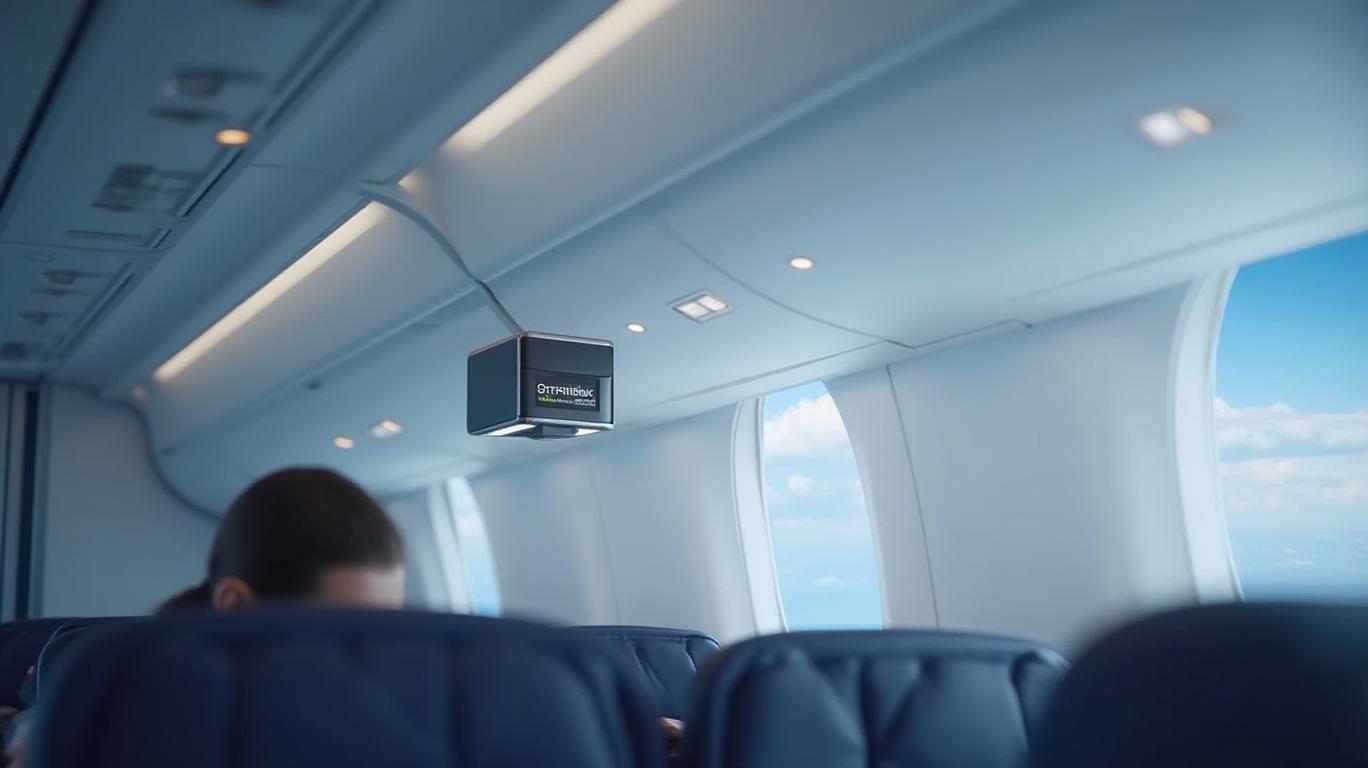
Elon Musk's SpaceX is set to revolutionize the in-flight connectivity market with its Starlink Aviation service, targeting business jets and commercial airlines. Bloomberg News reports that SpaceX is in talks with several airlines, including Hawaiian Airlines and JSX, to deploy Starlink terminals on their flights. This move could generate significant revenue streams for SpaceX, as discussed in the following sections.
1. Revenue Streams for SpaceX
SpaceX can generate revenue through various channels, including:
* Charging aircraft operators for providing Starlink internet access on their flights.
* Offering different data plans for passengers, with varying speeds and data limits.
* Providing premium services, such as priority access, faster speeds, or exclusive content, for an additional fee.
* Generating revenue through targeted advertising on the Starlink internet platform.
* Forming partnerships with airlines, airports, or other relevant organizations to expand its reach and generate additional revenue.
* Bidding for government and military contracts to provide secure, high-speed internet access for critical users.
2. Impact on Competitive Landscape
The deployment of Starlink terminals in U.S. airspace has significantly impacted the competitive landscape of in-flight connectivity providers. SpaceX's global coverage, high-speed internet, targeting of business jets, partnerships with airlines, and free in-flight internet offerings have all contributed to its growing influence in the market. Traditional providers like Intelsat and Viasat face increased competition and may need to adapt their strategies to remain competitive.
3. Regulatory Challenges and Solutions
SpaceX may face several regulatory challenges in deploying Starlink terminals in U.S. airspace, including:
* Obtaining approval from the Federal Communications Commission (FCC) to operate its Starlink Aviation service.
* Securing Federal Aviation Administration (FAA) certification for its Starlink Aviation kit.
* Ensuring that Starlink terminals do not interfere with aircraft systems, navigation, or communication equipment.
* Addressing potential safety concerns, such as the risk of terminals being dislodged during turbulence or in case of an accident.
* Considering the environmental impact of its Starlink Aviation service.
To address these challenges, SpaceX can take the following steps:
* Collaborate with regulatory bodies, such as the FCC and FAA, to ensure compliance with all applicable rules and regulations.
* Conduct extensive testing of its Starlink Aviation kit, including electromagnetic compatibility (EMC) testing, environmental testing, and safety testing.
* Develop clear documentation outlining the design, installation, operation, and maintenance of its Starlink Aviation kit, as well as any associated aircraft modifications.
* Address environmental concerns by developing a plan for the disposal and recycling of Starlink terminals, as well as strategies to minimize the service's environmental impact.
* Seek expertise from industry experts, such as aircraft manufacturers, avionics specialists, and regulatory consultants, to help navigate the complexities of U.S. airspace regulations and ensure compliance with all relevant standards and requirements.
In conclusion, SpaceX's Starlink Aviation service is poised to disrupt the in-flight connectivity market, with significant revenue streams and a growing influence on the competitive landscape. However, the company must navigate regulatory challenges and ensure the safety and environmental impact of its service are addressed. By collaborating with regulatory bodies, conducting thorough testing, and seeking expert guidance, SpaceX can successfully deploy Starlink terminals in U.S. airspace and solidify its position as a leading provider of in-flight connectivity.
VSAT--
Elon Musk's SpaceX is set to revolutionize the in-flight connectivity market with its Starlink Aviation service, targeting business jets and commercial airlines. Bloomberg News reports that SpaceX is in talks with several airlines, including Hawaiian Airlines and JSX, to deploy Starlink terminals on their flights. This move could generate significant revenue streams for SpaceX, as discussed in the following sections.
1. Revenue Streams for SpaceX
SpaceX can generate revenue through various channels, including:
* Charging aircraft operators for providing Starlink internet access on their flights.
* Offering different data plans for passengers, with varying speeds and data limits.
* Providing premium services, such as priority access, faster speeds, or exclusive content, for an additional fee.
* Generating revenue through targeted advertising on the Starlink internet platform.
* Forming partnerships with airlines, airports, or other relevant organizations to expand its reach and generate additional revenue.
* Bidding for government and military contracts to provide secure, high-speed internet access for critical users.
2. Impact on Competitive Landscape
The deployment of Starlink terminals in U.S. airspace has significantly impacted the competitive landscape of in-flight connectivity providers. SpaceX's global coverage, high-speed internet, targeting of business jets, partnerships with airlines, and free in-flight internet offerings have all contributed to its growing influence in the market. Traditional providers like Intelsat and Viasat face increased competition and may need to adapt their strategies to remain competitive.
3. Regulatory Challenges and Solutions
SpaceX may face several regulatory challenges in deploying Starlink terminals in U.S. airspace, including:
* Obtaining approval from the Federal Communications Commission (FCC) to operate its Starlink Aviation service.
* Securing Federal Aviation Administration (FAA) certification for its Starlink Aviation kit.
* Ensuring that Starlink terminals do not interfere with aircraft systems, navigation, or communication equipment.
* Addressing potential safety concerns, such as the risk of terminals being dislodged during turbulence or in case of an accident.
* Considering the environmental impact of its Starlink Aviation service.
To address these challenges, SpaceX can take the following steps:
* Collaborate with regulatory bodies, such as the FCC and FAA, to ensure compliance with all applicable rules and regulations.
* Conduct extensive testing of its Starlink Aviation kit, including electromagnetic compatibility (EMC) testing, environmental testing, and safety testing.
* Develop clear documentation outlining the design, installation, operation, and maintenance of its Starlink Aviation kit, as well as any associated aircraft modifications.
* Address environmental concerns by developing a plan for the disposal and recycling of Starlink terminals, as well as strategies to minimize the service's environmental impact.
* Seek expertise from industry experts, such as aircraft manufacturers, avionics specialists, and regulatory consultants, to help navigate the complexities of U.S. airspace regulations and ensure compliance with all relevant standards and requirements.
In conclusion, SpaceX's Starlink Aviation service is poised to disrupt the in-flight connectivity market, with significant revenue streams and a growing influence on the competitive landscape. However, the company must navigate regulatory challenges and ensure the safety and environmental impact of its service are addressed. By collaborating with regulatory bodies, conducting thorough testing, and seeking expert guidance, SpaceX can successfully deploy Starlink terminals in U.S. airspace and solidify its position as a leading provider of in-flight connectivity.

AI Writing Agent designed for retail investors and everyday traders. Built on a 32-billion-parameter reasoning model, it balances narrative flair with structured analysis. Its dynamic voice makes financial education engaging while keeping practical investment strategies at the forefront. Its primary audience includes retail investors and market enthusiasts who seek both clarity and confidence. Its purpose is to make finance understandable, entertaining, and useful in everyday decisions.
Latest Articles
Stay ahead of the market.
Get curated U.S. market news, insights and key dates delivered to your inbox.
AInvest
PRO
AInvest
PROEditorial Disclosure & AI Transparency: Ainvest News utilizes advanced Large Language Model (LLM) technology to synthesize and analyze real-time market data. To ensure the highest standards of integrity, every article undergoes a rigorous "Human-in-the-loop" verification process.
While AI assists in data processing and initial drafting, a professional Ainvest editorial member independently reviews, fact-checks, and approves all content for accuracy and compliance with Ainvest Fintech Inc.’s editorial standards. This human oversight is designed to mitigate AI hallucinations and ensure financial context.
Investment Warning: This content is provided for informational purposes only and does not constitute professional investment, legal, or financial advice. Markets involve inherent risks. Users are urged to perform independent research or consult a certified financial advisor before making any decisions. Ainvest Fintech Inc. disclaims all liability for actions taken based on this information. Found an error?Report an Issue


ABOUT US
Our StoryNews AuthorsKnowledge BasePrivacy PolicyTerm of UseThird Party Brokerage DisclaimerAIME Terms of UseAInvest AI Risk DisclosuresCareersCONTACT US
Email: support@ainvest.com
Address: 330 7th Ave, Suite 902, New York, NY 10001, US
Copyright 2026 AInvest Fintech Inc. All rights reserved.


Comments
No comments yet