
Musk’s Davos Debut: Optimus Robot to Launch by End of 2027
 Aime Summary
Key Takeaways
- Elon Musk made his first-ever appearance at the Davos forum, signaling a shift in tone toward global policymakers.
- Tesla’s Optimus humanoid robot could be sold to the public before the end of 2027, pending safety and capability checks.
- AI, robotics, autonomy, and space-based computing were positioned as Musk’s next major growth pillars.
- Tesla shares rose sharply as markets welcomed clearer timelines for new revenue drivers.
- Musk emphasized optimism about the future, arguing abundance will reshape the global economy.
Elon Musk has previously criticized the World Economic Forum in Davos, calling it “extremely boring.” Yet he appears to have changed his view, making his first-ever appearance at the forum and bringing updates from across his business empire.
Musk declared that ubiquitous AI and robotics will drive an unprecedented expansion of the global economy, ultimately making human labor unnecessary. By 2030 or 2031, he said, AI will be smarter than the combined intelligence of all humans. “At some point, goods and services will be extremely abundant, and there will be more robots than people,” Musk said.
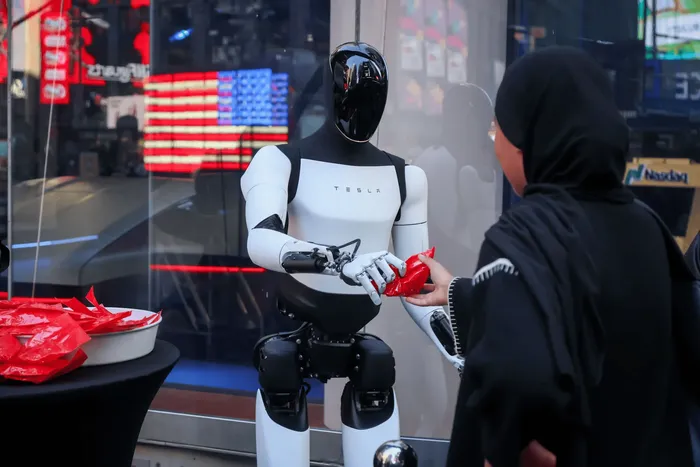
He noted that robots are already performing simple tasks in TeslaTSLA-- factories. By the end of 2026, they will be capable of more complex work, and before the end of 2027, Tesla plans to sell its Optimus humanoid robot to the public — provided it meets strict safety and performance standards.
Following these remarks, Tesla shares jumped more than 4% by the close. Amid intense competition in the electric vehicle market and two consecutive years of declining deliveries, Tesla is in urgent need of new growth drivers. Previously, the production timeline for Optimus had been vague, and the newly specified schedule sparked significant investor excitement.
Musk has said before that by 2040, the number of robots could reach 10 billion units or more, each priced between $20,000 and $25,000. If the robot business proves successful, Tesla’s valuation could potentially reach $25 trillion to $30 trillion. While such figures may sound fantastical today, Musk’s track record suggests he should not be underestimated.
What Else Did Musk Say?
Another widely watched growth engine, Full Self-Driving (FSD), also saw progress. Tesla hopes to gain full FSD approval in Europe and China as early as next month, while Robotaxi services could become widespread across the U.S. by 2027.
Investors are closely watching when Tesla will remove safety drivers from its Robotaxi service in Austin and expand fully autonomous operations to other U.S. cities. Musk, however, did not provide further details on these points.
Another highlight was the concept of space-based data centers. SpaceX plans to begin launching solar-powered satellites within the next few years, with the expectation that space-based data centers could ease competition for energy between data centers and residential users on Earth, offering the lowest-cost solution. Musk suggested this ambition could be realized within two to three years.
Additionally, SpaceX aims to achieve fully reusable rockets this year, potentially reducing launch costs to below $100 per pound.
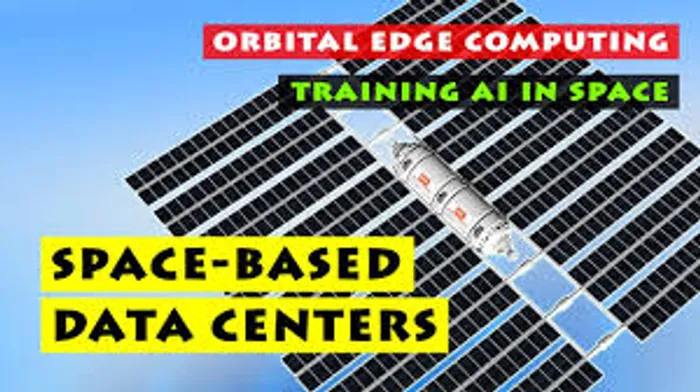
To address the growing tension between data centers and households over electricity consumption, Musk said that beyond space-based data centers, he is also pushing for expanded renewable energy generation. A solar panel area of roughly 26,000 square kilometers could theoretically power the entire United States. Teams at Tesla and SpaceX are working toward building annual solar manufacturing capacity of 100 gigawatts in the U.S. within three years.
Musk also touched on longevity, saying aging is a solvable problem, but warning that if humans were to live forever, society might “lack vibrancy.”
In closing, Musk urged people to remain optimistic about the future. “If you want to improve the quality of life,” he said, “it’s better to be optimistic and wrong than pessimistic and right.”

Senior Research Analyst at Ainvest, formerly with Tiger Brokers for two years. Over 10 years of U.S. stock trading experience and 8 years in Futures and Forex. Graduate of University of South Wales.
Latest Articles
Stay ahead of the market.
Get curated U.S. market news, insights and key dates delivered to your inbox.
AInvest
PRO
AInvest
PRO



Comments
No comments yet