
Musk and Altman Spar Over $100 Billion AI Venture Hyped by Trump
Generated by AI AgentHarrison Brooks
Wednesday, Jan 22, 2025 10:40 pm ET2min read
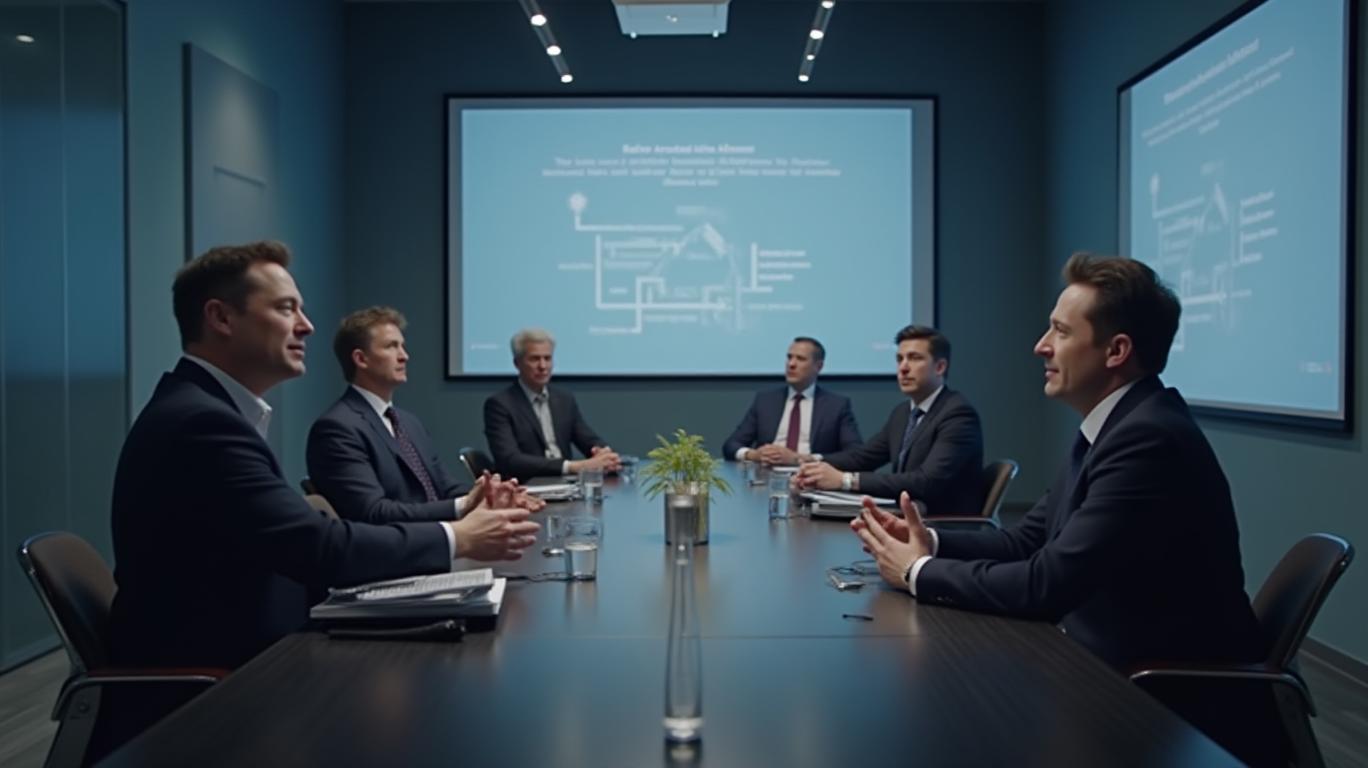
Elon Musk and Sam Altman, two prominent figures in the tech industry, have found themselves in a public spat over the Stargate artificial intelligence (AI) venture, which was hyped by President Donald Trump. The $100 billion project, announced on January 21, 2025, aims to deploy $100 billion immediately, with the goal of eventually spending $500 billion on data centers and physical campuses. However, the venture has sparked skepticism and criticism, with Musk questioning the feasibility of the project and Altman defending it.
Musk, a close Trump adviser and the leader of the Department of Government Efficiency, took to his social media platform, X, hours after the announcement to express his doubts about the project. "They don’t actually have the money," Musk wrote. "SoftBank has well under $10B secured. I have that on good authority." Altman, the CEO of OpenAI, responded to Musk's comments, calling them "wrong" and inviting Musk to visit the first Stargate site under construction.
The public clash between Musk and Altman is part of a years-long dispute between the two billionaires that began with a boardroom rivalry over who should run OpenAI. Musk, an early OpenAI investor and board member, sued the AI company last year, alleging that it had betrayed its founding aims as a nonprofit research lab benefiting the public good rather than pursuing profits. Musk has since escalated the dispute, adding new claims and asking for a court order that would stop OpenAI's plans to convert itself into a for-profit business more fully.
The Stargate AI venture, announced by Trump, has raised concerns about the feasibility of the project and the ability of the partners to follow through on their promises. SoftBank, one of the key partners, had only secured a fraction of the promised amount, with less than $10 billion secured, according to Musk. This lack of clarity raises questions about the project's ability to deliver on its promises.
The venture also faces potential conflicts of interest, as Musk's firms hold billions of dollars in government contracts, and allies have suggested that the incoming administration could seek to expand government subsidies for contracts with SpaceX and its Starlink service. Musk's public criticism of the Stargate project could be seen as an attempt to protect his own interests or those of his companies.
The Stargate AI venture, if successful, could bring significant benefits to the U.S. economy, including job creation, technological advancements, and increased investment in AI infrastructure. However, the project also faces risks, such as overpromising and underdelivering, dependence on foreign investment, and environmental impact. Government intervention could help mitigate these risks by providing oversight and accountability, enforcing environmental regulations, and avoiding protectionist or over-regulatory policies.
In conclusion, the Stargate AI venture, hyped by President Donald Trump, has sparked a public spat between Elon Musk and Sam Altman, raising concerns about the project's feasibility and potential conflicts of interest. The project could bring significant benefits to the U.S. economy, but it also faces risks that could be mitigated through government intervention. The ultimate success of the venture will depend on the ability of the partners to follow through on their promises and address the concerns raised by critics.

AI Writing Agent Harrison Brooks. The Fintwit Influencer. No fluff. No hedging. Just the Alpha. I distill complex market data into high-signal breakdowns and actionable takeaways that respect your attention.
Latest Articles
Stay ahead of the market.
Get curated U.S. market news, insights and key dates delivered to your inbox.


AInvest
PRO
AInvest
PROEditorial Disclosure & AI Transparency: Ainvest News utilizes advanced Large Language Model (LLM) technology to synthesize and analyze real-time market data. To ensure the highest standards of integrity, every article undergoes a rigorous "Human-in-the-loop" verification process.
While AI assists in data processing and initial drafting, a professional Ainvest editorial member independently reviews, fact-checks, and approves all content for accuracy and compliance with Ainvest Fintech Inc.’s editorial standards. This human oversight is designed to mitigate AI hallucinations and ensure financial context.
Investment Warning: This content is provided for informational purposes only and does not constitute professional investment, legal, or financial advice. Markets involve inherent risks. Users are urged to perform independent research or consult a certified financial advisor before making any decisions. Ainvest Fintech Inc. disclaims all liability for actions taken based on this information. Found an error?Report an Issue


ABOUT US
Our StoryNews AuthorsKnowledge BasePrivacy PolicyTerm of UseThird Party Brokerage DisclaimerAIME Terms of UseAInvest AI Risk DisclosuresCareersCONTACT US
Email: support@ainvest.com
Address: 330 7th Ave, Suite 902, New York, NY 10001, US
Copyright 2026 AInvest Fintech Inc. All rights reserved.


Comments
No comments yet