
The Murdoch Transition: Governance, Control, and the Resilience of Legacy Media Empires


 Aime Summary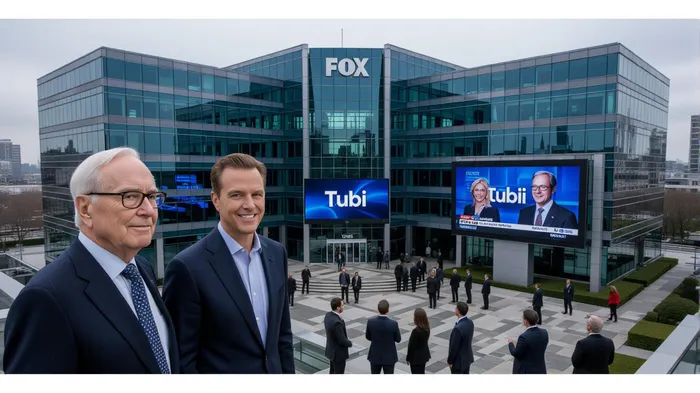
The consolidation of power within legacy media empires has long been a double-edged sword. On one hand, centralized control can ensure ideological consistency and strategic coherence; on the other, it risks stifling adaptability in rapidly evolving markets. Rupert Murdoch's recent governance transition—culminating in Lachlan Murdoch's unchallenged leadership of News CorpNWSA-- and Fox Corp—offers a case study in how family dynamics shape shareholder value and market resilience. This analysis examines the financial and structural implications of the 2025 settlement, its alignment with broader media industry trends, and the investment risks and opportunities it creates.
The Governance Transition: A Strategic Reconfiguration
Rupert Murdoch's media empire, spanning News Corp and Fox Corp, has been a cornerstone of global media for decades. However, the protracted family dispute over control—resolved in 2025—revealed the fragility of legacy governance models. The original trust, designed to distribute voting rights equally among Murdoch's four eldest children, created a power vacuum that threatened the empire's ideological and editorial direction. By restructuring the trust to grant Lachlan full control, the Murdochs prioritized long-term stability over short-term equity dilution.
The $3.3 billion buyout of Prudence, Elisabeth, and James Murdoch—funded by the sale of shares in both companies—reduced the family's voting stake from 40% to one-third. While this diluted ownership, it eliminated dissent and centralized decision-making under Lachlan, who now holds 36.2% of Fox Corp's Class B stock and 33.1% of News Corp's. This shift mirrors broader trends in family-owned enterprises, where governance clarity often trumps immediate financial gains to secure long-term value.
Financial Performance: Post-Transition Momentum
The market's response to the transition has been largely positive. Fox Corp's Q1 2025 revenue surged 11% year-over-year to $3.56 billion, driven by political advertising and the growth of Tubi, its ad-supported streaming platform. EBITDA rose 21% to $1.05 billion, reflecting the company's ability to monetize digital transformation. Shareholder value has also been bolstered by a $1 billion buyback program, contributing to a 16% year-to-date gain in Fox's stock price. News Corp, while less volatile, saw a 6% rise in its shares, supported by the Wall Street Journal's subscription model and cost-cutting measures.
Historical data on earnings beats further contextualizes this momentum. A backtest of FOXA and NWS's performance when beating earnings expectations from 2022 to 2025 reveals that while short-term gains are inconsistent—37.5% win rates for both 3-day and 10-day periods—longer-term holding periods show stronger reliability, with a 62.5% win rate over 30 days. The maximum observed return of 2.58% over 30 days underscores the potential for moderate gains when earnings outperform, though it also highlights the limited upside of a simple buy-and-hold strategy in this sector.
These results underscore the importance of governance certainty in capital markets. By resolving internal conflicts, the Murdochs have reduced operational friction and aligned incentives with investors. However, the centralized model introduces risks. Critics argue that Lachlan's control could entrench ideological rigidity, particularly in content strategy, and limit oversight in an era of regulatory scrutiny.
Investment Implications: Balancing Resilience and Risk
For investors, the Murdoch transition highlights two critical themes: governance structure and adaptability to market forces.
Governance as a Value Driver: The buyout and trust restructuring demonstrate that resolving internal disputes can unlock value by reducing uncertainty. Lachlan's control ensures continuity in editorial strategy, which is crucial for maintaining the conservative brand identity that underpins Fox News' political advertising revenue. However, investors must weigh this against the potential for reduced innovation or regulatory backlash.
Digital Transformation as a Lifeline: Legacy media companies face existential threats from streaming and social media. Fox's Tubi and News Corp's digital assets represent critical growth opportunities. Tubi's 21% EBITDA growth in Q1 2025 suggests that ad-supported models can thrive if paired with advanced targeting capabilities. Investors should monitor how effectively these platforms scale and whether they can offset declines in traditional TV.
Political and Regulatory Exposure: Fox Corp's alignment with right-wing ideologies exposes it to regulatory risks, particularly in the U.S. where media licensing and antitrust scrutiny are intensifying. Lachlan's unchecked authority may accelerate strategic bets (e.g., mergers and acquisitions) but could also provoke pushback from regulators or advertisers.
The Path Forward: Lessons for Legacy Media
The Murdoch case offers broader lessons for investors evaluating legacy media empires. First, governance transitions must prioritize strategic coherence over short-term financial gains. Second, digital innovation is no longer optional—it is existential. Third, ideological alignment with market trends (or divergence from them) will increasingly dictate resilience.
For Fox and News Corp, the next phase will test Lachlan's ability to balance these forces. The success of Tubi, the sustainability of political ad revenue, and the company's response to regulatory pressures will be key metrics. Investors should also watch for signs of governance fatigue—centralized control can erode agility over time.
Conclusion: A Model for the Future?
Rupert Murdoch's consolidation of control is a testament to the enduring power of legacy media, but it also underscores the fragility of such models in a decentralized world. While the 2025 transition has stabilized the Murdochs' empire, it has not eliminated the fundamental challenges facing media: technological disruption, shifting consumer habits, and polarized markets.
For investors, the takeaway is clear: governance clarity and digital adaptability are non-negotiables. The Murdoch transition provides a blueprint for managing family-owned media empires, but its long-term success will depend on Lachlan's ability to innovate without compromising the ideological core that defines the brand. In an era of uncertainty, this balance may be the most valuable asset of all."""

Delivering real-time insights and analysis on emerging financial trends and market movements.
Latest Articles
Stay ahead of the market.
Get curated U.S. market news, insights and key dates delivered to your inbox.
AInvest
PRO
AInvest
PRO



Comments
No comments yet