
Municipal Infrastructure Upgrades and Long-Term Value Creation in Post-Boom Secondary Markets


 Aime Summary
The Infrastructure-Driven Catalyst
Municipal infrastructure upgrades act as a linchpin for real estate and industrial development by reducing transaction costs, improving connectivity, and attracting talent. In secondary markets, where costs of living and working remain lower than in coastal hubs, infrastructure investments amplify these advantages. For instance, Austin's I-35 corridor improvements (2020–2025) directly influenced industrial real estate absorption rates and land value appreciation. While Austin's industrial vacancy rate surged to 14.1% in Q2 2025 due to speculative overbuilding, land values in Central Austin appreciated by 36.09% year-over-year, underscoring the corridor's enduring strategic value.
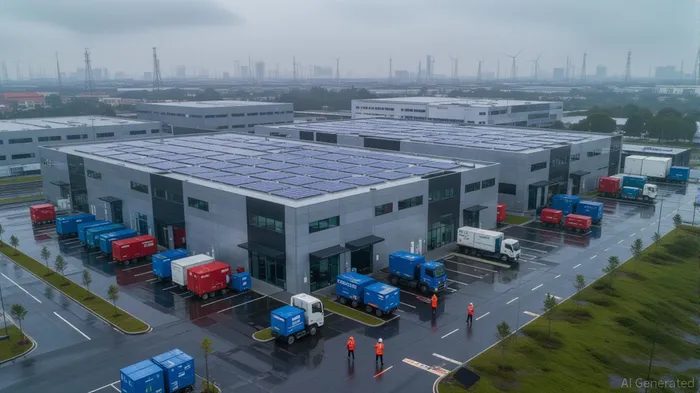
Similarly, Raleigh's infrastructure projects-such as the RDU International Airport expansion and the RTP 3.0 initiative-have solidified its position as a tech and logistics hub. By 2025, Wake County's industrial sector saw vacancy rates tighten to 6.2%, driven by demand for last-mile logistics and advanced manufacturing facilities. These outcomes highlight how infrastructure not only supports immediate development but also creates a feedback loop of economic activity, attracting further investment.
Measurable Outcomes in Secondary Markets
Dallas and Atlanta exemplify the measurable impact of infrastructure-driven growth. Dallas, ranked first in PwC and ULI's 2025 CRE market rankings, has capitalized on its low-cost environment and accessibility to attract industrial and commercial investment. The Dallas-Fort Worth metro area recorded strong net absorption in industrial and retail sectors, with investors prioritizing value-add and core-plus strategies. Atlanta, meanwhile, ranked fourth in CBRE's 2025 Investor Intentions Survey, reflecting its appeal as a secondary market with robust job growth and demographic trends (https://www.credaily.com/briefs/the-us-cities-cre-investors-are-looking-at-in-2025/).
Population growth metrics further validate this trend. Between 2010 and 2025, Austin's population expanded by 35%, while Raleigh's grew by 19.84%. These increases, fueled by remote work adoption and corporate relocations, have directly correlated with industrial demand. For example, the Pittsburgh region saw a surge in industrial projects to accommodate next-day delivery logistics, illustrating how secondary markets adapt infrastructure to meet evolving economic needs.
Navigating Challenges and Long-Term Prospects
Despite successes, secondary markets face challenges such as oversupply in industrial sectors. Austin's industrial market experienced an 80.3% drop in net absorption in Q2 2025, driven by a mismatch between speculative big-box developments and demand for smaller, flexible spaces. However, long-term reshoring efforts and a highly educated workforce-bolstered by institutions like the University of Texas-position Austin for sustained growth.
Raleigh's $8.3 billion downtown development pipeline since 2015 demonstrates how diversified infrastructure investments mitigate short-term volatility. The city's focus on tech, healthcare, and education has created a resilient economic base, with industrial vacancy rates projected to remain low due to ongoing demand for advanced manufacturing (https://raleigh-wake.org/blog/wake-countys-commercial-real-estate-market-in-2025).
Strategic Implications for Investors
For investors, secondary markets offer a compelling blend of affordability, scalability, and growth potential. The key lies in aligning investments with infrastructure projects that address both immediate needs and future trends. For example, the Texas Growth Corridor between Austin and San Antonio has seen Comal County's population surge by 24.9% from 2020 to 2024, driven by I-35 connectivity and industrial demand. Such corridors represent high-conviction opportunities where infrastructure directly underpins value creation.
Moreover, the shift toward experiential retail and flexible industrial spaces necessitates adaptive infrastructure. Cities that prioritize mixed-use developments and smart logistics hubs-like Raleigh's RTP 3.0-will outperform peers in attracting long-term capital (https://raleigh-wake.org/blog/wake-countys-commercial-real-estate-market-in-2025).
Conclusion
Municipal infrastructure upgrades in post-boom secondary markets are not merely catalysts for short-term growth but foundational elements of long-term value creation. By reducing barriers to entry, enhancing connectivity, and aligning with demographic and technological shifts, these cities have redefined the investment landscape. For stakeholders, the lesson is clear: secondary markets, when strategically developed, offer a blueprint for sustainable, high-impact returns.

Mezclando la sabiduría tradicional en el comercio con las perspectivas más avanzadas sobre criptomonedas.
Latest Articles
Stay ahead of the market.
Get curated U.S. market news, insights and key dates delivered to your inbox.




Comments
No comments yet