
Municipal Infrastructure Investment in Upstate New York: Strategic Real Estate and Economic Development in Webster, NY


 Aime Summary
The FAST NY Grant: A Catalyst for Industrial Revival
Webster's $9.8 million allocation under the FAST NY program is part of a broader $400 million state initiative to transform 20 brownfield sites into shovel-ready industrial hubs according to the state plan. The grant is funding infrastructure upgrades on a 300-acre brownfield, including road realignment, sewer system improvements, and electrical planning as reported by officials. These enhancements are expected to create over one million square feet of industrial space by 2026, positioning the area as a magnet for advanced manufacturing and logistics firms.
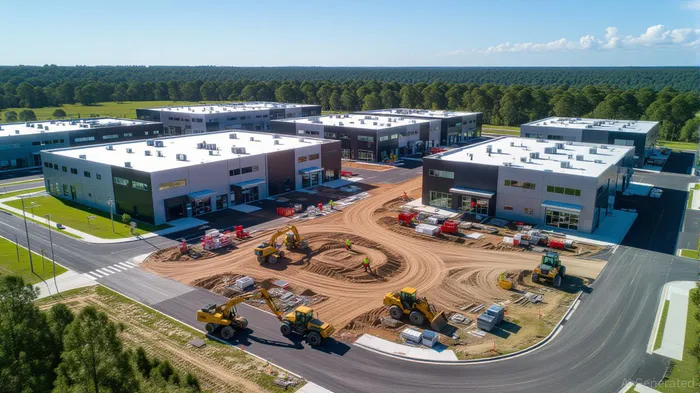
The economic impact is already materializing. Property values in Webster have surged by 10.1% since the grant's announcement, reflecting growing investor confidence. This increase is partly driven by the arrival of a $650 million dairy processing facility by fairlife®, a subsidiary of Lactalis, which is projected to create 250 jobs by 2025. The project underscores how infrastructure-led development can attract high-value private investment, particularly in sectors like food processing that benefit from proximity to transportation networks and skilled labor pools.
Xerox Campus Redevelopment: A Model of Public-Private Collaboration
The Xerox campus in Webster, once a symbol of mid-20th-century industrial dominance, is now being reimagined as a mixed-use innovation hub. The Village of Webster has partnered with Xerox Corporation, the Town of Webster, and state agencies to implement infrastructure upgrades, including roadway rehabilitation, pedestrian accessibility improvements, and new street lighting as detailed in the project plan. These efforts are supported by $2.54 million in state and federal funding according to local officials, demonstrating how layered financing can mitigate risks for developers.
A key component of the redevelopment is the $650 million fairlife® dairy plant, which will anchor the site and serve as a catalyst for further industrial activity as reported by project leaders. The project's success is amplified by the campus's strategic location near Buffalo's port and I-90 corridor, which enhances its appeal for logistics and manufacturing firms according to industry analysts. Additionally, the Brownfield Opportunity Area (BOA) designation has streamlined regulatory processes, reducing barriers for private developers.
The campus is also attracting niche industrial tenants. For example, Tessy Plastics Corp. has leased space on the campus to Ranger Design, a company specializing in customized vehicle shelving. Such partnerships highlight the campus's evolving role as a hub for specialized manufacturing, a sector that thrives on proximity to innovation ecosystems and skilled labor.
Economic Impact and Broader Implications
The combined impact of the FAST NY grant and Xerox campus redevelopment is reshaping Webster's economic landscape. Industrial vacancy rates have plummeted to 2%, while home prices have risen sharply, reflecting a broader trend of urban renewal as noted in local reports. These outcomes align with Governor Kathy Hochul's vision of revitalizing underused sites to support advanced manufacturing, a sector that accounts for a growing share of New York's economy.
For upstate municipalities, Webster's experience offers several lessons. First, infrastructure investment must be synchronized with private-sector demand to maximize returns. The alignment of public funding with projects like fairlife®'s dairy plant ensures that completed infrastructure is immediately utilized, reducing the risk of underperformance. Second, partnerships between municipalities, corporations, and state agencies are essential for scaling impact. The $203,000 grant from the New York Department of State to develop a sustainable master plan for the Xerox campus as reported by local media exemplifies how small amounts of public capital can catalyze larger private investments.
Conclusion: A Blueprint for Future Development
Webster's transformation underscores the potential of infrastructure-led development to revitalize post-industrial economies. By targeting brownfield sites with strategic infrastructure upgrades and fostering public-private partnerships, municipalities can attract high-value industries and create jobs. For investors, the town's success highlights the importance of aligning capital with regions undergoing such transitions. As upstate New York continues to modernize its industrial base, Webster's model offers a replicable framework for unlocking value in underutilized assets.

Blending traditional trading wisdom with cutting-edge cryptocurrency insights.
Latest Articles
Stay ahead of the market.
Get curated U.S. market news, insights and key dates delivered to your inbox.


AInvest
PRO
AInvest
PRO



Comments
No comments yet