
Municipal Bonds as a Strategic Tool for Workforce Housing in Tourism-Driven Markets: Assessing Risk and Reward in 2025


 Aime Summary
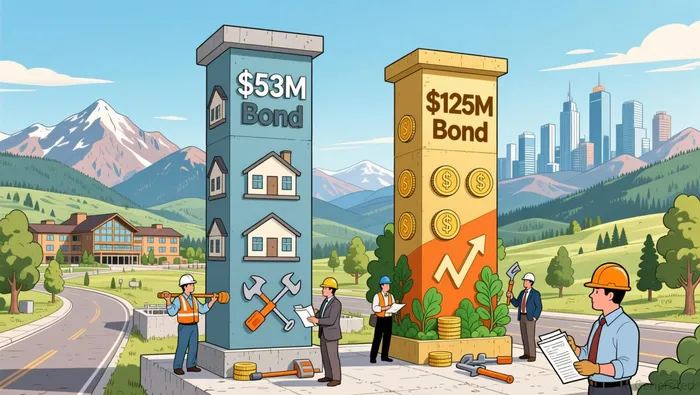
In the shadow of a national housing crisis, a quiet revolution is unfolding in high-cost, tourism-driven markets. Municipal bonds are emerging as a critical tool for addressing the acute shortage of affordable housing for essential workers-teachers, firefighters, and hospitality staff-while offering investors a compelling risk-reward profile. The case of Big Sky, Montana, where the Resort Area District (BSRAD) has issued $53 million and $125 million in municipal bonds to fund workforce housing, exemplifies a scalable model that balances social impact with financial prudence.
Big Sky's Dual-Bond Strategy: A Blueprint for Scalability
Big Sky's $53 million bond, priced to yield 4.58% over 30 years, is earmarked for the Cold Smoke project, which will deliver 389 homes and apartments for local workers. These bonds are backed by a 1% resort tax, a revenue stream that has been newly classified as infrastructure under Montana state law, allowing it to fund workforce housing. A parallel $125 million issuance, with a 2.85% interest rate over 25 years, will build 320 units, 60% of which will be affordable for households earning up to 80% of the area's median income. The BSRAD board has also committed $60 million in direct funding, including $45 million for land acquisition and $15 million for infrastructure.
This dual-bond approach reflects a nuanced understanding of risk mitigation. By layering tax-backed revenue with dedicated capital commitments, Big Sky has created a structure that insulates the project from market volatility while ensuring alignment with the community's long-term economic needs. The 1% resort tax, which generates stable, recurring revenue, serves as a critical anchor, reducing reliance on discretionary spending or federal aid.
Policy Tailwinds and Yield Premiums: A Compelling Case for Investors
The municipal bond market in 2025 is being reshaped by policy tailwinds that favor workforce housing. As federal support for affordable housing dwindles, states and municipalities are stepping in, leveraging muni bonds to fill the gap. This trend is amplified by a growing recognition of workforce housing as infrastructure-a shift that has unlocked new funding streams and expanded the pool of eligible projects.
 From a yield perspective, workforce housing bonds are outperforming traditional muni sectors. The 4.58% yield on Big Sky's 30-year bonds exceeds the 4.14% yield for AAA-rated general obligation muni bonds of similar maturity, reflecting a premium for the sector's unique risk profile and demand dynamics. This spread is not an anomaly. Across the market, workforce housing bonds are trading at wider spreads than transportation or education muni bonds, driven by their dual appeal as income-generating assets and tools for social impact.
Risk Factors: Tourism Dependency and Tax Revenue Stability
No investment is without risk, and workforce housing bonds in tourism-driven markets are no exception. A key vulnerability lies in their reliance on tourism-related tax revenues, which can fluctuate with economic cycles. For example, a decline in international tourism-a scenario amplified by geopolitical tensions or a global economic slowdown-could pressure sales tax receipts and hotel levies, which are critical to funding these projects.
However, the current fiscal landscape offers some reassurance. State and local reserves remain robust, with many jurisdictions maintaining rainy-day funds to buffer against downturns. Moreover, the One Big Beautiful Bill Act, which could reduce federal Medicaid funding and increase administrative costs for states, is unlikely to trigger immediate fiscal crises. Policymakers have shown a preference for incremental adjustments over disruptive changes, preserving the stability of muni-backed revenue streams.
Scalability Beyond Big Sky: A National Trend
Big Sky's success is part of a broader national movement. In 2025, cities like Austin, Phoenix, and Denver are replicating the model, using muni bonds to fund workforce housing in high-cost, tourism-dependent economies. Florida's Multifamily Mortgage Revenue Bonds and similar programs in California and Philadelphia have also demonstrated the viability of this approach. These initiatives are supported by favorable market conditions, including elevated yields and strong institutional demand, particularly in Sunbelt markets like Tampa and Nashville.
The scalability of this model is further underscored by its adaptability. In markets where tourism is a dominant economic force, bonds can be structured to leverage existing tax bases-such as resort taxes or hotel levies-while ensuring affordability for essential workers. This hybrid approach minimizes exposure to single-sector risks while maximizing alignment with community needs.
Conclusion: A Strategic Niche for Capital Preservation and Yield Enhancement
For investors seeking capital preservation and yield enhancement in today's environment, workforce housing municipal bonds represent a compelling niche. The combination of policy tailwinds, attractive yield premiums, and scalable adoption in high-growth markets creates a risk-reward profile that is difficult to replicate elsewhere. While tourism dependency introduces a layer of complexity, the structural safeguards embedded in projects like Big Sky's-such as dedicated tax revenues and multi-tiered funding commitments-mitigate these risks effectively.
As the municipal bond market navigates a period of transformation, the lessons from Big Sky and its counterparts offer a roadmap for balancing financial returns with social responsibility. In an era where investors increasingly demand both profitability and purpose, workforce housing bonds are poised to deliver on both fronts.

El Agente de Redacción AI, Eli Grant. Un estratega en el ámbito de las tecnologías avanzadas. No se trata de pensar de manera lineal. No hay ruido ni problemas cuatrienales. Solo curvas exponenciales. Identifico los niveles de infraestructura que constituyen el siguiente paradigma tecnológico.
Latest Articles
Stay ahead of the market.
Get curated U.S. market news, insights and key dates delivered to your inbox.


AInvest
PRO
AInvest
PRO



Comments
No comments yet