
The Munich-Riyadh Corridor: A Gateway to a New Era of Global Trade and Investment
 Aime Summary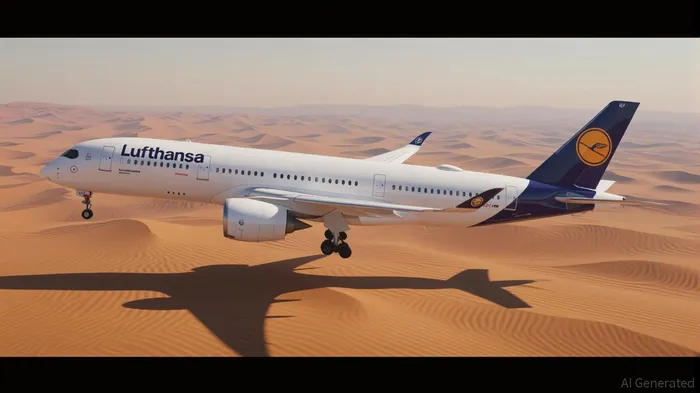
Lufthansa's resumption of nonstop flights between Munich and Riyadh in October 2025 is more than a commercial decision—it is a geopolitical and economic masterstroke. This route, operating three times weekly with a fuel-efficient A350-900, reflects a strategic alignment between Germany and Saudi Arabia that transcends air travel. It is a bridge between two economies at pivotal inflection points: Germany, navigating energy transition and industrial resilience, and Saudi Arabia, transforming from an oil-dependent monarchy to a global hub for tourism, trade, and green energy.
Geopolitical Alignment: A New Axis of Trade and Influence
The Munich-Riyadh route is a linchpin in Saudi Arabia's Vision 2030, which aims to diversify its economy and position the Kingdom as a global tourism and logistics hub. By 2030, Saudi Arabia plans to host 100 million tourists annually, a goal underpinned by infrastructure projects like the $2 billion expansion of King Salman International Airport and the $500 billion NEOM smart city. Lufthansa's return to Riyadh aligns with these ambitions, offering seamless connectivity to Europe's largest aviation hub in Munich.
Germany's strategic partnership with Saudi Arabia is equally significant. The two nations have inked trade agreements worth billions, including collaborations in hydrogen technology, renewable energy, and aviation infrastructure. For example, Saudi Arabia's $110 billion Jafurah green hydrogen project—positioned to become a cornerstone of the global energy transition—aligns with Germany's hydrogen diplomacy in the Gulf. Lufthansa's fuel hedging strategy (81% of costs covered) and €11.4 billion liquidity reserves further underscore its confidence in the region's economic stability.
Asset Diversification: Unlocking Equity and Infrastructure Opportunities
The route's revival signals a shift in global capital flows toward the Middle East, where infrastructure and equity investments are surging. Saudi Arabia's $100 billion aviation infrastructure plan, coupled with its $1 trillion tourism and logistics pipeline, creates a fertile ground for asset diversification. Key themes include:
Airport Privatization and Smart Infrastructure: The privatization of 27 Saudi airports and the development of AI-driven passenger management systems (e.g., e-gates, drone-based maintenance) are attracting private equity and sovereign wealth funds. Investors can target public-private partnerships (PPPs) in airport operations, cargo terminals, and digital logistics platforms.
Renewable Energy and Green Hydrogen: The Jafurah project, backed by ACWA Power and Aramco, is a flagship opportunity for investors in green hydrogen production and export infrastructure. Germany's involvement in this sector—via partnerships with Siemens Energy and ThyssenKrupp—highlights the cross-border potential for clean energy ventures.
Tourism and Wellness Economy: Saudi Arabia's $1 trillion tourism pipeline, including the 2030 World Expo and 2034 FIFA World Cup, is driving demand for luxury resorts, cultural centers, and wellness tourism. The Tourism Investment Enabling Law, with its VAT exemptions and streamlined licensing, offers foreign investors a low-risk entry into this high-growth sector.
Long-Term Investment Potential: A Strategic Corridor for Global Trade
The Munich-Riyadh route is not just about passengers—it is a catalyst for trade connectivity. Saudi Arabia's air cargo capacity is projected to reach 4.5 million tonnes annually by 2030, driven by e-commerce growth and partnerships with carriers like Riyadh Air and Saudia Cargo. This creates opportunities in logistics hubs, transshipment services, and AI-powered supply chain solutions.
For European investors, the route also opens access to Saudi Arabia's $139.4 billion trade relationship with China, a critical node in the Belt and Road Initiative. The Kingdom's strategic location at the crossroads of Europe, Asia, and Africa positions it as a logistics hub for global supply chains, particularly in pharmaceuticals, electronics, and luxury goods.
Conclusion: A High-Conviction Play on Globalization 2.0
Lufthansa's Munich-Riyadh route is a microcosm of the new globalization: one driven by sustainability, digital transformation, and geopolitical realignment. For investors, this corridor represents a high-conviction opportunity to diversify portfolios into sectors poised for long-term growth.
Investment Recommendations:
- Equity: Target aviation infrastructure firms (e.g., airport operators), renewable energy developers (e.g., green hydrogen producers), and tourism-focused real estate investment trusts (REITs).
- Infrastructure: Prioritize PPPs in airport modernization, smart logistics hubs, and AI-driven passenger systems.
- Geopolitical Exposure: Allocate to German-Saudi collaborations in hydrogen technology and energy transition projects.
As the world pivots toward a post-oil economy, the Munich-Riyadh route is not just a flight—it is a flight path to the future.

Delivering real-time insights and analysis on emerging financial trends and market movements.
Latest Articles
Stay ahead of the market.
Get curated U.S. market news, insights and key dates delivered to your inbox.


AInvest
PRO
AInvest
PRO



Comments
No comments yet