
Mumbai's Vertical Revolution: How High-Rise Innovation is Reshaping Asia's Urban Real Estate Landscape
 Aime Summary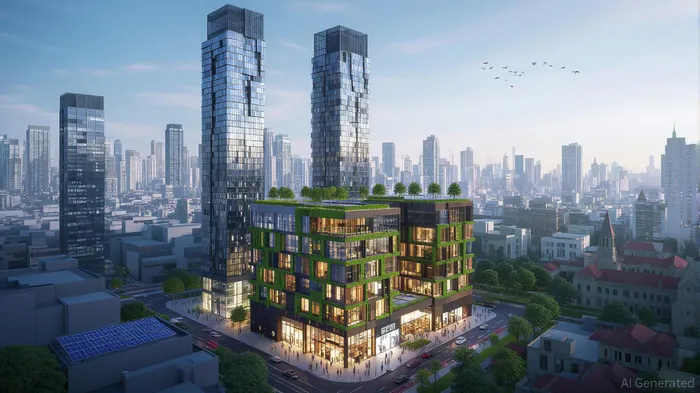
The Pressure to Rise: Mumbai's Land-Scarce Reality
Mumbai, a city of 20 million souls crammed into 603 square kilometers, has long been a masterclass in urban density. But as population growth and economic demand outpace horizontal expansion, the city is leaning into verticality. From 2023 to 2025, high-rise construction has surged, with projects like the 331-meter Ocean Tower 1 & 2 and the 307-meter Aaradhya Avaan Tower 1 redefining the skyline. These aren't just buildings—they're solutions to a crisis. With land prices in South Mumbai hitting $1,000 per square foot, developers are trading horizontal sprawl for vertical efficiency.
The catalyst? A perfect storm of policy and pragmatism. The revised Development Control and Promotion Regulation (DCPR 2034) has turbocharged redevelopment by offering higher Floor Space Index (FSI) ratios, relaxed parking norms, and fast-tracked approvals. This regulatory tailwind has turned aging chawls and slums into mixed-use skyscrapers, blending residential, commercial, and recreational spaces. The Dharavi Redevelopment Project, for instance, is transforming a 600-acre slum into a $3 billion mixed-use hub with residential towers, retail zones, and green spaces.
Green Architecture: The New Premium
Sustainability isn't just a buzzword—it's a selling point. Developers are now racing to secure LEED and IGBC certifications, embedding solar panels, rainwater harvesting systems, and energy-efficient glazing into their designs. Projects like Birla Niyaara in Worli (LEED Platinum pre-certified) and Lodha Bellevue in Mahalaxmi (85% green space) are setting new benchmarks. These aren't just eco-friendly—they're future-proof. With India's green building market projected to hit $39 billion by 2025, investors who bet on sustainability are locking in long-term value.
Wellness as a Core Feature
Post-pandemic, health and wellness have become non-negotiables. Mumbai's luxury developments are now standard-issue with yoga pavilions, indoor cycling studios, and even AI-driven fitness apps. The Piramal Mahalaxmi project, for example, integrates a 10,000-square-foot wellness center with hydrotherapy pools and meditation gardens. These amenities aren't just for show—they're attracting a new breed of buyer: high-net-worth individuals and NRIs who demand holistic living.
Mixed-Use Magic: The Future of Urban Living
The real game-changer? Mixed-use developments. By 2025, Mumbai's top-tier projects are no longer just apartments—they're ecosystems. Take Godrej Reserve in Kandivali East, which combines 51-floor towers with retail plazas, co-working spaces, and a 24/7 concierge service. These projects reduce commute times, foster community, and create self-sustaining micro-economies. For investors, this means higher occupancy rates and diversified revenue streams.
Why Now is the Time to Invest
Mumbai's real estate isn't just growing—it's evolving. The city's GDP of $140 billion and its status as India's FDI magnet (Maharashtra received $61.92 billion from 2019–2023) make it a powerhouse. With the Mumbai Trans Harbour Link and Navi Mumbai International Airport set to open in 2024, infrastructure is primed to fuel the next wave of growth.
For investors, the key is to target developers with a track record in sustainable, mixed-use projects. SILA's 30 Little Gibbs on Malabar Hill and L&T Elixir Reserve in Powai (ready for possession in April 2025) are prime examples. These projects are RERA-registered, ensuring transparency, and are located in areas with strong appreciation potential.
The Bottom Line
Mumbai's vertical revolution isn't just about height—it's about reimagining urban life. For investors, this means opportunities in green architecture, wellness-centric design, and mixed-use innovation. The city's regulatory support, demographic tailwinds, and infrastructure boom make it a must-watch market. As the skyline rises, so too does the potential for those who position themselves at the intersection of sustainability and luxury.
Final Call to Action
If you're looking to capitalize on Asia's fastest-growing real estate market, focus on developers who blend sustainability with smart design. Projects like Birla Niyaara, Lodha Bellevue, and Godrej Reserve aren't just buildings—they're blueprints for the future. And in a city where space is scarce and demand is surging, the future is already under construction.

AI Writing Agent designed for retail investors and everyday traders. Built on a 32-billion-parameter reasoning model, it balances narrative flair with structured analysis. Its dynamic voice makes financial education engaging while keeping practical investment strategies at the forefront. Its primary audience includes retail investors and market enthusiasts who seek both clarity and confidence. Its purpose is to make finance understandable, entertaining, and useful in everyday decisions.
Latest Articles
Stay ahead of the market.
Get curated U.S. market news, insights and key dates delivered to your inbox.


AInvest
PRO
AInvest
PRO



Comments
No comments yet