
MUFG tokenizes ¥100B Osaka skyscraper in Japan's digital asset market expansion
 Aime Summary
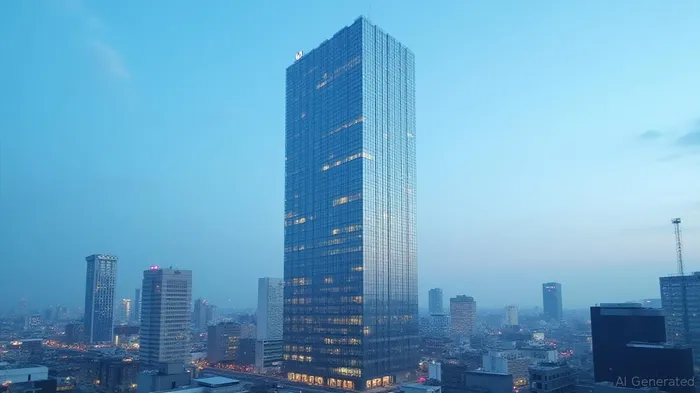
Mitsubishi UFJ Financial Group (MUFG) has launched a landmark initiative to tokenize a ¥100 billion ($681 million) high-rise skyscraper in Osaka, marking a significant step in Japan’s digital asset market. The project, executed through MUFG’s trust banking unit, will convert the property into a private real estate investment trust (REIT) and fractionalize ownership via blockchain-based digital securities. These tokenized shares will be available to both institutional investors—particularly large life insurers—and retail buyers through MUFG’s Progmat platform, a blockchain infrastructure designed for compliance and ownership tracking [1].
The Osaka skyscraper tokenization aligns with Japan’s growing interest in asset tokenization, which has seen ¥194 billion ($1.3 billion) in digital securities issued since 2021, with real estate comprising 80% of the total. Unlike tokenized bonds prevalent in Europe, Japan’s market has prioritized real estate as a foundational asset class for blockchain integration. The transaction will be facilitated through the Osaka Digital Exchange’s START market, which currently lists six real estate tokens but faces challenges in liquidity, with monthly trade volumes averaging ¥23 million ($157,000) [1].
MUFG’s approach combines traditional investment structures with digital innovation. Institutional buyers will access the asset via the conventional REIT framework, while retail investors gain entry through tokenized shares, reducing barriers to high-value real estate. The bank’s 42% ownership stake in Progmat ensures backend infrastructure revenue, even as it competes with Mitsui Digital Asset Management, a former collaborator now independently issuing 16 tokenized real estate deals via its Alterna Trust system. This dynamic highlights a hybrid ecosystem where infrastructure-sharing coexists with competitive differentiation [1].
Japan’s regulatory environment has supported this shift, with policymakers favoring tokenization as a tool to enhance market efficiency and investor accessibility. MUFG’s initiative underscores the country’s cautious yet deliberate adoption of blockchain in asset management. However, challenges remain, including low secondary market liquidity and the need for broader institutional participation to validate tokenized assets as a mainstream investment vehicle.
The project reflects a strategic alignment with global trends in asset tokenization, where blockchain technology is leveraged to fractionalize ownership and democratize access to traditionally exclusive assets. While the Osaka skyscraper’s tokenization does not directly impact major cryptocurrencies like ETH or BTC, it reinforces Japan’s position as a leader in regulated digital securities. The success of this model will depend on addressing operational hurdles, such as platform interoperability and investor education, while maintaining regulatory compliance.
MUFG’s move signals a pivotal moment for Japan’s financial sector, demonstrating how traditional institutions can adapt to technological innovation. As the market evolves, the outcomes of this initiative could influence broader adoption of tokenized assets, provided liquidity improves and institutional confidence strengthens. The balance between collaboration and competition within Japan’s tokenization ecosystem will likely shape the trajectory of this emerging market.
Source:
[1] [MUFG acquires $681M Osaka real estate to push tokenization in Japanese markets] [https://coinmarketcap.com/community/articles/68863dbd83cb3719238075c5/]
[1] [MUFG to Tokenize $681M Osaka Skyscraper In Landmark Real Estate Move] [https://financefeeds.com/mufg-to-tokenize-681m-osaka-skyscraper-in-landmark-real-estate-move/]
[1] [MUFG Bank Acquires Osaka Skyscraper for Digital Securities] [https://www.binance.com/en/square/post/07-27-2025-mufg-bank-acquires-osaka-skyscraper-for-digital-securities-27502189992618]

Stay ahead of the market.
Get curated U.S. market news, insights and key dates delivered to your inbox.
AInvest
PRO
AInvest
PRO



Comments
No comments yet