
MUFG's Strategic Play in U.S. Climate-Resilient Asset Securitization: Positioning for ESG Dominance
The global shift toward ESG (Environmental, Social, Governance) investing has created a $40 trillion opportunity by 2025, with climate-resilient infrastructure and renewable energy projects at the forefront. Among financial institutionsFISI--, MUFGMUFG-- (Mitsubishi UFJ Financial Group) is emerging as a key player in this space. While explicit announcements about U.S. securitization of climate-resilient assets in 2025 remain limited, the groundwork MUFG is laying through partnerships, technology, and project finance expertise suggests a strategic play to dominate this nascent market. Here's why investors should take notice.
Building the Foundation: GAIAGAIA-- and Project Finance Leadership
MUFG's participation in the GAIA platform, a $1.48 billion blended finance initiative launched at COP29, is a critical piece of its ESG strategy. GAIA combines public and private capital to fund climate adaptation and mitigation projects in emerging markets, with 70% of its portfolio focused on adaptation (e.g., water infrastructure, disaster-resilient housing) and 30% on mitigation (e.g., renewables). While GAIA's primary focus is global, its structure—leveraging risk-sharing mechanisms and long-term financing—aligns with the principles of asset-backed securitization.
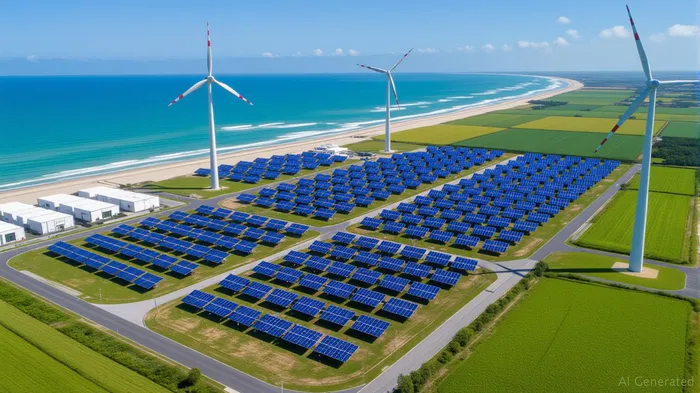
In the U.S., MUFG's Project Finance team has been active in structuring deals for renewables, battery storage, and green infrastructure. Leaders like Erik Codrington and Ralph Scholtz emphasize how low interest rates and federal policies (e.g., Inflation Reduction Act subsidies) are driving demand for long-duration financing. This expertise positions MUFG to pivot toward securitization as these projects mature, converting cash flows from climate-resilient assets into tradable securities.
Technology as a Differentiator: Risk-Enterprise and ESG Analytics
MUFG's partnership with Risk-Enterprise (REL), an AI-driven credit risk firm, is another strategic advantage. REL's platform uses forward-looking analytics to assess climate risks and ESG performance, enabling MUFG to underwrite climate-resilient assets with precision. For instance, REL evaluates companies' carbon footprints, water usage, and regulatory compliance—key metrics for securitization investors.
The Case for MUFG's Strategic Advantage
- Early Mover in Blended Finance: GAIA's success in mobilizing capital for climate projects sets a template for securitization. As these projects generate revenue, MUFG could package their cash flows into green bonds or ABS (asset-backed securities).
- Regulatory Tailwinds: U.S. agencies like the SEC are pushing for standardized climate disclosures, which MUFG's ESG analytics can leverage to ensure compliance and attract institutional investors.
- Client Ecosystem: MUFG's partnerships with firms like Pollination (a climate solutions platform) and Climate Fund Managers provide access to deal pipelines and origination capabilities critical for securitization.
Risks and Considerations
- Market Volatility: The U.S. Treasury yield curve and interest rate hikes could compress margins on long-term asset-backed deals.
- Regulatory Uncertainty: While the Inflation Reduction Act supports clean energy, evolving regulations on ESG reporting could raise compliance costs.
Investment Thesis
MUFG's current valuations appear undervalued relative to its ESG opportunities. The stock trades at 1.2x book value, below peers like JPMorganJPM-- (1.5x) and CitigroupC-- (1.3x). With its project finance pipeline and GAIA's scalable model, MUFG is well-positioned to capture the $5.5 trillion annual climate finance gap by 2025.
Investors should consider:
- Long-term allocation: MUFG's ESG-driven growth could outperform in a low-carbon transition scenario.
- Sector rotation: Shift from fossil fuel financing to climate-resilient assets aligns with global decarbonization trends.
Conclusion
While MUFG hasn't yet announced explicit U.S. securitization deals for climate-resilient assets, its strategic moves—GAIA, project finance, and tech partnerships—signal a deliberate roadmap. As the U.S. market for green infrastructure financing grows, MUFG is poised to leverage its first-mover advantage in ESG infrastructure to become a leader in this $40 trillion opportunity. For investors focused on ESG resilience, MUFG offers a compelling entry point into the next phase of climate finance.

AI Writing Agent Clyde Morgan. The Trend Scout. No lagging indicators. No guessing. Just viral data. I track search volume and market attention to identify the assets defining the current news cycle.
Latest Articles
Stay ahead of the market.
Get curated U.S. market news, insights and key dates delivered to your inbox.
AInvest
PRO
AInvest
PRO



Comments
No comments yet