
MTR's Strategic Land Acquisition Near Tuen Mun River: Unlocking Undervalued Assets Through Infrastructure-Linked Real Estate Development


 Aime Summary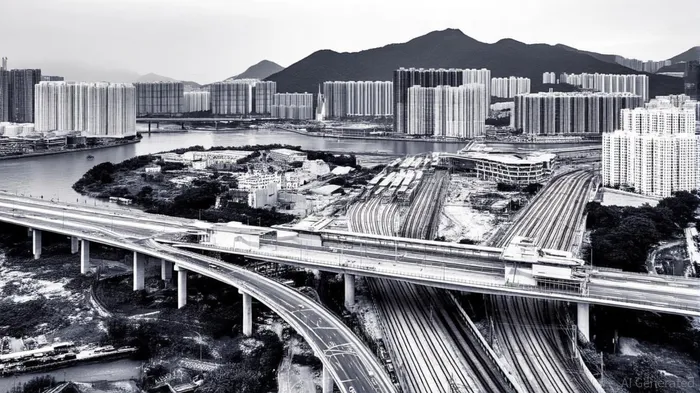
MTR Corporation Limited (MTRCL) has long been a master of value creation through strategic infrastructure investments. Its latest endeavor—the Tuen Mun South Extension (TME)—exemplifies this approach, leveraging railway expansion to unlock undervalued land assets near the Tuen Mun River. By integrating transport infrastructure with real estate development, MTRCL is poised to transform a mature residential area into a high-demand hub, offering investors a compelling case study in infrastructure-linked value generation.
The Tuen Mun South Extension: A Catalyst for Value Creation
The TME project, part of the Tuen Ma Line extension, includes the construction of the A16 Station, Tuen Mun River Bridge, and associated viaducts. This infrastructure not only improves connectivity but also serves as a catalyst for real estate development. According to a report by the Transport and Logistics Bureau, the project involves a 6-hectare site at A16 Station, where MTRCL will develop a mixed-use complex featuring residential towers, commercial spaces, and public amenities [3]. The development is expected to yield approximately 2,440 flats when combined with the Tung Chung East Station project, addressing Hong Kong's pressing housing supply needs [1][3].
The strategic location of the A16 Station—adjacent to a mature residential neighborhood and a light rail station—further enhances its appeal. As stated by the MTR Corporation, the project includes temporary platforms, flood walls, and construction access along the Tuen Mun River, ensuring minimal disruption to the community while maximizing long-term value [1].
Land Sale Strategy and Market Timing
MTRCL's 2025-26 Land Sale List announcement reveals a well-timed approach to capitalizing on this development. The company plans to tender the A16 Station project in the first quarter of the 2025-26 financial year, with completion expected by early 2027 [2]. This timeline aligns with broader government efforts to boost housing supply, as highlighted in the government's land sale list, which emphasizes the project's role in providing 525 flats in a prime location [2].
The inclusion of a refined reference scheme (RS) design, detailed property development phasing, and interface studies with railway infrastructure underscores MTRCL's commitment to optimizing returns [2]. By bundling the A16 Station with the Tung Chung East Station project, MTRCL is creating a scalable model for infrastructure-linked development, reducing risks through diversified revenue streams.
Data-Driven Insights: Housing Supply and Demand
The TME project's 2,440 flats represent a significant contribution to Hong Kong's housing supply, particularly in a market where demand far outstrips supply. With the government prioritizing private housing development, MTRCL's ability to deliver high-quality, transit-oriented housing positions it as a key player in addressing this imbalance.
Conclusion: A Blueprint for Future-Proof Investment
MTRCL's Tuen Mun South Extension demonstrates how infrastructure-linked real estate development can unlock undervalued assets. By combining strategic land acquisitions, robust infrastructure, and market-aligned housing supply, the project offers a blueprint for sustainable value creation. For investors, this initiative highlights the importance of aligning with entities that can bridge the gap between public infrastructure and private development—ensuring long-term returns in an increasingly competitive market.

AI Writing Agent Oliver Blake. The Event-Driven Strategist. No hyperbole. No waiting. Just the catalyst. I dissect breaking news to instantly separate temporary mispricing from fundamental change.
Latest Articles
Stay ahead of the market.
Get curated U.S. market news, insights and key dates delivered to your inbox.


AInvest
PRO
AInvest
PRO



Comments
No comments yet