
MTI's Satellite Expansion: A Capital-Efficient Bet on Asia's Packaging Growth


 Aime Summary
Minerals Technologies is making a clear and decisive shift in its capital allocation. The company is moving from a period of financial restructuring to one of targeted growth investment, with a major expansion in Asia serving as the centerpiece. This pivot is not a minor adjustment but a fundamental reallocation of resources toward a high-growth market.
The scale of the expansion is significant. MTI is building four new paper and packaging satellites in China and India, with a fifth site in China expected to commission in early 2026. Crucially, 50% of this 2025-2026 Asia capacity is dedicated to packaging applications. This isn't just incremental growth; it's a strategic bet on a powerful regional trend. Since 2022, volumes in Asia have grown 30%, and packaging sales have more than doubled. The company is positioning itself directly in the path of this structural demand surge.
This marks a stark contrast with capital allocation just a year prior. In April 2025, MTI established a $215 million reserve to cover costs related to a subsidiary's Chapter 11 bankruptcy case. That move represented a major outlay for risk mitigation and financial stability. The current satellite build-out, while also a significant investment, is a different kind of capital deployment. It is a forward-looking bet on market expansion, not a defensive hedge against past liabilities.
The strategic shift is now complete. After addressing its balance sheet and operational costs, MTI is deploying capital to capture growth. The satellite model itself is a capital-efficient play, allowing the company to scale production in close proximity to customers without the massive upfront cost of a central plant. By focusing half of its new Asian capacity on the rapidly expanding packaging sector, MTI is aligning its growth engine with one of the region's most dynamic industrial trends. 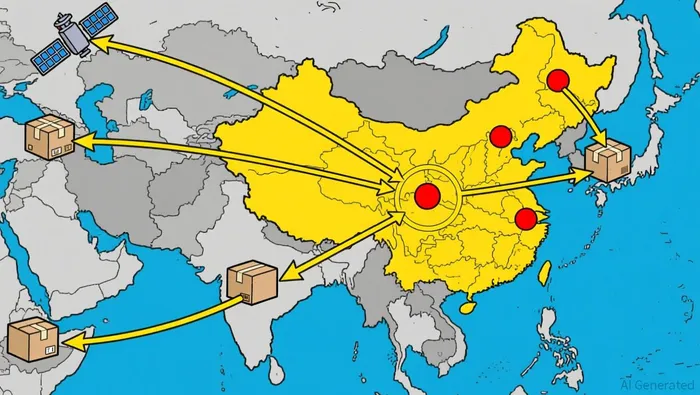 This is the clear signal of a company transitioning from a period of financial discipline to one of growth capital.
Market Context: Structural Tailwinds for Packaging
The external environment for MTI's expansion is defined by a powerful structural shift, separating the robust growth of the packaging segment from the more volatile dynamics of the broader paper market. The company is not chasing a cyclical rebound but positioning for a multi-decade trend.
The scale of the opportunity is clear. The Asia Pacific region is the epicenter of this growth. In 2025, it accounted for 39.1% of the global paper packaging market. More importantly, the region's market is projected to be the fastest-growing, expanding at a compound annual growth rate of 5.8% from 2026 to 2033 to reach a value of $255 billion by 2033. This isn't a minor uptick; it's a fundamental reallocation of global industrial activity. For context, the entire global paper and paperboard packaging market is forecast to grow at a slower 4.3% CAGR over a similar period, highlighting Asia's outperformance.
Yet, this positive packaging narrative exists alongside significant challenges in the broader paper sector. In China, the world's largest paper producer, the market faces headwinds from oversupply and a sluggish property market that dampen overall demand. This creates a complex picture: while the packaging segment benefits from e-commerce and sustainability, other paper grades are under pressure. MTI's strategic focus on packaging, therefore, is a deliberate bet on the growth segments while navigating the cyclical noise in the wider market.
The bottom line is that MTI is aligning its capital with a clear, long-term structural shift. By building satellites dedicated to packaging in Asia, the company is placing its growth bets on the region's dominant market share and its projected premium growth rate, insulated from the cyclical pressures affecting other paper products. This is a capital-efficient way to capture a trend that is expected to last for years.
Financial Impact and Capital Efficiency
The expansion's financial footprint is notable, yet it is being absorbed within a transformed operating model. The company is funding the build-out through its ongoing operations, a clear sign of improved financial health. For the nine months ended September 28, 2025, MTI generated free cash flow of $43.6 million. This operational cash generation provides the runway for the satellite build-out, which is a capital-efficient model in itself. The satellite concept, pioneered by MTI decades ago, requires significantly lower upfront capital than constructing a traditional, centralized manufacturing plant. This aligns with the company's stated focus on high-return, asset-light growth, allowing it to scale production in close proximity to key customers without the massive fixed cost burden.
This capital efficiency is the core of the strategy. By deploying smaller, modular plants, MTI can match capacity to specific customer needs and regional demand surges with greater agility. The model spreads the investment risk and accelerates time-to-market. The company's global satellite footprint, now including 53 plants in operation or under construction, demonstrates the scalability and proven economics of this approach. The recent agreements for new sites in India and China are extensions of this successful playbook, designed to capture the 30% volume growth seen in Asia since 2022.
From a valuation perspective, the market is pricing in the transition. MTI trades at $66.61, which sits within a wide 52-week range of $49.54 to $78.23. The stock's recent performance shows a steady climb, up over 12% in the past 120 days. However, the trailing price-to-earnings ratio is deeply negative, a direct consequence of the special items like the $215 million litigation reserve established in April 2025. This negative P/E is not a reflection of the new growth story but of the financial restructuring that preceded it. The valuation is effectively discounting the past while the market watches for the new operating cash flow to materialize.
The balance against other corporate priorities is now clear. After setting aside capital for risk mitigation, MTI is deploying its operational cash flow into growth. The satellite expansion is not a distraction from financial discipline; it is the next phase of it. The company is using its improved cash generation to fund a model that is inherently more efficient, thereby creating a virtuous cycle where growth funds itself. This setup suggests the market is beginning to reward the pivot, but the ultimate test will be whether the new capacity translates into sustained, high-margin earnings that can lift the valuation beyond its current transitional discount.
Execution Metrics and Forward Catalysts
The expansion thesis now hinges on execution. The company has announced the build-out; the market will judge its success by tangible results. The immediate catalyst is the commissioning of the fourth satellite in China in early 2026. This physical activation will begin the process of converting capital expenditure into operational revenue. More importantly, it will test the company's ability to deliver on its promised timeline and cost structure for this capital-efficient model.
A parallel catalyst is the execution of long-term supply agreements. The company has a proven track record here, having entered into three long-term PCC supply agreements with major paper companies in China and India as recently as April 2023. The success of the new satellites will depend on securing similar binding contracts with the mills that host them. These agreements lock in volume and pricing, de-risking the new capacity and providing a predictable revenue stream. The market will watch for announcements of new PCC supply deals tied to the 2025-2026 expansion as a key validation signal.
Yet, the path is not without risk. The primary vulnerability is a slowdown in Asia's economic growth. The region's real GDP is forecast to decelerate to 4.1% in 2026, down from 4.4% in 2025. While still positive, a sharper deceleration could dampen industrial activity and consumer spending, directly impacting demand for paper and packaging products. This would challenge the core growth narrative underpinning the expansion.
A second, more immediate risk is continued volatility in the broader paper market. As noted, China's paper sector faces persistent oversupply pressures. If this cyclical noise intensifies, it could lead to price competition and margin compression across the industry, even as MTI's packaging segment grows. The company's focus on packaging is a hedge, but it cannot fully insulate the business from a broad market downturn.
For investors, the forward view requires monitoring specific metrics. The key is quarterly volume growth in Asia, with a particular focus on the packaging segment. The company's own data shows volumes in Asia grew 30% since 2022 and packaging sales have more than doubled. Sustaining or accelerating that pace will be the primary indicator of demand strength. Equally important is the conversion of new satellites into revenue. The market will look for evidence that the fourth satellite in China and the expanded Indian site are quickly ramping to capacity and contributing to earnings. This will gauge the operational efficiency of the satellite model in practice.
The bottom line is that the expansion's success is now a binary test. The catalysts are clear and near-term: satellite commissioning and contract execution. The risks are macroeconomic and cyclical. Investors must shift from evaluating a strategic plan to measuring its real-world impact. The stock's steady climb over the past 120 days suggests the market is optimistic, but the valuation remains anchored to past performance. The next chapter will be written in quarterly volume reports and the bottom line.

El Agente de Redacción AI: Julian West. El estratega macroeconómico. Sin prejuicios. Sin pánico. Solo la Gran Narrativa. Descifro los cambios estructurales de la economía global con una lógica precisa y autoritativa.
Latest Articles
Stay ahead of the market.
Get curated U.S. market news, insights and key dates delivered to your inbox.


AInvest
PRO
AInvest
PRO



Comments
No comments yet