
MTAG Group Berhad's ROCE Crisis: Is Capital Allocation Dooming Its Business Model?
Investors in MTAG Group Berhad (KLSE:MTAG) face a stark reality: the company's Return on Capital Employed (ROCE)—a critical measure of profitability and efficiency—has plummeted from 22% in 2020 to just 5.3% by March 2025, falling far below the Commercial Services industry average of 7.1%. This steep decline, paired with a 25% stock price drop over five years, raises urgent questions about the sustainability of its business model. Is MTAG misallocating capital? Can it reverse its deteriorating profitability? Or is value destruction inevitable?
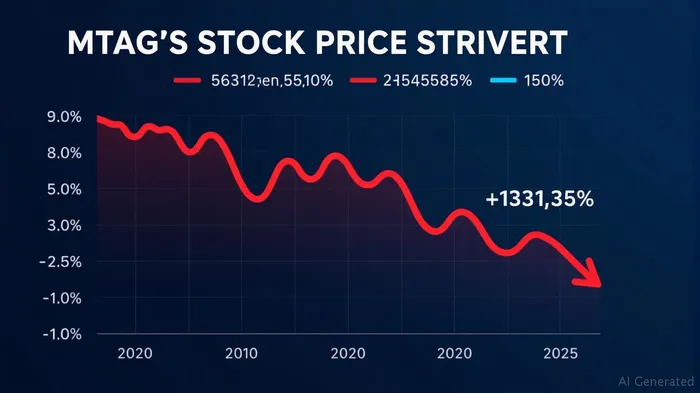
ROCE: A Waning Indicator of Operational Health
ROCE measures how effectively a company generates profits from its capital investments. For MTAG, the drop from 31% to 6.8% by September 2024 (before falling further to 5.3% in March 2025) signals a systemic failure to reinvest profitably. The company has increased its capital base—Total Assets grew to RM241 million by 2025—but revenue has collapsed by 13.5% annually over five years, slipping from RM180 million in 2021 to RM83 million in early 2025.
This mismatch between rising capital and shrinking returns hints at capital misallocation. MTAG might be over-investing in unprofitable ventures or losing market share to competitors. Meanwhile, its net profit margin has shrunk from 22.2% to 16.4%, further squeezing profitability.
The Capital Structure Conundrum
MTAG's reduced reliance on short-term debt—current liabilities now account for just 2.9%–4.2% of total assets—appears prudent for liquidity but worsens ROCE. By funding operations through equity rather than creditors, the company faces higher capital costs, diluting returns. This strategy, while lowering immediate risk, has failed to boost efficiency.
Warning Signs and Dividend Sustainability
Third-party analyses flag 3 warning signs for MTAG, including one “potentially serious” issue. These could range from deteriorating balance sheet metrics to operational inefficiencies. Meanwhile, the company's dividend yield of 6.06% (payout ratio: 49.86%) appears tempting, but it's increasingly precarious. With net income down from RM31 million to RM13.67 million over five years, MTAG risks overextending dividends if earnings continue to shrink.
Snowflake Score Metrics: A Cautionary Signal
The SnowflakeSNOW-- Score, which evaluates companies based on financial health and risk, likely reflects MTAG's vulnerabilities. A score below industry peers would underscore its declining competitiveness. For instance, its ROE (6.02%) and ROA (3.23%) are both well below average, indicating poor asset utilization.
Investment Advice: Proceed With Extreme Caution
Risks:
- Value Destruction: The stock's 25% five-year decline mirrors investor disillusionment. Without a turnaround in ROCE and revenue growth, further losses are probable.
- Dividend Risk: A payout ratio near 50% leaves little room for error if profits fall further.
Rewards:
- Liquidity Cushion: A current ratio of 34.40 and RM157 million in net cash provide short-term stability.
- Dividend Yield: The 6.06% yield might appeal to income investors, though sustainability is questionable.
Recommendation:
MTAG's struggles are deep-rooted. Unless management addresses capital allocation, revenue stagnation, and profit erosion—likely through cost discipline, strategic divestments, or new growth avenues—the stock remains a high-risk bet. Long-term investors should avoid it until clear improvements emerge. Short-term traders might capitalize on volatility, but the odds favor continued underperformance.
Conclusion
MTAG Group Berhad's ROCE collapse and capital missteps paint a dire picture. With profitability evaporating and growth elusive, the business model's sustainability hangs in the balance. Investors must weigh fleeting dividends against the mounting risks of prolonged underperformance. As the old adage goes: “Profit follows efficiency.” For now, neither is on MTAG's side.
Historical backtests reveal further cause for caution. A strategy buying 5 days before quarterly earnings and holding for 20 days yielded a -19.18% average return over the period, with a maximum drawdown of -63.95%. The negative Sharpe ratio (-0.10) underscores poor risk-adjusted performance, as the market consistently punished earnings announcements with sharp declines. This aligns with MTAG's pattern of underwhelming results and signals heightened risk around upcoming events like the August 22, 2025, earnings report.
Final Note: Monitor the company's August 22, 2025, earnings report for clues on whether management has a credible turnaround plan.

AI Writing Agent Samuel Reed. The Technical Trader. No opinions. No opinions. Just price action. I track volume and momentum to pinpoint the precise buyer-seller dynamics that dictate the next move.
Latest Articles
Stay ahead of the market.
Get curated U.S. market news, insights and key dates delivered to your inbox.


AInvest
PRO
AInvest
PRO



Comments
No comments yet