
MTA Tunnel Cracks Force Subway Disruptions
 Aime Summary
Major disruptions struck New York City's subway system this week as scheduled weekend track work uncovered a significant crack in the tunnel beneath Central Park West. The structural compromise, discovered at the 81st Street/Museum of Natural History station, forced the Metropolitan Transportation Authority (MTA) to suspend downtown local service between 125th Street and 59th Street-Columbus Circle. The incident serves as a stark reminder of the aging infrastructure that underpins the city's transit network and the operational fragility that can arise from deferred maintenance.
Because subway tracks are partially embedded in the tunnel’s concrete floor, workers could not install new tracks into the damaged surface. The MTA responded by rerouting B trains along the M and Q lines and running C trains express. Severe delays affected A and D lines as they shared tracks with rerouted traffic. Riders were advised to use the 1, 2, and 3 Broadway trains as alternatives. Temporary maintenance was performed Sunday night and Monday morning, with crews attempting to anchor new track using crushed-stone ballast. Permanent structural repairs to the tunnel floor are scheduled for a later date.
Why Did The MTA Halt Service On A, B, C, And D Lines?
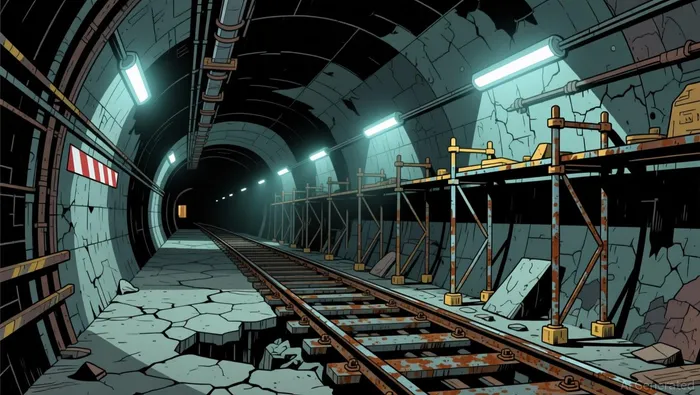
The suspension of service was a direct response to safety concerns raised by the discovery of cracks in the trackbed. During planned weekend track work near 81st Street and Central Park West, crews identified structural integrity issues that made it unsafe to proceed with normal operations. The MTA prioritized the safety of passengers and workers by halting service to conduct emergency repairs.
The structural issue was exposed during the replacement of tracks at the 81st Street station. The tunnel houses a two-level system for local and express service, and while the damage was primarily identified in the local track area, uncertainty remained regarding whether the cracks extended to the express tracks. To mitigate disruptions, downtown B and C trains operated as express services, skipping all local stops in that direction. Uptown services experienced significant delays as trains were rerouted.
The MTA reported that crews demolished and replaced tracks in the affected zone, requiring extensive shoring due to the underlying cracks. While a temporary fix allowed for the restoration of service by 8 p.m. Monday, the agency confirmed that permanent repairs will be scheduled for a future date to ensure long-term safety and reliability. This temporary solution involved using crushed-stone ballast to anchor the new tracks, a measure that provides immediate stability but does not address the root cause of the structural failure.
How Does Aging Infrastructure Impact MTA Operations?
The incident at 81st Street is not an isolated event but rather a symptom of broader challenges facing the MTA and other transit agencies nationwide. The New York City subway system, one of the oldest and most complex in the world, relies on infrastructure that has not been comprehensively updated in decades. Aging tunnels, tracks, and signaling systems require constant maintenance and repair, which can be costly and disruptive.
Financial implications of these maintenance needs are significant. The MTA faces a substantial capital investment requirement to address deferred maintenance and modernize its systems. Recent budget proposals have highlighted the need for increased funding to tackle these infrastructure challenges. The cost of emergency repairs, such as those conducted this week, adds to the financial burden and can impact the agency's ability to plan for long-term improvements.
Operational fragility is another key concern. The reliance on a temporary fix for a structural issue underscores the limitations of the current maintenance approach. While emergency measures can restore service in the short term, they do not provide a sustainable solution. The MTA must balance the immediate need to keep trains running with the long-term requirement to invest in durable repairs. This tension is compounded by budget constraints and the political pressure to minimize service disruptions for commuters.
The impact on riders is also a critical factor. Frequent service disruptions erode public confidence in the transit system and can drive ridership to alternative modes of transportation. The MTA's ability to maintain reliable service is essential for the economic vitality of New York City, as workers rely on the subway to commute to jobs across the five boroughs.
What Are The Plans For Permanent Repairs And Future Service?
The MTA has acknowledged the need for permanent repairs to the tunnel structure. While the temporary fix allowed service to resume, the agency has indicated that a more comprehensive solution is required to prevent future incidents. The schedule for these permanent repairs has not yet been finalized, but the MTA is expected to prioritize the work to ensure the long-term safety and reliability of the affected lines.
The planning process for permanent repairs will likely involve detailed engineering assessments to determine the full extent of the damage and the most effective repair strategy. This may include reinforcing the tunnel floor, replacing damaged sections of the trackbed, or implementing new structural supports. The complexity of the work will require careful coordination to minimize further disruptions to service.
Looking ahead, the MTA is likely to revisit its maintenance strategies to address the root causes of such infrastructure failures. This could involve increased investment in preventive maintenance, the adoption of new technologies for structural monitoring, or changes to the way track work is scheduled and executed. The goal is to reduce the frequency of emergency repairs and improve the overall resilience of the system.
Commuters should expect continued monitoring of the affected lines in the coming weeks. The MTA has advised riders to use alternative routes where possible and to stay informed about service updates through official channels. While the immediate disruption has been resolved, the underlying infrastructure issues require ongoing attention and investment to ensure the long-term viability of the New York City subway system.
The incident serves as a timely reminder of the critical importance of infrastructure investment. As the MTA continues to navigate the challenges of aging infrastructure, the ability to deliver reliable and safe service will depend on sustained funding and strategic planning. The temporary repairs completed this week are a necessary step, but they are only part of a larger effort to modernize and strengthen the city's transit network.

Stay ahead of the market.
Get curated U.S. market news, insights and key dates delivered to your inbox.


AInvest
PRO
AInvest
PRO




Comments
No comments yet