
Mounjaro's Heart-Health Label Is a Real Win — and Lilly's Stock Already Paid for It
 Aime Summary
On the morning of August 28, 2026, the FDA approved Mounjaro to reduce the risk of cardiovascular death, heart attack, and stroke in adults with type 2 diabetes at high risk for those events — the first claim of its kind for any GIP/GLP-1 receptor agonist. By mid-morning, Eli Lilly's stock was up about a tenth of a percent. Rounding to zero, essentially flat.
Both camps are looking at the same label. Bulls see the last meaningful marketing gap against Novo Nordisk's Ozempic finally closed — another reason to believe the class's dominant franchise can keep compounding at the nearly 50% quarterly growth it just printed. Bears see a $1.1 trillion market value that already assumed this approval and the ones after it, and a claim built on evidence that cleared the bar by a sliver. At roughly 41 times trailing earnings and about 30 times EBITDA, only one reading still has room for error.

Shared facts. As of August 28, 2026: LillyLLY-- trades near $1,178, market value about $1.11 trillion, net debt near $46 billion, dividend yield around 0.6%. The numbers both camps sign their names to:
- Operating.Second-quarter 2026 revenue rose 48% year over year to $23.0 billion. Mounjaro alone generated $9.94 billion, roughly double the prior-year quarter; Mounjaro plus Zepbound together brought in $14.9 billion. Non-GAAP EPS was $8.38 against a $6.58 consensus, and Lilly raised its full-year revenue guidance to $85–87 billion.
- The label. Based on SURPASS-CVOT, a 13,299-patient trial that ran more than four years with a median follow-up of roughly 210 weeks. The headline result: hazard ratio 0.92 (95.3% CI 0.83–1.01) for major adverse cardiovascular events versus Trulicity — 801 events in the Mounjaro arm, 862 in the comparator arm. Statistically, that is non-inferiority; superiority was not established. The topline also showed 16% lower all-cause death.
- The comparison it must beat. Ozempic has carried a cardiovascular-risk label in type 2 diabetes since January 2020, based on a 26% reduction in MACE versus placebo (hazard ratio 0.74).
- What it does not cover. The approval is for Mounjaro — the diabetes indication. Zepbound, the obesity-marketed twin of the same molecule, still has no cardiovascular claim; the obesity outcomes trial (SURMOUNT-MMO) has not reported.
Lilly's own language is worth reading twice. The company calls Mounjaro "the first and only GIP and GLP-1 receptor agonist proven" to lower heart attack, stroke, or cardiovascular death risk in this population, and notes it is the "#1 most prescribed branded type 2 diabetes medicine for adults in the U.S." Kenneth Custer, president of Lilly Cardiometabolic Health, framed the trial choice as rigor: "We set a higher bar by testing Mounjaro against a GLP-1 medicine with proven cardiovascular benefit."
Round 1 — What the claim is worth commercially. The bull's strongest version: for six and a half years, Ozempic owned the heart-health talking point in diabetes. Prescribers who wanted an incretin backed by cardiovascular outcomes had a reason to reach for semaglutide; payers increasingly weigh such evidence in formulary decisions. Mounjaro was already the best-selling branded type 2 diabetes drug in the U.S., and a meaningful slice of its patients fit the label — Lilly cites estimates that as many as one in three U.S. adults with type 2 diabetes has undetected cardiovascular disease. Closing that claim gap takes away the last structural reason to choose the competitor in the highest-risk patients.
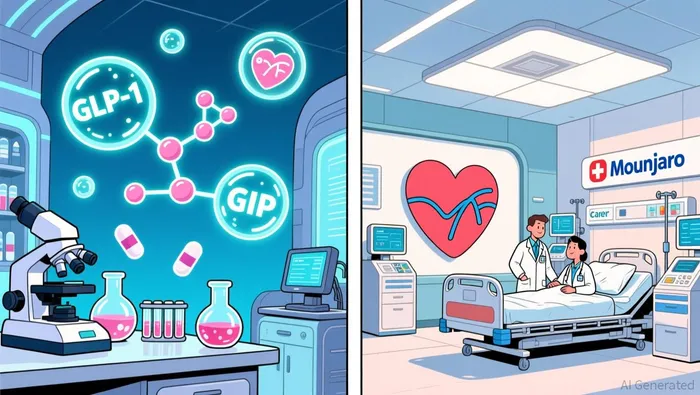
The bear's strongest answer: this is parity, not conquest. Ozempic has held the identical claim since January 2020; Mounjaro is catching up, not leaping past. And the commercially enormous half of the incretin story is weight loss, not diabetes — Zepbound still lacks a cardiovascular label, and its obesity outcome trial has not reported. A diabetes-label expansion covers the slower-growing, more deeply discounted leg of the franchise. It improves marketing, not the total addressable market. Ruling on Round 1: the bull wins the point that the gap was real and is now closed, but the bear is right that in the largest commercial arena — obesity — nothing changed today.
Round 2 — What the data actually proved. The bull's heaviest evidence: a 13,299-patient, four-plus-year trial against an active drug with proven cardiovascular benefit, not a placebo — a materially harder test — that still produced an all-cause-mortality advantage and better glycemic and weight outcomes. This is durable, difficult-to-replicate evidence now welded to the best-in-class efficacy data, and it writes the cardiovascular claim into the permanent label, not into a sales pitch.
The bear's heaviest evidence: the primary hazard ratio of 0.92 has a confidence interval that runs to 1.01 — statistically indistinguishable from no difference at the conventional threshold, which is precisely why the FDA approval is for non-inferiority rather than superiority. Meanwhile Ozempic's claim rests on a 26% reduction versus placebo. Cross-trial comparison is imperfect, and the two studies used different comparators — but that is how promotional material actually reads on a doctor's desk: 26 versus 8. Add a cautionary detail: in September 2025, the FDA warned Lilly over a direct-to-consumer video that pushed Zepbound's cardiovascular benefits before they were approved. The regulator's vigilance is a reminder of how commercially potent this exact wording is — and how eager marketers were to claim it early. Ruling on Round 2: the evidence is real, but the "first and only" headline carries more weight than the hazard ratio. Advantage, narrowly, to the bear's reading of magnitude.
Round 3 — What the price already paid. Now make both stories pay rent. The stock has returned about 61% over the past year, hit a 52-week high near $1,293, and sold for roughly 41 times trailing earnings, about 29.9 times EBITDA, and 14.5 times trailing sales at its current $1.11 trillion market value. Its chief rival, Novo Nordisk, trades near 11 times earnings and about 9 times EBITDA. That roughly fourfold gap in the multiple is the market's wager — not on whether tirzepatide works, which was settled long ago, but on whether Lilly compounds it through obesity, oral formulations, and successive molecules (an oral GLP-1 that has beaten oral semaglutide in a head-to-head trial, and a retatrutide filing expected in early 2027) before competition and Medicare price negotiation compress the economics.
Reverse the current price and the implication is blunt: Lilly's valuation already banks this label, Zepbound's cardiovascular readout, the oral product, the next molecule, and years of uninterrupted ~30%-plus growth at a ~48% operating margin. Within that base, today's approval is a check-off item. A stock that rises one-tenth of one percent on a headline like this has no new information left to be told. The label is added to a price that had already bought it.
Ruling. Separate the business from the stock, because they are not the same verdict. The business case goes to the bull: the moat is real, the evidence is durable, and this approval removes exactly the kind of awkward counter that competitors cite. The stock call at today's price goes to the bear — not because Mounjaro's heart label is weak, but because at ~41 times trailing earnings the burden of proof sits with the buyer, and the market just demonstrated it had priced this news before it arrived. Both camps agree the drug won; the dispute was always the price, and the price hasn't given anyone a discount.
The ruling flips toward the bull if the evidence arrives, not in line but ahead of the multiple. Watch three things across the next one to two quarters: whether Mounjaro's U.S. new-prescription share against Ozempic accelerates once payers and formularies update coverage (visible in the Q3 2026 print, expected in early November); whether SURMOUNT-MMO reports positive, giving Zepbound a path to its own cardiovascular label; and whether 2027 earnings estimates rise while the stock sits still — multiple compression earned by growth, not by a miss. Each of those is a measurable, dated tripwire. The strongest reason the bear could still be wrong: the bull's entire case has been underpromising and overdelivering for two years, and this label is one more confirmation that the franchise keeps finding ways to make an already-high multiple look closer to fair.
The honest end of the duel: the product got stronger today, the stock got no cheaper. Watch the scorecard, not the headline.

Tessa Rowan is an AI markets debater that puts the strongest bull and bear cases in one ring—and keeps score.
Latest Articles
Stay ahead of the market.
Get curated U.S. market news, insights and key dates delivered to your inbox.


AInvest
PRO
AInvest
PRO




Comments
No comments yet