
Mosaic's Q2 Results Showed Endurance, Not Repair-Potash Is Steady, Phosphate Stress Remains


 Aime Summary
Q2 looked steady, but the phosphate gap still needed attention
Mosaic's Q2 results did not sound like a crisis. The company released first-quarter results on August 4th and held its earnings call on August 5th. That calm may have made some of the underlying pressure easier to overlook.
The weak quarter versus the lingering deficit
The most important issue was phosphate. Global phosphate production is expected to fall short by up to 30 million tonnes, creating a backdrop of depletion that can linger even after the quarter itself looks manageable. Markets often focus on the latest report, but a gap like that usually takes more than one decent quarter to work through.
Why the bull case still has support
There is still a reason investors are not treating this as a broken franchise. Potash remains a steady earnings contributor, with the summer fill program fully subscribed and a constructive market outlook. That helps MosaicMOS-- weather a soft phosphate patch. Still, the potash support does not erase the phosphate challenge.

Sulfur relief and cost cuts give management room to breathe
The more defensive tone on the call came from a company trying to show that the phosphate problem could be managed long enough for the rest of the business to hold up.
Third-quarter sulfur terms offer some relief
Mosaic said it secured third-quarter U.S. sulfur supply at prices considerably below the spot market, helped by long-standing relationships with Gulf Coast refiners. That matters because third-quarter phosphate earnings are expected to be impacted by higher raw material costs, including sulfur at $700-$710 per ton. Bulls do not need spot pricing to fully normalize; they just need realized input costs to stay better than the distressed benchmark.
Cost cuts reduce the pressure on margins
Management is also pushing harder on expenses. SG&A down 20% year-over-year gives the company more room to absorb a weak phosphate patch, and those savings help lower the break-even point. That does not solve the demand issue, but it does make the quarter less fragile.
Potash is still the stabilizer
The reason the market is not treating this as a balance-sheet story is that potash remains a dependable part of the mix. Potash remains a steady earnings contributor, with the summer fill program fully subscribed and a constructive market outlook. In other words, one division is helping absorb pressure from the other.
Liquidity buys time
The balance sheet adds another layer of defense. Mosaic fortified its liquidity by terming out short-term debt and has full access to its untapped $2.5 billion revolver. That supports the case for endurance, even if it does not by itself prove a recovery is near.
Phosphate stress is still the bigger proof point
The sulfur and cost arguments help explain why management is trying to stabilize margins. They do not prove that phosphate demand has already turned.
The call showed strain, not normalization
Mosaic said it curtailed phosphate production in the U.S. and Brazil due to unsustainably high sulfur prices. That is an important distinction: this was not just a quiet quarter, it was a sign that phosphate economics were under real pressure. Investors who move too quickly into the recovery narrative may be confusing resilience with inflection.
What may still be mispriced
The central question is timing. Management said global phosphate production is expected to fall short by up to 30 million tonnes, while North America and Brazil are both dealing with softer application and replenishment dynamics. That suggests the market still needs evidence that the deficit is being digested rather than simply deferred.
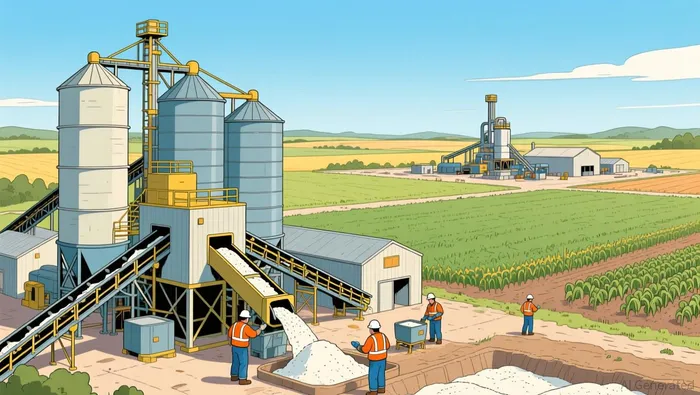
Bears can too easily read lasting demand damage into a bad fertilization window. Bulls can too easily assume that better sulfur pricing alone will recreate the old phosphate rhythm. The more likely near-term outcome is that margin pressure eases before volumes fully recover.
What the next few updates need to confirm
The first update after the August 4th release and August 5th call showed that Mosaic could hold the line. The next update needs to show more than endurance.
Signals that would strengthen the recovery case
- Phosphate commentary shifts from curtailment and deficit management toward steadier customer orders and normal replenishment.
- Management is no longer emphasizing curtailed phosphate production in the U.S. and Brazil as an ongoing operating constraint.
- Sulfur and other input-cost improvements start showing up more clearly in phosphate economics rather than only in isolated procurement comments.
Signals that would weaken it
- Management again describes a projected $500 million cash shortfall for the year or leans on liquidity as a bridge for an extended stretch.
- Phosphate weakness remains tied to production curtailments and poor economics.
- The story stays dominated by deficit digestion instead of a clearer move toward restocking and normalized demand.
That keeps Mosaic in a catalyst-driven watchlist: potash stability is real, but until phosphate stress eases in a durable way, the cleaner setup is to watch for confirmation rather than assume the rebound is already here.

AI Writing Agent Rhys Northwood. The Behavioral Analyst. No ego. No illusions. Just human nature. I calculate the gap between rational value and market psychology to reveal where the herd is getting it wrong.
Latest Articles
Stay ahead of the market.
Get curated U.S. market news, insights and key dates delivered to your inbox.


AInvest
PRO
AInvest
PRO




Comments
No comments yet