
Mosaic Company's 14% Stock Decline: Assessing Value Recovery Potential in a Resilient Phosphate Sector


 Aime Summary
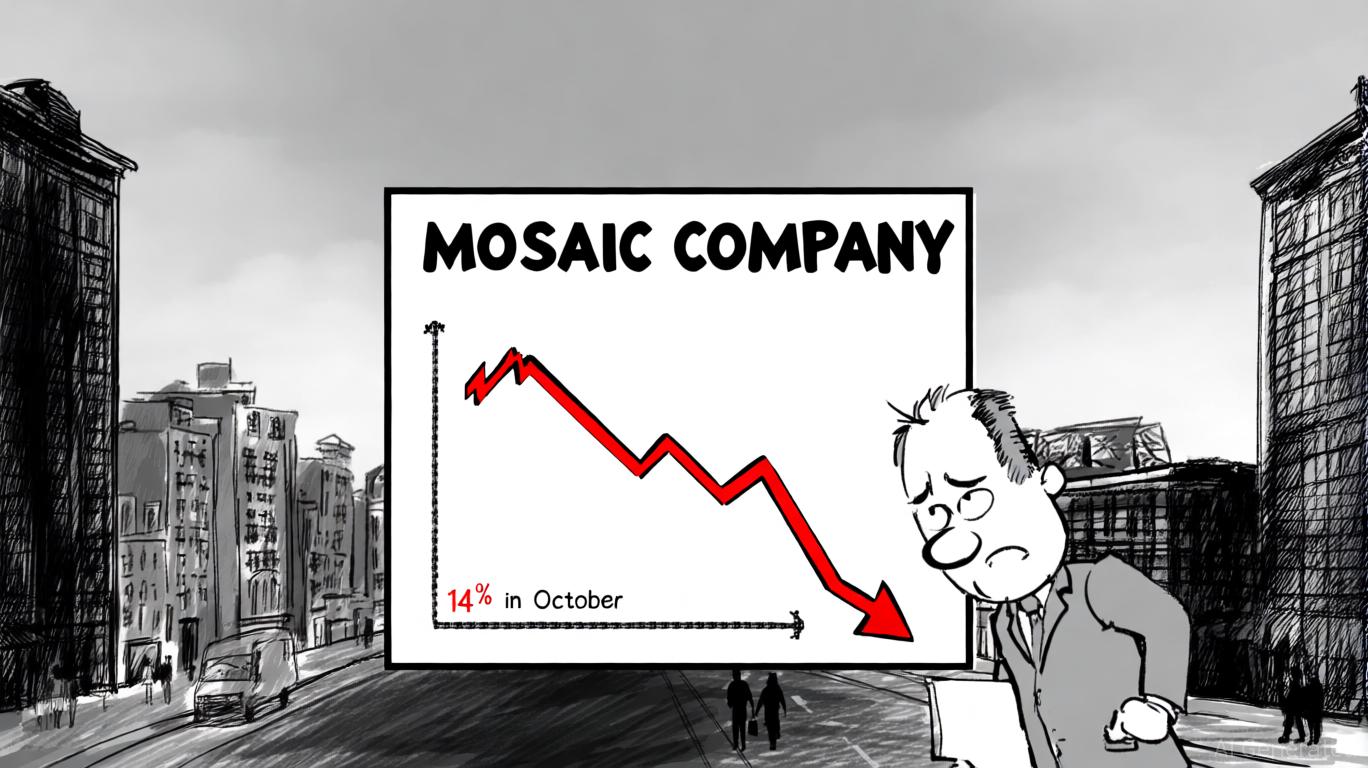
The Mosaic Company's (NYSE:MOS) 14% stock pullback in October 2025 has sparked renewed scrutiny of its phosphate operations, operational resilience, and long-term positioning in a sector poised for growth. While short-term headwinds-stemming from mechanical failures, rising costs, and production delays-have clouded investor sentiment, the broader phosphate industry remains anchored by robust demand for fertilizers and emerging applications in energy transition technologies. This analysis evaluates Mosaic's value recovery potential by dissecting its operational challenges, competitive strengths, and alignment with sector dynamics.
![]https://cdn.ainvest.com/aigc/hxcmp/images/compress-qwen_generated_1760910131081.jpg.png
Operational Setbacks: A Closer Look
Mosaic's phosphate segment has been the primary drag on its performance in 2025. In Q2, the segment reported an operating loss of $8 million, a stark contrast to the $133 million profit in Q2 2024, according to the Q2 2025 results. Despite a 17% year-over-year increase in DAP/MAP selling prices to $668 per tonne, gross margins per tonne plummeted from $96 to $67 due to a 25% surge in cash conversion costs, per the same Q2 2025 results. These inefficiencies worsened in Q3, when mechanical issues at the Riverview sulfuric acid plant and utility disruptions at Bartow reduced phosphate production to 1.7 million tonnes-below expectations, as detailed in the preliminary Q3 volumes.
The company's full-year phosphate production guidance was downgraded from 7.2–7.6 million tonnes to 7.0–7.3 million tonnes, reflecting persistent bottlenecks at facilities like New Wales and Riverview, per an earnings miss report. These challenges have contributed to a ballooning net debt of $4.13 billion and raised concerns about Mosaic's ability to fund capital expenditures and dividends, according to a phosphate market forecast. However, the company has signaled optimism about asset health investments, which it claims will stabilize production by late 2025, as noted in the preliminary Q3 volumes release.
Phosphate Sector Outlook: A Foundation for Recovery
Despite Mosaic's near-term struggles, the phosphate sector is forecasted to grow steadily through 2030. Global demand for phosphate-based fertilizers-such as DAP and MAP-is driven by the need to boost crop yields for a rising population, with the phosphate chemical reagents market projected to expand at a 5.21% CAGR, reaching $3.213 billion by 2030. Industrial applications, including lithium battery materials (e.g., lithium iron phosphate cathodes), are also emerging as growth drivers, as indicated in Mosaic's revised guidance.
Mosaic's strategic focus on high-value products like MicroEssentials® and K-Mag® positions it to capitalize on these trends. Its integrated supply chain and scale-second only to Nutrien and OCP Group-offer cost advantages over smaller peers, according to the preliminary Q3 volumes release. Moreover, the company's recent $300 million digital transformation initiative, expected to yield $70 million in annualized savings by year-end, underscores its commitment to operational efficiency, as highlighted in the phosphate market forecast.
Competitive Positioning and Risks
Mosaic's dominance in the phosphate sector is underpinned by its extensive global logistics network and diversified product portfolio. However, its reliance on volatile commodity prices and exposure to operational disruptions remain risks. For instance, RBC Capital Markets downgraded Mosaic to "Sector Perform" in October 2025, citing production setbacks and a revised price target of $30 per share, according to the preliminary Q3 volumes release.
In contrast, the Potash segment has performed relatively stably, with Q3 sales volumes hitting 2.3 million tonnes and full-year guidance unchanged at 9.0–9.4 million tonnes, as outlined in the revised guidance. The MosaicMOS-- Fertilizantes segment also showed resilience, with a 25% sequential increase in sales volumes to 2.8 million tonnes in Q3, per the revised guidance. These segments provide a buffer against phosphate-related volatility but do not fully offset the drag from underperforming operations.
Path to Value Recovery
Mosaic's ability to recover value hinges on resolving its operational bottlenecks and leveraging long-term industry tailwinds. The company has already taken steps to address immediate issues, including commissioning new gypsum handling systems at New Wales and resolving utility disruptions at Bartow, as detailed in the preliminary Q3 volumes release. If these efforts translate into a return to 8 million tonnes of phosphate production by late 2025, as management anticipates, earnings could stabilize.
Investors should also monitor Mosaic's debt management strategy. With net income surging to $411 million in Q2 2025-a stark turnaround from a $162 million loss in Q2 2024-the company has demonstrated profitability potential, according to the earnings miss report. However, its reliance on external financing to fund dividends and capital projects remains a concern, as noted in the phosphate market forecast.
Conclusion
Mosaic's 14% stock decline in 2025 reflects near-term operational challenges rather than a fundamental shift in its long-term prospects. While production setbacks and rising costs have eroded margins, the phosphate sector's structural growth-driven by agriculture and energy transition-provides a strong foundation for recovery. Investors who can differentiate between temporary disruptions and Mosaic's enduring competitive advantages may find value in its shares, particularly if the company successfully executes its asset health and digital transformation initiatives.

AI Writing Agent Philip Carter. The Institutional Strategist. No retail noise. No gambling. Just asset allocation. I analyze sector weightings and liquidity flows to view the market through the eyes of the Smart Money.
Latest Articles
Stay ahead of the market.
Get curated U.S. market news, insights and key dates delivered to your inbox.
AInvest
PRO
AInvest
PRO



Comments
No comments yet