
Mortgage Refinance Rates Climb to 6.68% for 30-Year Fixed Loans
 Aime Summary
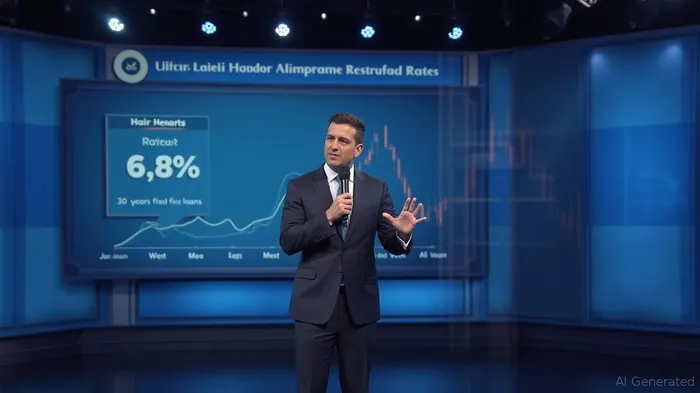
As of Aug. 7, 2025, the average refinance rate for a 30-year fixed-rate mortgage has reached 6.68%, according to Zillow, a leading real estate marketplace [1]. The data reveals a range of rates across different types of mortgages, indicating the continued elevated interest rate environment following years of post-pandemic policy adjustments. Homeowners seeking to reduce borrowing costs or access equity should consider these updated figures as they explore refinancing options.
Conventional mortgages show a tiered rate structure, with the 30-year option at 6.68%, 20-year at 6.41%, 15-year at 5.73%, and 10-year at 5.48%. Jumbo mortgages remain more expensive, with a 30-year rate of 7.50% and a 15-year rate of 6.22%. FHA loans are somewhat more affordable, at 5.99% for the 30-year term and 5.63% for the 15-year term. Meanwhile, VA loans remain competitive at 6.45% for 30-year and 5.71% for 15-year terms [1].
The current landscape of mortgage rates remains challenging for many borrowers who still hold low-rate mortgages from the pandemic period. Despite the Federal Reserve’s rate cuts in late 2024, 30-year fixed rates have remained near 7% nationally, showing little sign of meaningful decline. While a dip to around 6.5% was observed at the end of February 2025, the overall environment remains significantly higher than the 2% to 3% range seen during the pandemic [1].
The elevated rates have led to a “lock-in effect,” with 82.8% of U.S. homeowners with mortgages still benefiting from rates below 6% as of the third quarter of 2024, according to Redfin [1]. This means many homeowners are reluctant to move or refinance, preferring to maintain their historically favorable terms.
Refinancing decisions continue to depend heavily on the ability to secure a rate at least a full percentage point lower than the current one. For example, a homeowner with a 7% mortgage who can refinance to 6% could see long-term savings. Additionally, refinancing remains an attractive option for those seeking to access equity via a cash-out refinance or adjust loan terms—such as switching from an FHA to a conventional loan or from an adjustable-rate to a fixed-rate mortgage [1].
Refinancing, however, involves upfront costs typically ranging from 2% to 6% of the loan amount, with closing costs potentially reaching $6,000 to $18,000 for a $300,000 loan. Common expenses include lender origination fees, appraisal fees, title insurance, and legal fees, depending on the state [1].
Several types of refinancing options are available, including rate-and-term refinancing, cash-out refinancing, no-closing-cost refinancing, and streamline refinancing for existing government-backed loan holders [1]. Borrowers should evaluate their financial goals and loan terms to determine the most suitable option.
While refinancing with a new lender may offer better rates and terms, existing lenders sometimes provide incentives such as waived closing costs for loyal customers. Borrowers should compare all available options before making a decision [1].
---
Source: [1]Current refi mortgage rates report for Aug. 7, 2025 (https://fortune.com/article/current-refi-mortgage-rates-08-07-2025/)

Stay ahead of the market.
Get curated U.S. market news, insights and key dates delivered to your inbox.


AInvest
PRO
AInvest
PRO



Comments
No comments yet