
Mortgage Rates Today: Why Locking In Beats Waiting For 2027
 Aime Summary
- Mortgage rates have surged in early September 2026, with the 30-year fixed average hitting 6.87% due to Middle East tensions and Fed hike expectations.
- Major forecasters like Fannie Mae and the MBA have revised 2027 rate projections upward to 6.7%, eliminating hopes for a quick return to 5%.
- A 66% probability of a Fed rate hike in September creates immediate urgency for buyers to lock in current financing.
- Long-term outlooks suggest a slow decline toward 5.7% by 2030 as quantitative tightening ends, but near-term affordability remains a severe challenge.
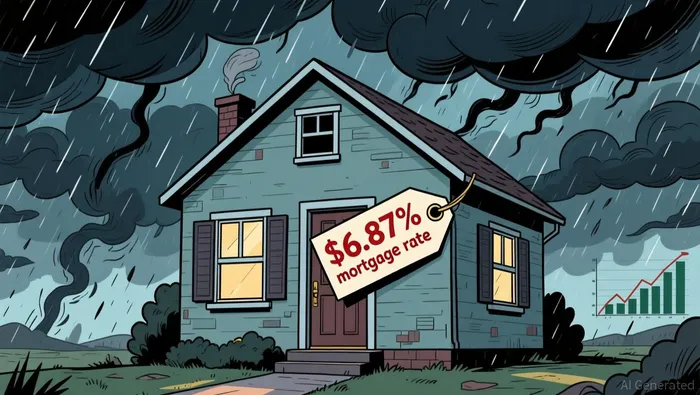
Mortgage markets are currently grappling with a perfect storm of geopolitical instability and persistent inflation. The average 30-year fixed mortgage rate recently reached 6.87% as of September 1, 2026, marking a sharp reversal from the downward trend seen earlier in the year. Just one day later, Zillow lender marketplace data showed the national average sitting at 6.74%, reflecting a 15-basis-point daily jump. This volatility is not merely a fluctuation; it is a structural shift driven by escalating tensions in the Middle East and the Federal Reserve's aggressive stance on interest rates. For prospective homebuyers, the window to secure favorable financing is narrowing rapidly.
The primary catalyst for this sudden upward pressure is the reescalation of conflict involving Iran. Geopolitical instability typically drives investors toward safe-haven assets, which inflates bond yields and, by extension, mortgage rates . Simultaneously, the Federal Reserve is navigating a delicate balancing act. Market data from the CME Group's FedWatch tool indicates a 66% probability that the central bank will raise interest rates during its upcoming meeting on September 16 . This looming hike adds a layer of immediate risk, suggesting that today's rates could easily become tomorrow's lows.
Are Current Mortgage Rates A Barrier To Homebuying?
Elevated borrowing costs are significantly impacting consumer sentiment and market liquidity. A recent survey by Neighbors Bank reveals that 72% of potential homebuyers paused their house searches. The primary reason for this hesitation is a persistent misconception that mortgage rates will eventually return to the pandemic-era lows of 5%. Only 35% of respondents could accurately estimate the current average rate, highlighting a severe disconnect between public perception and economic reality .
This waiting game is becoming increasingly costly. Forty-one percent of those who delayed their purchase already report regretting their decision, as higher rates and rising home prices continue to compound the affordability crisis . The housing market is experiencing a "double-whammy": borrowing costs are at multi-year highs, while home prices remain roughly 59% higher than in 2020 and are projected to climb another 2.2% in 2027. With real wages declining and construction costs soaring due to tariffs and material shortages, purchasing power is being eroded faster than ever .
Should Homebuyers Lock In Rates Before The Fed Meeting?
Given the high probability of a September rate hike, financial experts are advising a proactive approach to rate locking. By securing a rate lock at 6.87% now, buyers can insulate themselves from the anticipated 66% chance of a Fed-induced increase . This strategy effectively turns today's elevated rates into tomorrow's relative savings. Furthermore, rate locks offer built-in flexibility. If market rates fall before the closing date, borrowers can choose to unlock their current rate to capture the lower price. If rates do not drop, they maintain the security of their initial lock .
The refinance market is feeling the same pressure. The 30-year fixed refinance rate recently hit 6.73%, while the 15-year fixed stood at 6.16% . For existing homeowners, the cost of capital has risen sharply, making it difficult to justify a refinance unless they can significantly lower their loan balance or shorten their term. The simultaneous pressure from geopolitical risks and anticipated policy tightening has created an environment where borrowing costs are rising rapidly, prompting caution among both prospective buyers and current owners .
What Do 2027 And 2030 Mortgage Rate Forecasts Show?
Looking beyond the immediate turbulence, long-term forecasts suggest that relief will be gradual rather than sudden. Recent projections from Fannie Mae and the Mortgage Bankers Association have revised their 2027 forecasts upward to an average of 6.7% . This revision reflects a shift in economic reality where optimistic rate-cut expectations have been tempered by sticky inflation, which remains well above the Fed's 2% target at 3.7% . Consequently, experts warn that waiting for 2027 will not yield significant relief for prospective buyers .
Over a longer horizon, however, the outlook stabilizes. Based on the convergence of 10-year Treasury yield forecasts and the normalization of spreads between Treasuries and mortgage-backed securities, 30-year fixed mortgage rates projected to decline from 6.25% in 2026 to 5.70% by 2030. This gradual decline assumes that the Federal Reserve winds down its quantitative tightening program, allowing private market demand for mortgage-backed securities to recover . In a "bull case" scenario involving a soft landing, rates could potentially drop even closer to 5.00% by the end of the decade . Conversely, a "bear case" of persistent inflation could keep rates hovering near 7.00% .
The residential title industry is already feeling the strain of these macroeconomic factors. First American Financial Corporation (FAF) reported that its residential purchase revenues increased by only 2% in the second quarter of 2026, as a 6% rise in revenue per order was offset by a 3% decline in closed orders. While commercial title activity surged 34%, the residential sector remains subdued due to high interest rates . The company noted that a decline in mortgage rates remains a key potential catalyst for improving affordability and boosting title order volumes .
Ultimately, the current mortgage environment demands patience and strategic planning. While the long-term trend points toward lower rates by 2030, the near-term reality involves navigating geopolitical shocks, sticky inflation, and aggressive Fed policy. Homebuyers who wait for a miraculous return to 5% rates risk being priced out of a market where both asset prices and borrowing costs are climbing. Locking in a rate now, or entering the market with a clear understanding of the 6.5% to 7.0% baseline, remains the most prudent path forward.

Stay ahead of the market.
Get curated U.S. market news, insights and key dates delivered to your inbox.


AInvest
PRO
AInvest
PRO




Comments
No comments yet