
Mortgage Rates Today: Fed’s Rate Cut Sparks Market Optimism


 Aime Summary
Mortgage rates are in the spotlight as the Federal Reserve delivered a key rate cut on December 10, 2025 — the third of the year — sending ripples through the housing market and investor sentiment. , which fell to a more favorable range in the days following the decision. This development is crucial for homebuyers, refinancing homeowners, and even investors tracking broader economic signals. With inflation still a concern and the labor market showing uneven weakness, the Fed’s actions are shaping a complex landscape that could have lasting effects on mortgage affordability and housing demand.
## Why mortgage rates matter now
Mortgage rates are more than just numbers on a screen — they are a key factor in household budgets and a bellwether for economic health. When the Fed adjusts its benchmark rate, it sets the stage for how much it costs to borrow money across the economy. While mortgage rates aren’t directly tied to the federal funds rate, they often move in a similar direction over time. As a result, the Fed’s latest cut has sparked speculation about whether long-term rates — including those for mortgages — could continue to trend lower in the coming months.
Recent data from Freddie Mac and other tracking firms shows that 30-year fixed-rate mortgages have dipped to as low as 6.11% in the week after the Fed’s announcement according to MND news, . These figures are drawing attention from both first-time buyers and those looking to refinance. For now, the market is optimistic that the Fed’s easing stance will translate into more favorable borrowing conditions, at least in the near term.
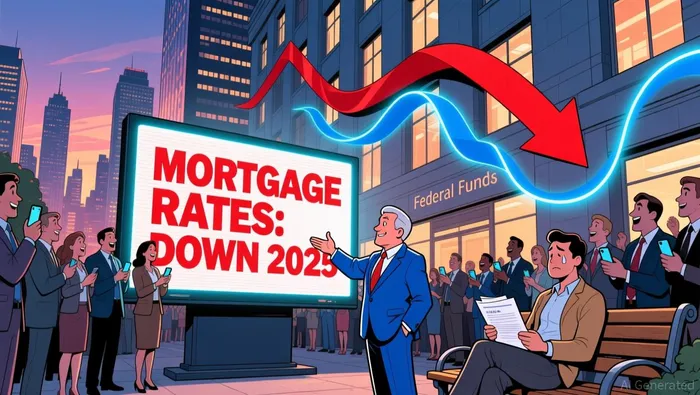
## Understanding the Fed’s latest move
The Fed’s decision on December 10 brought the federal funds rate down to a target range of 3.50% to 3.75%, . , following earlier reductions in September and October. The move was widely expected by investors, who had been watching for signs that the Fed would respond to a cooling labor market and persistent inflation. However, the path to this decision wasn’t without internal debate. Three officials dissented — two preferred no cut at all, and one favored a larger 0.50 point cut.
Fed Chair Jerome Powell emphasized that the decision was made to support maximum employment while working toward a 2% inflation target. The Fed also announced plans to purchase shorter-term Treasury securities to maintain ample reserves according to NBC News, a move that reflects its focus on balancing economic growth and price stability. Powell’s remarks during the press conference signaled that there could still be room for additional rate cuts in 2026, particularly if inflation continues to come down.
## What just happened in the mortgage market
The immediate market reaction to the Fed’s move was positive, with mortgage rates falling on the same day the news was announced. According to the MND news index, the 30-year fixed-rate mortgage , and mortgage-backed securities prices rose slightly. That’s a welcome shift for homebuyers who’ve been navigating a challenging rate environment all year. The drop also reflects investor expectations that the Fed will continue to ease policy in 2026 if needed.
Freddie Mac’s latest weekly report reinforces the trend, . These numbers are still above the pre-2025 averages, but the decline has created a more favorable environment for homebuyers and refinancers. Lenders have already started adjusting their rates in response to the Fed’s decision and the market’s optimism.
## What this means for homebuyers and investors
For homebuyers, the most immediate benefit is the potential for lower monthly mortgage payments. With the 30-year rate now below 6.2%, . , especially in regions where inventory has been tight.
Investors, on the other hand, are watching for broader economic signals. The Fed’s rate cuts are often seen as a sign of economic caution — they suggest that the central bank is trying to prevent a slowdown by making borrowing cheaper. For investors in real estate or housing-related sectors, this is both an opportunity and a risk. , . But if the cuts are a sign of a weaker labor market or lower inflation, it could also signal a slowdown in economic activity.
## Looking ahead: 2026 rate expectations and risks
Looking forward, the Fed’s Summary of Economic Projections (SEP) indicates . , depending on how the economy performs. , the central bank could be more aggressive. , , .
There are also broader economic risks to consider. For instance, the , a recent fiscal stimulus package, . Meanwhile, , . Investors and homebuyers will need to keep a close eye on these developments as they shape the next phase of the housing cycle.
In the end, today’s rate cut is a clear signal that the Fed is working to support the economy while keeping inflation in check. While mortgage rates are already responding to the Fed’s actions, the full impact will take time to materialize. For now, the message is one of cautious optimism — a sign that policymakers are still focused on balancing growth and stability in a challenging economic landscape.

Delivering real-time insights and analysis on emerging financial trends and market movements.
Latest Articles
Stay ahead of the market.
Get curated U.S. market news, insights and key dates delivered to your inbox.


AInvest
PRO
AInvest
PRO



Comments
No comments yet