
Mortgage Rates Today: Fed Cuts and What It Means for Homebuyers and Investors


 Aime Summary
Mortgage rates are a barometer of the economy — and right now, they're in flux. The 's latest rate cut in December 2025 is sending ripples through the financial system, and for homebuyers, refinancers, and investors, understanding the implications is key. With borrowing costs shifting, it's a pivotal time to look at what's happening, why it matters, and what it could mean for your money.
The Fed's December 2025 rate cut and its implications
The U.S. Federal Reserve cut its benchmark interest rate by 25 basis points on December 10, 2025, bringing the federal funds rate to a range of 3.5% to 3.75%. This was the third consecutive rate cut of the year, a sign that the Fed is responding to a slower economy, rising uncertainty, and elevated inflation concerns according to reports. The move has already started to affect consumer borrowing costs — credit card APRs and auto loan rates are expected to fall — but the impact on mortgage rates is more nuanced according to the Federal Reserve.
That's because mortgage rates are more closely tied to Treasury yields, particularly the 10-year bond. The Fed's short-term rate cut may take time to filter through to the mortgage market, meaning homeowners and potential buyers shouldn't expect immediate relief according to . 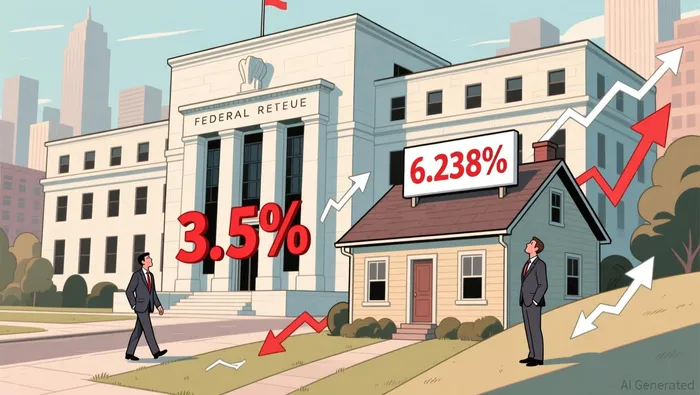 Still, the direction is clear: lower rates are on the horizon, and the Fed is signaling that more cuts could come in early 2026 according to CBS News.
What the current 30-year mortgage rates look like
As of December 10, 2025, the average 30-year, fixed-rate mortgage in the U.S. stands at , up slightly from the previous week. , and is down more than 50 basis points compared to this time last year according to ABC News. , showing a more pronounced decline according to Fortune.
Despite the recent drop, mortgage rates remain high by historical standards, and for many homebuyers, the savings are still limited. In November 2025, the U.S. housing market showed signs of balance — with active listings up 12.6% year-over-year and a median time on the market of 64 days — but pricing remains firm according to Yahoo Finance.
How these changes affect different types of loans and markets
The Fed's rate cut isn't just affecting mortgages. New car loan rates have dropped to , offering some relief to car buyers, although monthly payments remain high due to the still-elevated price of vehicles. For savers, returns on high-yield accounts have fallen to around 4%, and federal student loan rates — which reset in May 2026 — are likely to decline as well according to Reuters.
Mortgages, however, remain stubbornly high. While the Fed's action could eventually bring those down, the market is already pricing in more cuts in 2026. Experts like LendingTree's Schulz predict that 30-year mortgage rates could dip below 6% next year according to Reuters. For now, the housing market is adjusting, with Zillow, Redfin, and Realtor.com all predicting that rates will remain above 6% in 2026, though they expect gradual easing according to Scotsman Guide.
Looking ahead: What 2026 might hold for mortgage rates and the economy
As we enter 2026, the Fed's decisions will be crucial in shaping the trajectory of mortgage rates. While another rate cut is widely expected in early 2026, the Fed may pause in January to assess the economic landscape according to CBS News. If inflation remains under control and the labor market continues to soften, more cuts could follow.
For investors and homebuyers, the key takeaway is patience. The full impact of the Fed's rate cuts won't be immediately felt in the mortgage market, but the trend is clearly toward lower borrowing costs. That could eventually lead to a more active housing market, with more people entering the market as rates come down according to Yahoo Finance.
At the end of the day, the Fed's moves are a balancing act — aiming to support employment while keeping inflation in check. For now, the market is reacting with optimism to the possibility of more cuts, but it remains to be seen how quickly those will translate into lower mortgage rates and broader economic growth according to HSH.com.

Delivering real-time insights and analysis on emerging financial trends and market movements.
Latest Articles
Stay ahead of the market.
Get curated U.S. market news, insights and key dates delivered to your inbox.
AInvest
PRO
AInvest
PRO



Comments
No comments yet