
Mortgage Rates and Fed Policy: What Recent Data Means for Homebuyers and Investors


 Aime Summary
The 's recent move to cut interest rates has sparked renewed attention from homebuyers, refinancers, and investors. But despite these rate cuts, . So where are we now, and what might come next for the housing market and related investments? With the Fed signaling more cuts ahead and mortgage rates still trending lower, it's a crucial time to understand the forces at play.
The Fed’s Recent Rate Cuts and Market Signals
On December 10, 2025, the Federal Reserve 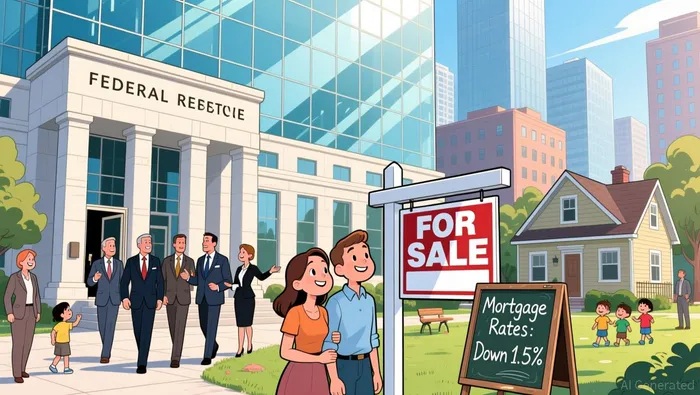 . The decision followed a close 9-3 vote, with some policymakers favoring a larger cut. The Fed cited slowing job gains and a rising unemployment rate as key factors driving the decision, .
The Fed also announced plans to resume purchasing Treasury securities, beginning with $40 billion in Treasury bills, to address liquidity concerns in overnight funding markets. This marks a shift from its previous quantitative tightening policy, signaling a more accommodative stance that could affect both short- and long-term borrowing costs.
How Mortgage Rates Are Responding — and What That Means for Borrowers
Mortgage rates have moved lower in 2025, but the decline has been gradual. As of December 12, 2025, the average 30-year fixed-rate mortgage stood at 6.22%, . This is a positive sign for homebuyers and refinancers, .
The Fed’s rate cuts have had a more immediate impact on short-term borrowing costs like credit cards and business loans, , which . .
Broader Market Reactions and Investor Implications
The Fed’s December move was widely seen as dovish, signaling continued support for the labor market and a cautious approach to inflation. The Fed’s updated economic projections now show core PCE inflation at 2.5% for 2026, down from earlier forecasts, and expect GDP growth of 2.3%. These signals have been broadly positive for financial markets, according to .
For investors, this environment creates a complex backdrop. On the one hand, lower rates can boost home prices and construction activity, supporting sectors like real estate, building materials, and mortgage finance. On the other hand, if inflation proves more stubborn than expected, the Fed could pivot toward a more hawkish stance, slowing rate reductions and possibly even hiking rates again. That volatility could affect everything from housing stocks to bond yields.
What’s Ahead: Rate Cuts and Housing Market Outlook
, indicating a gradual and measured approach according to . While this is good news for borrowers seeking lower mortgage rates, it’s worth noting that . .
HomeLight analysts also point to a mixed outlook for the 2026 housing market, according to . , .
At the end of the day, . But as remain elevated, .

Delivering real-time insights and analysis on emerging financial trends and market movements.
Latest Articles
Stay ahead of the market.
Get curated U.S. market news, insights and key dates delivered to your inbox.


AInvest
PRO
AInvest
PRO



Comments
No comments yet